
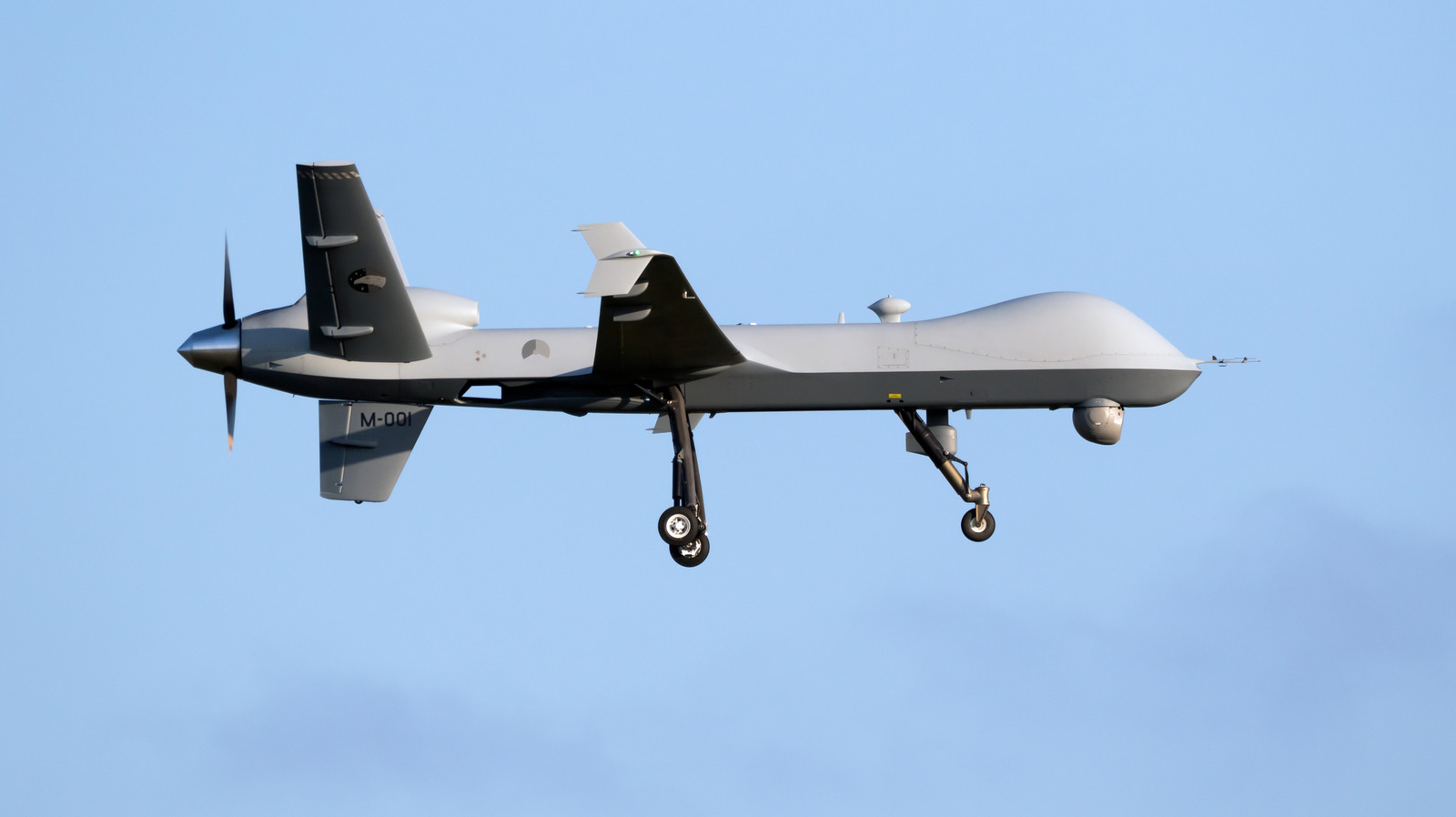
The United States has signed a contract with an American aerospace firm to design and build next-generation UAV engines, focused on longer endurance, greater efficiency, and lower signatures, and this article explains the program goals, the contractor’s role, technical priorities, testing timeline, supply chain impacts, and the operational effects these engines could have on unmanned systems.
Officials awarded the work to a U.S. aerospace contractor chosen for experience in propulsion systems and defense programs, not a startup or purely commercial shop. The contract funds design and prototype stages that aim to deliver engines tailored to military unmanned aerial vehicles. This is about closing performance gaps that current small turbine and piston options leave open.
The development target is clear: more power for the same weight, better fuel efficiency, and a smaller thermal and acoustic footprint. Engineers will focus on improving thrust-to-weight ratios while reducing specific fuel consumption so drones can fly farther and stay aloft longer. Reducing exhaust temperature and noise are separate design goals because stealthy persistence matters in modern operations.
Expect a mix of evolutionary and novel approaches rather than a single radical leap. That means advanced materials, improved combustion management, and tighter integration between engine controls and the aircraft avionics. The supplier will deliver modular designs so the same core engine can be scaled or adapted across multiple UAV classes.
This work targets not only large high-altitude platforms but also tactical and medium-altitude systems that face endurance limits today. For small tactical drones, efficiency gains translate directly into longer loiter time and fewer logistic burdens for batteries or frequent refueling. For larger systems, the priority is reliable cruise performance that keeps sensors on target for extended missions.
The program phases are straightforward: design, bench testing, prototype integration, and flight trials. Ground testing will validate thermal limits, vibration tolerances, and fuel consumption curves before any aircraft integration. Flight tests with instrumented prototype airframes will follow, building performance data under realistic loads and environments.
On the industrial side, the contract is meant to strengthen domestic propulsion capability and shield critical supply lines. The prime will likely subcontract work to specialist shops for compressors, turbines, and electronic controls, spreading jobs across the supply chain. Investment in tooling and testing facilities is expected, which keeps maintenance and future upgrades onshore.
Operationally, better engines change what commanders can do with drones. More endurance means fewer takeoffs and landings, less vulnerability during transit, and the ability to maintain overwatch or ISR coverage for longer windows. Lower signatures reduce the chance of detection during sensitive missions, enabling quieter reconnaissance and strike support when needed.
Export controls and interoperability will be part of the program conversation from the start, because propulsion technology has clear national security implications. Design choices must account for compliance with export regulations while keeping options open for allied procurement. The contractor will have to balance protecting sensitive tech with meeting partner needs where permissible.
There are real challenges ahead: managing cost growth, hitting performance timelines, and ensuring the prototypes integrate cleanly with a range of UAV airframes. Engine development has a long history of surprises, from material fatigue to unexpected vibration modes that only show up in flight. Program managers will need rigorous test regimes and clear stopgates to catch problems early before they cascade into schedule slips.
In short, the contract funds a focused push to modernize the heart of many unmanned systems, aiming for engines that stretch endurance, cut signatures, and reduce operating costs. If the program meets its benchmarks, the next wave of UAVs will be able to stay on station longer, operate more quietly, and deliver better capability with fewer logistical headaches.
