
Here’s what this piece covers: police restraint under pressure, the way mental illness complicates arrests, why long arrest videos keep exposing the same cracks, the role of training and physical control, and how public trust gets shaken when encounters drag on too long.
Long arrest videos have a way of stripping away the spin. Once the camera keeps rolling, people can see the same ugly truth play out again and again: officers trying to force a chaotic situation into something manageable while the suspect, the crowd, and the clock all seem to work against them.
The problem is not just force, and it is not just hesitation. It is the gap between what policing is supposed to be and what happens when a person in crisis refuses to calm down, talk clearly, or follow basic commands.
When mental illness enters the picture, the whole encounter can turn sideways fast. Officers are often expected to read the room, keep everyone safe, and make split-second choices while dealing with someone who may not be processing reality in a normal way.
That is where the video becomes brutal. What looks simple from a couch or a phone screen can be far more complicated on the street, where a bad decision, a sudden movement, or a delay in control can change the outcome in seconds.
There is also a hard truth that people do not always want to say out loud: arrests are physical events. No amount of public relations language changes the fact that a resisting suspect can force officers into a fight, and fights are messy, exhausting, and dangerous.
Training matters, and so does technique. A department that teaches officers how to use control holds, manage distance, and stay disciplined has a better shot at ending an arrest without turning it into a marathon of pain, panic, and confusion.
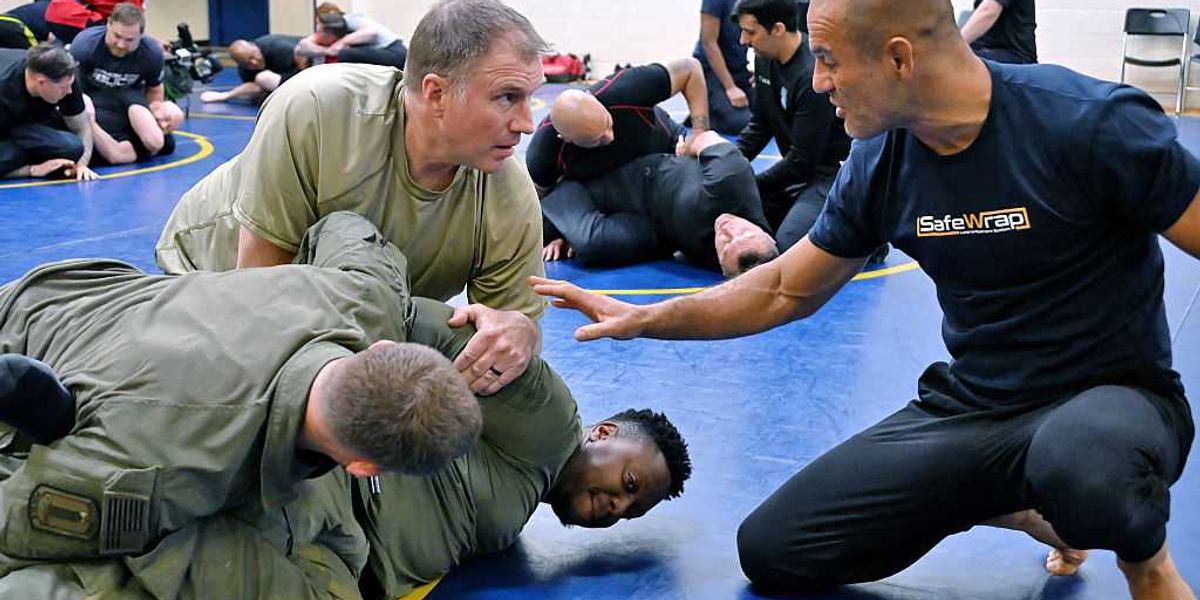
That is why martial arts-style control methods, including jiu jitsu, keep coming up in these conversations. Not because officers need to look slick, but because leverage, balance, and staying calm under pressure can keep a confrontation from escalating into something far worse.
Still, even good training has limits when an arrest drags on. The longer it goes, the more exhausted everyone becomes, the more mistakes pile up, and the more likely it is that the public sees the worst moment instead of the full picture.
That public view matters. People do not just judge the outcome anymore, they judge the pace, the tone, the body language, and every second that passes while someone is pinned, shouted at, or struggling against officers on the ground.
And if the person appears unstable, the tension only grows. Viewers start asking whether this was a medical issue, a mental health crisis, a law enforcement failure, or all three at once, and that mix can turn a single arrest into a broader argument about how police are supposed to operate.
The real issue is accountability on both sides. Officers need the tools, the training, and the discipline to keep control without losing their heads, and the public needs to understand that some arrests are not neat, quick, or easy no matter how much they wish they were.
What long arrest videos expose is not one bad moment, but a pattern. They show how fast a routine encounter can become a stress test for police judgment, suspect behavior, and the system’s ability to handle people who are not thinking clearly when the handcuffs come out.
That is why these clips land so hard when they spread online. They are not just snapshots of force, they are windows into the chaos that can unfold when law enforcement, mental illness, and raw physical resistance all collide in public.
