
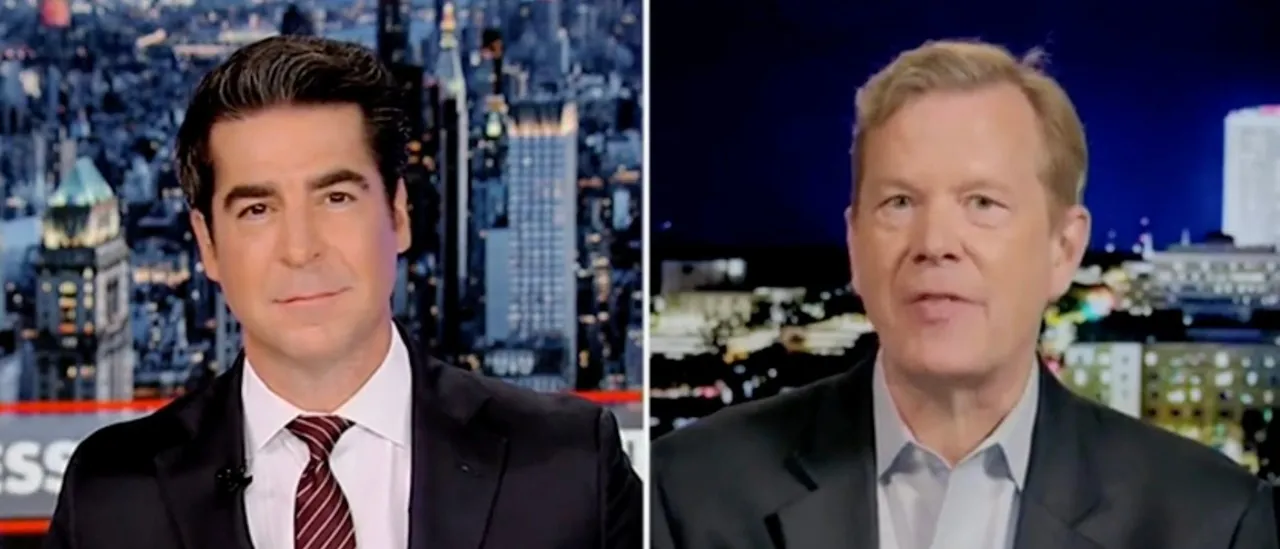
Peter Schweizer told Jesse Watters that President Trump’s recent strikes on Iran, combined with moves in Venezuela, are reshaping global energy flows and strategic alliances in a way that weakens China’s leverage, squeezes its energy supplies, and hands the United States a potent new layer of influence in the developing world.
Schweizer laid out a simple, hard truth: decisive action matters and it changes calculations overseas, fast. He argued the strikes created ripple effects that are now hitting China’s energy and tech plans, and that’s exactly the kind of pressure real leaders use to defend American interests. This is not finger wagging, it is leverage turned into policy and results.
“Any time you have these kinds of military operations that are taking place, they have ripple effects,” Schweizer told host Jesse Watters. “These ripples are actually tidal waves in China. Think about it. Over the last 58 days, between what happened in Venezuela and what started happening in Iran, China has lost two of its most important allies in the developing world.” Those are not idle observations; they describe a swift erosion of Beijing’s access to cheap, sanctioned oil and to friendly regimes.
China built its strategy on buying energy on the cheap and escaping dollar dependency, Schweizer noted, and the U.S. moves have undercut both. “China was able to buy that energy on the cheap because they were sanctioning companies. They were paying $15 a barrel less than anybody else was,” he added. “And by the way, they weren’t paying in U.S. dollars. They were paying in the Chinese currency, and that has been a long-term objective of China, to move away from a dollar-based economy. That is all gone.”
The strikes also hit contracts and revenue streams that feed China’s tech ambitions, especially in artificial intelligence, according to Schweizer. He highlighted how Beijing’s big AI players had expected massive payments from deals in Venezuela and Iran that are now in doubt. “two of the biggest AI contractors” in the East Asian nation ‘both have huge contracts in Venezuela and Iran, for which they are now not going to be paid.’” That loss translates directly into weaker capacity and fewer resources for China’s long-term AI push.
Schweizer was blunt about scale. “We’re talking about tens of billions of dollars in contracts, of revenue that they were expecting to get that they weren’t getting,” Schweizer said. “So, the ramifications are enormous, and Donald Trump has really shifted the equation with China within a matter of less than two months.” That’s the payoff of a strategy that pairs force with economic pressure.
Control of the Strait of Hormuz is where the strategic squeeze becomes tactical clout, he added, and the U.S. now has choices China can’t easily counter. “It now means we have a chokehold on the strait. Look, assume that China wanted to move on Taiwan, right? There’s a military response. But now we have a massive energy response, which is we simply don’t allow any tankers to ship oil from the Persian Gulf through the Strait of Hormuz,” the journalist said.
“We can do it. It might have been a little bit dicey had we not taken out the Iranians. That’s roughly half of their oil. Forty to 50 percent of their oil is now suddenly not available to them,” Schweizer continued. Those are the hard levers that matter when the chips are down, and they reshape calculations for capitals from Cairo to Caracas. When access to energy becomes weaponized, alliances shift toward whoever can secure supply.
Jesse Watters picked up on the geopolitical fallout: “So they [China] lose a bunch of customers, and they lose face,” Watters said. Schweizer agreed and pushed the point further: “Because they realize that China can sign all the ‘strategic partnerships’ they want, but they’re not going to do anything about it if their allies get in trouble,” he added. “All China has done is send some scolding messages. They haven’t done a single thing to stand up for their allies.”
That absence of action matters in the developing world, where leaders prize partners who protect their interests, not just write big checks. Schweizer argued the strikes send a clear signal that the United States under Trump is the partner countries should trust when the stakes are real. With energy leverage and demonstrable willingness to act, Washington can reshape alignments away from Beijing and toward states that value muscle paired with stability.
WATCH:
