
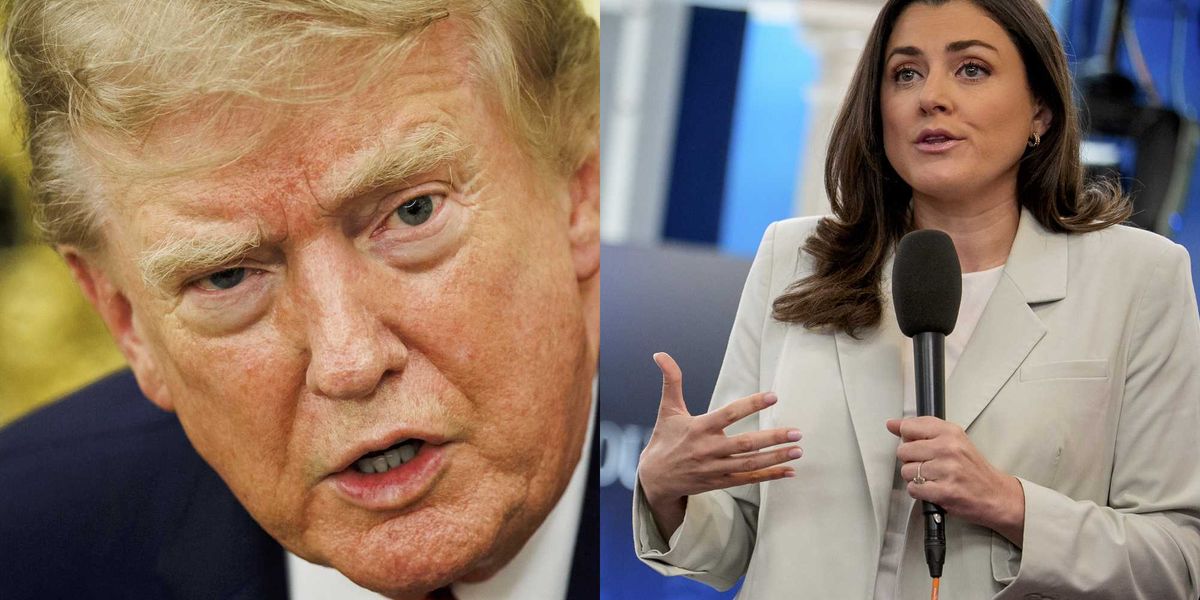
Trump’s rapid response crew is making noise again, and this time the target is a CNN reporter whose question set off a fresh round of outrage. The exchange centered on Natalie Harp and a line of questioning the Trump side blasted as cold, unnecessary, and flat-out nasty. The whole episode turned into another example of the media fight that keeps shadowing Trump’s orbit.
The reaction came fast and loud from the team around President Donald Trump, who called the question “disgusting and inhumane” and said it crossed a basic line of decency. That kind of response fits a pattern that has defined Trump world for years, where even routine media moments can snap into a full-blown clash in seconds. For supporters, it is another sign that some reporters seem more interested in scoring points than in showing any human instinct at all.
Natalie Harp has become a familiar figure in Trump’s circle, often showing up in stories tied to his day-to-day operation and public messaging. That visibility makes her a natural magnet for press attention, but it also means any question involving her can flare up quickly. In this case, the outrage was not just about the wording, but about what the wording seemed to suggest, and the Trump side clearly thought the reporter went too far.
CNN has long been a favorite punching bag for Trump allies, and this latest dust-up fit neatly into that larger storyline. The network is often accused by conservatives of pushing hostility first and journalism second, especially when the subject is Trump or anyone close to him. When a question lands with the wrong tone, it can instantly become proof, in their view, that the media bias problem is still alive and kicking.
That is why these moments keep hitting so hard. They are not just about one reporter or one answer, but about trust, attitude, and whether the press is covering Trump fairly or trying to needle him at every turn. For a lot of Republican voters, the answer is obvious, and the CNN exchange only reinforces what they already believe.
The Trump team’s sharp language also reflects how little patience they have for what they see as performative outrage from cable news. They are not in the mood to soften their tone when they believe a reporter has already gone off the rails. In the fast-moving world of political media, that kind of pushback can turn a single clip into a viral fight before the day is over.
What makes these confrontations stick is how quickly they expose the gap between Washington media culture and the people watching at home. Viewers do not always care about polished framing or inside-baseball nuance. They care whether a question sounds fair, human, and grounded in reality, and when it does not, the backlash can be immediate and fierce.
Trump has built his political brand on taking on the press without blinking, and the people around him have learned to fight with the same edge. That means every tense interview, every loaded question, and every awkward exchange can turn into a larger battle over respect and motive. In that kind of climate, even one offhand question can ignite a storm that does not cool off quickly.
The bigger story is not just the clash itself, but the way it keeps feeding the broader war between Trump and the media. His allies see these moments as proof that old habits in newsrooms die hard, while critics see the Trump side as eager to fight anything that feels uncomfortable. Either way, the CNN exchange landed right in the middle of a familiar collision course, and nobody involved looked eager to back down.
