
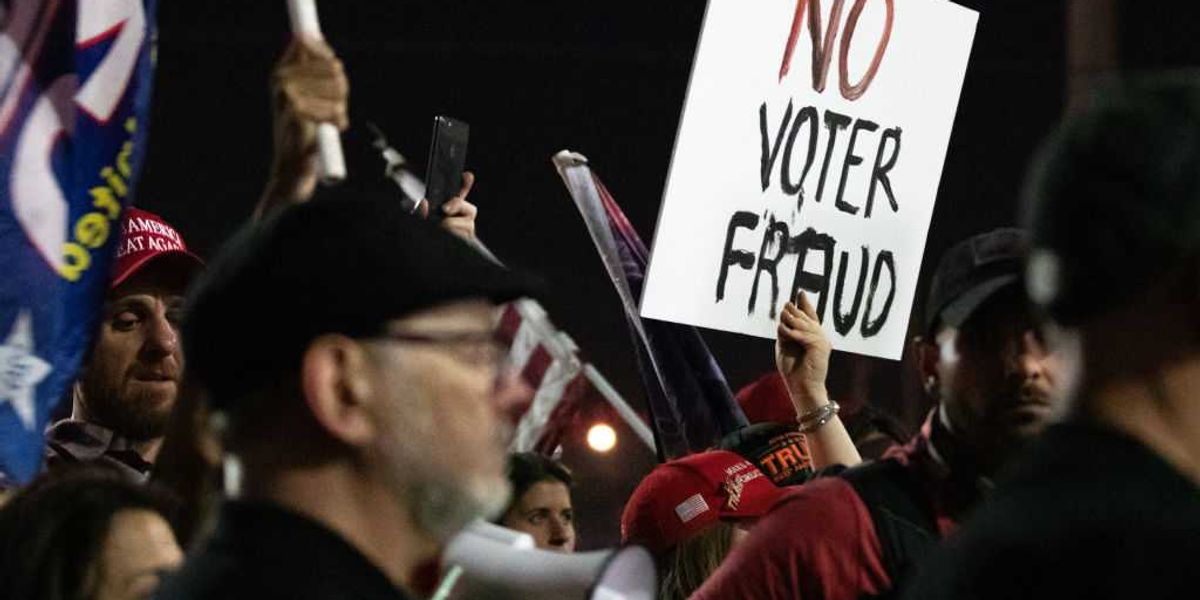
President Trump has renewed his push to scrap the Senate filibuster around the SAVE America Act, arguing Republicans must stop dithering if they want secure elections. This bill targets a clear weakness: current voter registration rules let noncitizens and identity thieves slip into the rolls. The stakes are straightforward and political leaders should treat them as such.
The SAVE America Act aims to tighten who can get on the voter rolls and how officials verify citizenship. For conservatives focused on election integrity, the bill is about restoring basic trust in the system. It concentrates on practical fixes rather than political theater.
Right now, many states accept flimsy proofs for registration, allowing a state ID, a few Social Security digits, or even utility bills to stand in for citizenship. That approach creates obvious gaps. It hands opportunistic fraudsters and confused clerks latitude to make bad calls.
“The current rules make it easy for noncitizens and citizens alike to illegally register to vote.” That sentence captures the problem exactly and without spin. It is not a theory; it is a description of how the patchwork of rules operates in too many places.
Consider how some states issue driver’s credentials to noncitizens; possession of one no longer implies citizenship. Likewise, the last four digits of a Social Security number are a weak filter because numbers are stolen, recycled, or misused. Those are the cold realities the law has to address.
Substitute documents like pay stubs or utility statements do nothing to prove someone is a citizen, yet they are accepted in several jurisdictions. That policy choice effectively equates residency with citizenship for registration purposes. Voters deserve better factual foundations for the rolls that determine our elections.
Identity theft at the ballot box is a real risk where safeguards are thin. A parent with knowledge of an adult child’s social data could register and vote in the child’s name without detection in weak systems. That is not speculation; it is a loophole begging for common-sense fixes.
States differ dramatically in how they secure the ballot. Some require photo ID for in-person voting and run robust in-person systems, which limits certain types of fraud. Other states have no ID rules for most voters and rely heavily on mail ballots, which opens different vulnerabilities.
Mail-in voting is convenient and legitimate for many, but it also expands the attack surface if verification is lax. No-excuse mail ballots and all-mail systems need stronger verification steps to ensure ballots are cast by actual, eligible voters. Safeguards can preserve access while blocking abuse.
Surveys suggest a troubling willingness among some voters to cross legal lines for partisan gain, which underscores that rules matter. When a significant fraction of the electorate says they might help a candidate by bending rules, lawmakers should stop pretending verification is optional. Simple deterrents and checks reduce temptation and opportunity.
The SAVE America Act would force states to tighten registration standards, better verify citizenship, and strengthen ballot-level safeguards. Passing it would put clear federal standards in place for a problem that currently looks different from state to state. That is the kind of action Republicans campaigned on and were sent to Washington to deliver.
Republicans in Congress have a choice: either move decisively to fix the gaps lawmakers know exist, or keep letting inconsistent state rules be the deciding factor in who gets to vote. The voters who care about fair elections will remember which path party leaders took. Lawmakers should use the authority voters granted them to secure the process once and for all.
