
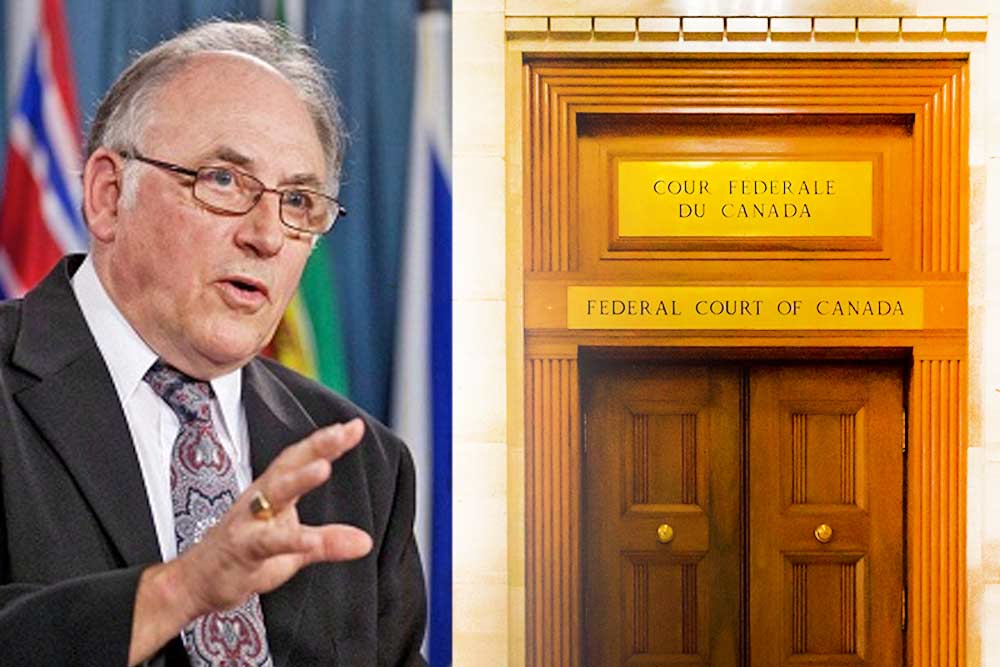
Former Newfoundland premier Brian Peckford sharply criticized the federal government’s legal brief to the Supreme Court asking for constraints on the notwithstanding clause, calling the move “out of line.” This piece examines the politics and principle behind that confrontation, why the notwithstanding clause matters to provincial authority, and what the debate means for the balance between courts and legislatures. It focuses on the core claim: Ottawa is stepping into territory that many see as a foundational democratic safeguard.
Brian Peckford’s reaction landed hard and fast, and for good reason. A long-time champion of provincial rights, he sees the notwithstanding clause as an essential check on judicial overreach, and he views the federal submission as an attempt to rework constitutional ground rules without democratic consent. That perspective rings with anyone who worries that elected bodies must retain the power to make decisions on behalf of their citizens.
The notwithstanding clause exists to give legislatures a clear, democratic backstop when courts interpret rights in ways that clash with majoritarian decisions. It is imperfect and rarely used, but its presence forces a conversation about accountability and values. When the federal government files a factum asking the Supreme Court to narrow that tool, it raises a straightforward question: who gets to set the boundaries of democracy, judges or lawmakers?
From a conservative viewpoint, the stakes are simple: preserve democratic choice and reject centralization. Provinces and legislatures are closer to the people and should keep the authority to balance rights and policy. Ottawa moving to curtail a provincial tool looks like the kind of federal overreach that shrinks provincial space and concentrates power at the center.
Peckford’s phrase ‘out of line,’ blunt and effective, captures frustration with a federal government that seems intent on reshaping constitutional practice through litigation rather than legislation or public debate. That approach substitutes court-led engineering for democratic deliberation. It also sends a message that the federal government trusts judges more than voters when it comes to hard policy trade-offs.
The legal argument presented by the federal factum is framed as a technical refinement, but the political effect is unmistakable. Tightening the notwithstanding clause would make it harder for legislatures to respond to local concerns that national courts may not fully appreciate. For citizens in provinces with different social values, that loss of flexibility is not a theoretical worry; it is a real reduction in self-government.
Courts play a vital role in protecting rights, and conservatives do not deny that judicial review is important. The conflict here is about balance: when judges interpret constitutional guarantees, they should do so with humility about democratic choices. Removing or weakening a legislative remedy in response to judicial decisions risks elevating judicial interpretations into permanent policy without accountable debate.
What happens next matters. The Supreme Court will consider the federal arguments and weigh them against constitutional text, history, and the practical consequences for governance. Whatever the outcome, this episode exposes the fault lines between a federal government eager to standardize outcomes and provincial leaders who want to keep meaningful authority to legislate for their citizens.
The debate should not be framed as judges versus legislators in absolute terms, but as a test of where democratic responsibility ought to sit. If Ottawa gets what it seeks, the default will shift toward judicial dominance in contested policy areas. If Peckford and like-minded voices prevail, legislatures will retain a clearer path to assert their choices when courts and elected officials disagree.
This is about more than one court case or one legal brief; it is about whether decisions that reflect local values can be preserved in a federation. Voters who value democratic accountability and provincial autonomy will watch closely, because the balance struck in this dispute will echo in future battles over how Canada governs itself. The conversation is raw, real, and central to how constitutional democracy survives the pressures of centralization.
