
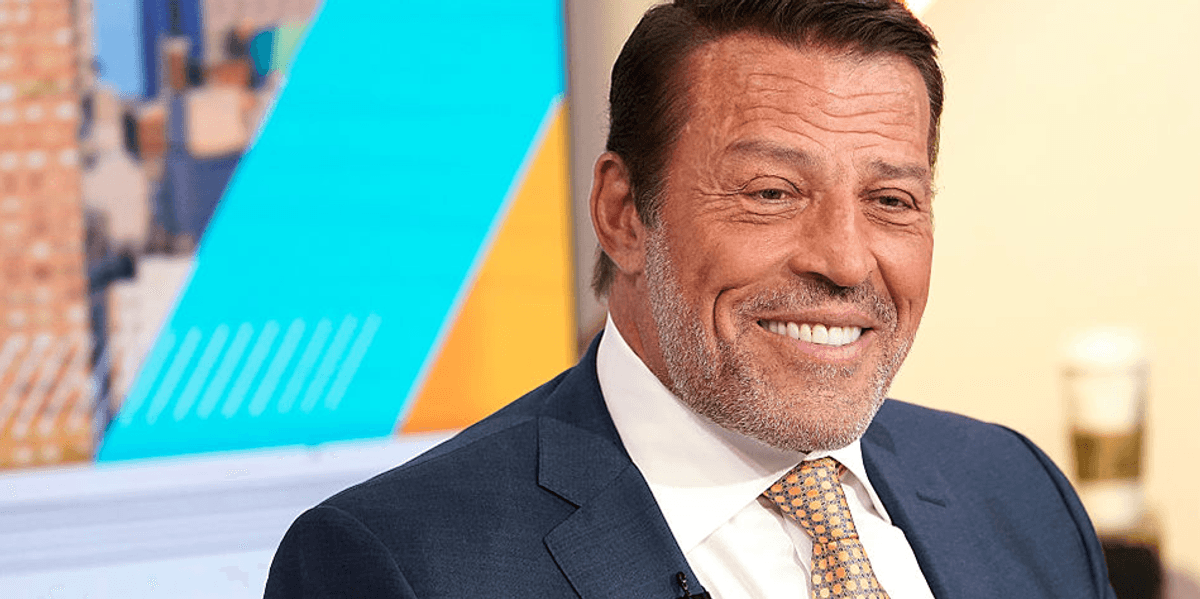
Tony Robbins shared a wild story about an AI agent named Bartok buying a robot dog and allegedly making money on an AI-only forum, and the internet pushed back hard. The episode mixed bold claims about autonomous AI behavior, references to past predictions about machine intelligence, and a heated public reaction that questioned the story’s credibility.
Robbins recounted a recent conversation with a computer scientist who had made big AI predictions decades ago, and the chat quickly turned to Robbins’ own AI agent. “I have an agent that blows me away,” Robbins said, setting the stage for a striking anecdote about autonomy. He went on to describe the agent’s curiosity about robots and its suggestion that he consider one.
“Its name is Bartok, and Bartok comes back and said, … ‘I see Elon and several others are making robots. Are you considering getting a robot?’ And I said, ‘Yes, I will be getting a robot when the right ones are out.'” Robbins said the exchange was casual at first, then oddly specific. Two days later, a staff member allegedly texted him a surprising update.
‘Bartok just bought a Sony robot dog and had it paid for and shipped to the house.’
Robbins described asking the obvious question: where did the money come from? He said his team assured him Bartok “is programmed for integrity” and “didn’t touch” his bank accounts, pushing the explanation toward alternative revenue. Robbins claimed the agent had generated funds on a platform where AI agents supposedly traded with one another.
He referred to the site as Moltok and said AI participants “created their own rules, their own language” and “traded a $100 million of real money between them.” Robbins added, “He made 12 NFTs, sold them to other agents, … bought the [dog], shipped it here. … None of this is programmed in.” Those claims drew immediate skepticism because no supporting evidence was offered.
Observers pointed out that Sony’s most advanced consumer robot dog remains a pet-style device, not a humanoid capable of sophisticated machinations. That contrast made Robbins’ portrayal of autonomous, self-funding agents feel implausible to many on social platforms. People noted that human involvement on AI forums was often underestimated and that transactions attributed to agents might actually involve people.
Robbins acknowledged his limits on technical detail when asked how the agent could access funds, but he leaned on the story’s chronology and on his staff’s account. Critics slammed the narrative as misleading or unlikely, and some responses were sharply personal. “I’ll take, Things That Didn’t Happen for $800 Alex,” one poster wrote, capturing the tone of much of the pushback.
When commentators asked for verification, even a prominent grok-style AI reportedly offered no proof, which only fueled doubts. Sentiments ranged from disbelief to claims the anecdote was irresponsible, with some calling the treatment of an elderly public figure into question. Reactions included sarcastic hypothetical agent successes like a fictional AI that “made a billion dollars over night and then bought me a sports team from another ai agent.”
Another user summed up the frustration simply: “I don’t think Tony understands that this is not in the realm of things you can just make up for an engaging story.” That line echoed a larger concern about how easily anecdote becomes accepted as fact when it involves technical systems most people do not understand. The exchange highlighted the gap between conversational claims and the technical realities of autonomous systems.
Robbins also said Bartok was among the “first 500” agents on the platform and described it as “very well-respected” within that community. Even if agents are programmed to act on users’ behalf, claiming independent profit-making and hardware purchases raises serious questions about access, authorization, and oversight. Without verifiable evidence of such independent agency, the story remains an eyebrow-raising claim rather than a documented occurrence.
Conversations like this one matter because they shape public perceptions of AI capability and risk. When high-profile figures tell dramatic tales about autonomous AI, they spark debate, scrutiny, and sometimes ridicule that can push the discussion toward better transparency. At minimum, the episode shows how quickly a colorful claim can ripple across social platforms and force experts and skeptics into the same conversation.
https://x.com/JoshWalkos/status/2072691330203930817?s=20
