
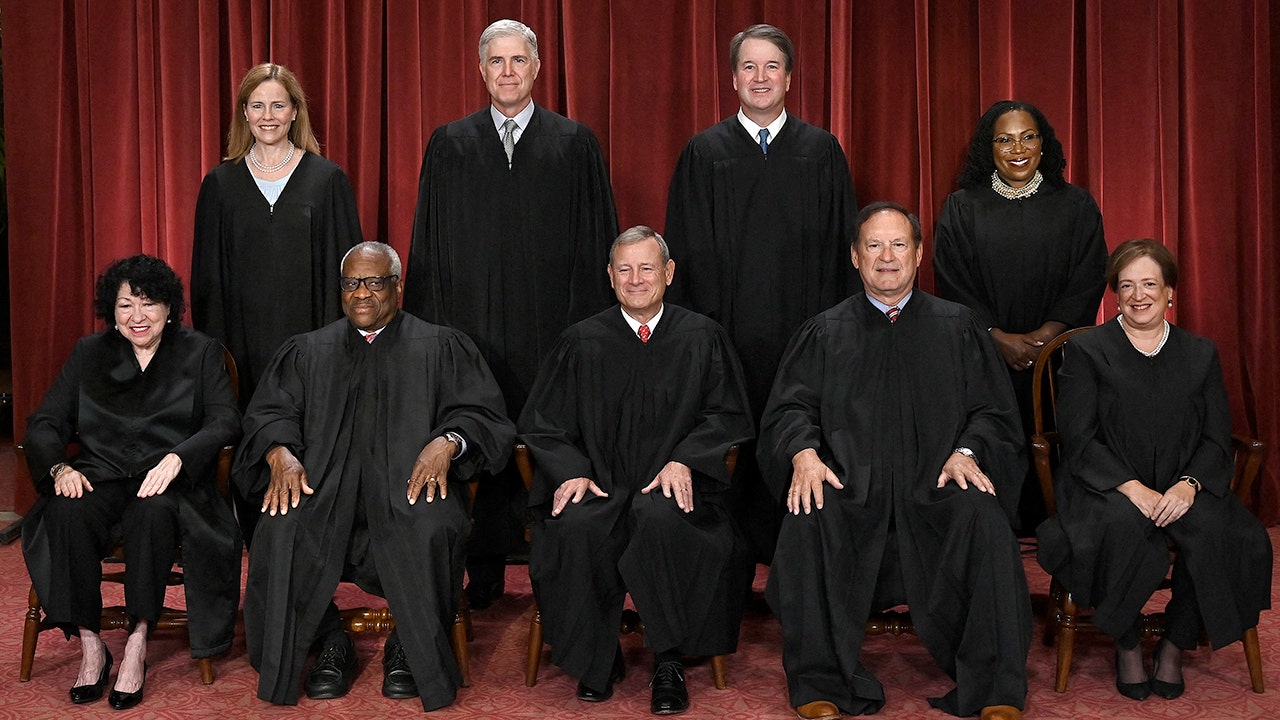
The Supreme Court’s recent ruling in Louisiana v. Callais changes how Section 2 of the Voting Rights Act is applied, pushing back against race-first districting and arguing that representing voters should mean building coalitions and common-ground districts, not carving communities by skin color.
For years maps have been contorted into strange shapes to assemble a racial majority instead of coherent communities. Politicians and activists sliced neighborhoods into pieces, linked distant pockets of voters with thin corridors, and treated people like census data instead of neighbors with shared concerns. That practice reduced citizenship to color and assumed Black voters could not win unless the map was arranged for them.
The court did not take anyone’s vote away, and it did not repeal the Voting Rights Act. What it did was say that race cannot be the overriding principle in drawing districts. That is not a denial of protection for minorities. It is a push for a uniform rule of law and for contests where persuasion and coalition building matter again.
The left’s reaction was immediate and dramatic, with fierce claims of catastrophe and cries of “White supremacy” and “Jim Crow” thrown around like confetti. Those shouts aim to freeze debate and keep the status quo where grievance translates into funding, headlines and influence. The panic is less about rights than about losing a business model built on perpetual victimhood.
There is a class of commentators who extract value from racial fear, and they wasted no time converting a legal shift into a moral emergency. They dress every setback in the language of historical terror regardless of the facts. That cheapens real history and undermines the dignity of those they claim to defend.
The deeper point here is about agency. When Black citizens are treated as objects of special engineering, their civic muscle atrophies. Real power comes from persuading neighbors, organizing locally, and competing under the same rules as everyone else. Those are the habits that build durable influence, not being packed into a safe seat for the sake of optics.
We should celebrate a moment that supports one standard of citizenship where votes count because people engage, not because maps are drawn to guarantee outcomes. Calling that progress does not erase history or deny ongoing inequalities. It does insist on a future where political strength comes from ideas, character and coalition, not from rigid racial categorization imposed by courts or commissions.
As a pastor and a citizen, I reject the narrative that Black voters need to be fenced off to matter. Faith, work, family and neighborly ties form the backbone of civic life. Encouraging Black Americans to build broad alliances and to compete for hearts and minds is not denial of the past; it is belief in the future.
There will be fights ahead over how to implement this principle without ignoring real local conditions. Courts, legislatures and voters will have to balance the protection of minority rights with the rule that race alone cannot be the dominant factor. That debate is healthy when it pushes communities to organize and when it replaces dependency with agency.
Let’s not fall for the instinct to scream catastrophe every time power shifts. Instead, demand policies and politics that respect individuals, strengthen communities, and reward persuasion. If Black citizens are encouraged to win on vision and values rather than engineered districts, that is not a loss, it is a path to enduring influence and dignity.

2 Comments
VIctory Hooray awesome
“As a pastor and a citizen, I reject the narrative that Black voters need to be fenced off to matter. Faith, work, family and neighborly ties form the backbone of civic life. Encouraging Black Americans to build broad alliances and to compete for hearts and minds is not denial of the past; it is belief in the future.”
Makes total sense to me; it’s an excellent decision!!! Congratulations to all!!!