
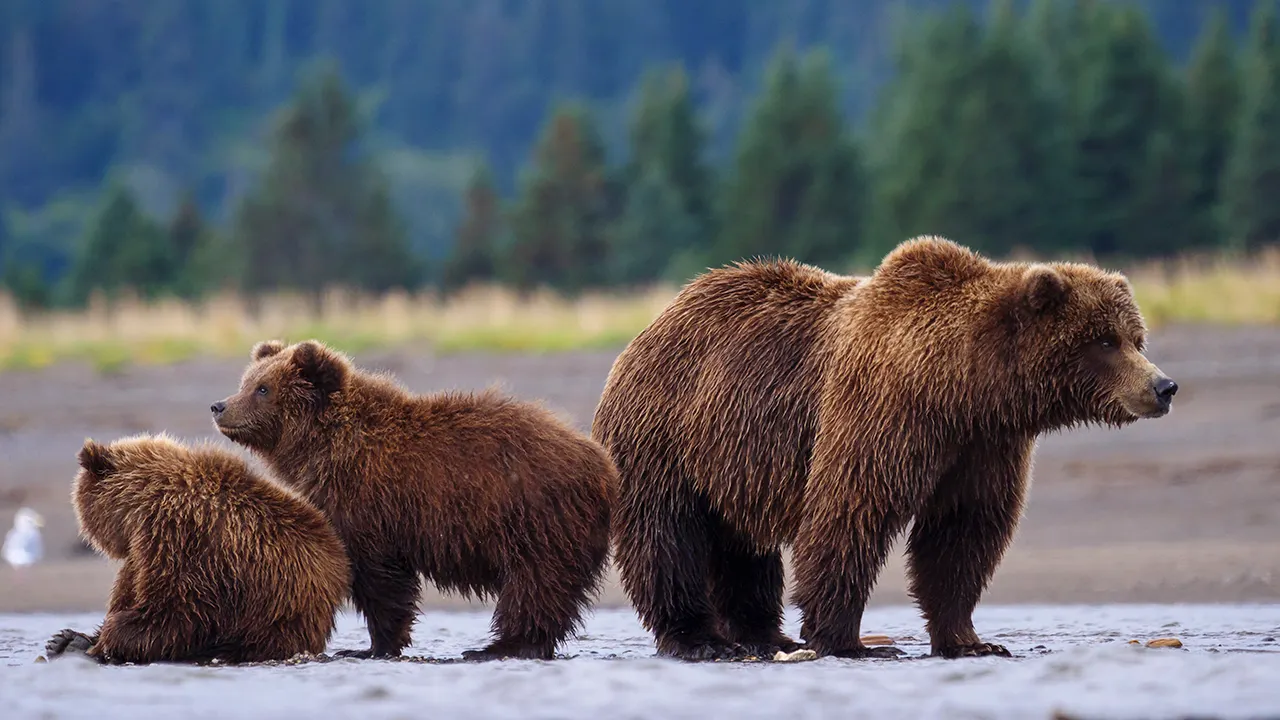
Washington has spent years holding Wyoming at arm’s length on grizzly bear management, even after the recovery numbers told a very different story. Now that the Trump administration has moved to hand more control back to the states, the fight is shifting from federal rulemaking to common sense on the ground, where ranchers, wildlife crews, hunters, and local communities have been living with the consequences all along.
For Wyoming, this is not some abstract policy debate cooked up in a distant office. It is about whether people who actually share space with grizzlies can make smart decisions based on real conditions instead of waiting for Washington to catch up. That frustration has been building for years, because the Greater Yellowstone grizzly population has gone from a fragile recovery story to a clear success story.
Back in 1975, the bears were listed under the Endangered Species Act when there were roughly 136 of them in the ecosystem. Today, that number is estimated at around 1,000, which is a massive increase by any honest measure. The population has not just bounced back, it has pushed beyond the original recovery goals and kept growing.
That matters because the whole point of the Endangered Species Act is supposed to be recovery followed by a return to state management. When a species has clearly recovered, leaving it trapped under federal control starts to look less like conservation and more like bureaucracy for its own sake. In this case, the science has been saying for years that the grizzly is no longer teetering on the edge.
Wyoming has also put real money and effort into making coexistence work. The state has invested tens of millions of dollars in biologists, monitoring programs, and conflict response teams that can move quickly when bears get too close to livestock or people. That kind of local infrastructure does not appear by accident, and it exists because Wyoming has had to carry the burden of managing a recovering predator while federal agencies dragged their feet.
Programs like Bear Wise have helped ranchers and recreationists learn practical ways to live around grizzlies without turning every encounter into a disaster. State wildlife crews also relocate dozens of bears each year before conflicts spiral, which is a lot more useful than waiting until someone is already in a bind. It is a messy job, but it is the kind of job that demands local knowledge.
The problem is that Washington keeps finding excuses to interfere. The grizzly was briefly delisted in 2007, then put back under federal control after activist lawsuits, and the same dance repeated under the Biden administration. Instead of relying on the recovery data, federal officials leaned on uncertainty, delay, and litigation pressure to keep Wyoming and Montana from taking back what they had helped restore.
That kind of approach wears people down fast. Ranchers do not have the luxury of pretending every bear encounter is a policy seminar, and wildlife managers cannot run a serious program by waiting for distant bureaucrats to bless every move. When federal leaders ignore the numbers and side with activist pressure, they end up telling western states that success does not count if the wrong people achieved it.
At the center of this is a basic question of trust. If the law says recovered species should eventually be returned to state management, then that promise needs to mean something. Otherwise the Endangered Species Act stops looking like a recovery tool and starts looking like a permanent federal leash.
Wyoming’s position is pretty straightforward: the people who live with grizzlies should be the ones managing them once the species has clearly recovered. That includes ranchers, hunters, biologists, and local officials who understand both the value of conservation and the realities of living alongside a large predator. They have not only earned that role, they have already been doing the hard work to make it possible.
The new rule from the Trump administration gives that idea a real opening. It signals that states should not be punished forever for success, and it puts science back in the driver’s seat where it belongs. Wyoming is not asking for a free pass, just the authority to manage a species it helped bring back from the brink and now has to live with every single day.
