
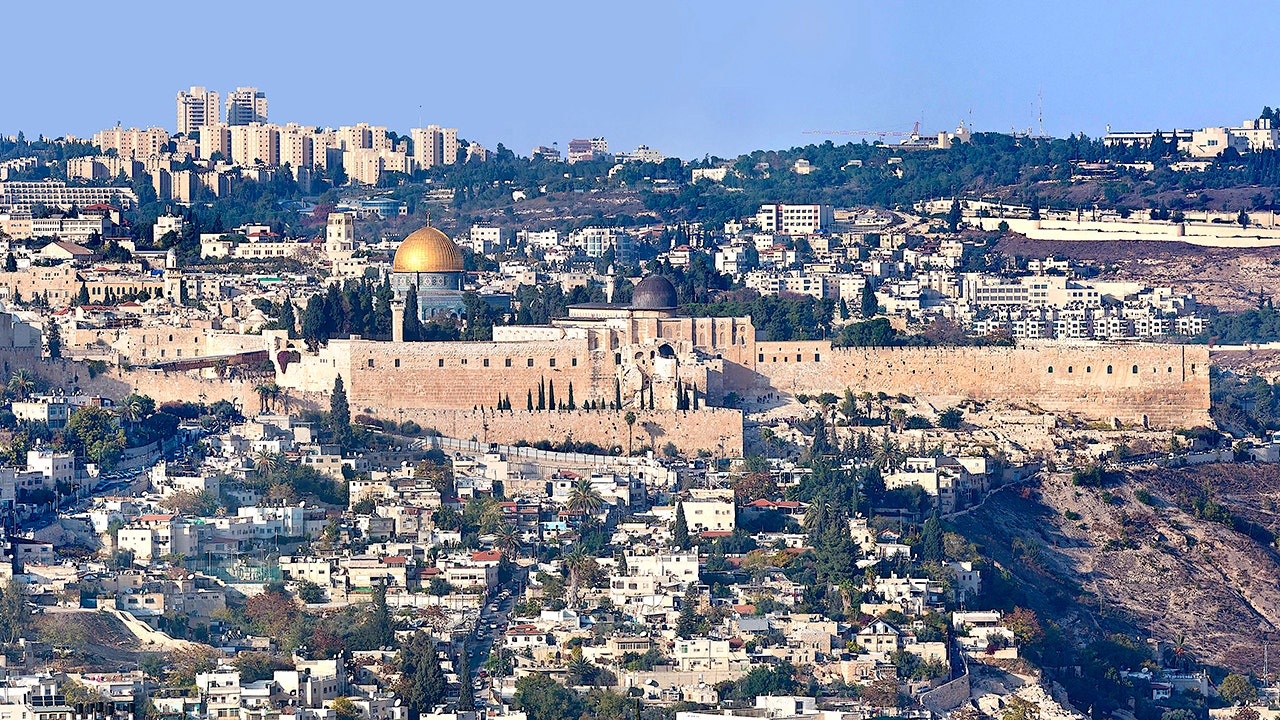
America’s deepest ideas about liberty, dignity, and moral responsibility are often traced to familiar landmarks at home, but this piece argues that the real intellectual spark runs much farther back, to Jerusalem and the City of David. It follows the growing international recognition of that ancient site and ties it to the biblical roots of equality before the law, the right to speak truth to power, and the belief that human rights come from the Creator rather than from rulers.
When people picture the birth of the United States, they usually think of Plymouth Rock, Valley Forge, or Independence Hall. Those places matter, but the argument here is that the Founders were also looking across history for something bigger than geography. They were reaching for a moral framework that could hold up a new nation.
That is why the City of David has become such a powerful symbol. In 2020, the United States formally recognized it as a heritage site, and later Argentina and Guatemala followed with their own acknowledgments. The message behind those decisions is not hard to miss: this place is being treated as a source of civilizational memory, not just as an archaeological dig.
The case being made is simple and forceful. The modern American idea that no one is above the law did not just appear out of thin air, and it did not come from the old empires that prized power for its own sake. It grew out of a biblical worldview that placed kings, citizens, and the poor under the same moral standard.
That is why the story of King David still lands with such force. In the ancient account, Nathan confronted David over wrongdoing, and the king did not erase the messenger or pretend the criticism was treason. He accepted accountability, admitted sin, and moved to make things right, which is the kind of scene that would have sounded radical in a world ruled by unchecked authority.
Thomas Paine later captured that same spirit when he declared that in America, the law is king. The phrase rings through the Revolutionary era because it was more than a slogan, it was a rejection of the old idea that rulers could sit above everyone else and do as they pleased. That conviction helped shape the American refusal to bow to arbitrary power.
The article also points to Jeremiah, another figure from that same city who challenged corrupt leadership and called out injustice. His opponents tried to silence him by tossing him into a cistern, a grim reminder of what happens when power gets nervous about the truth. Even then, the underlying principle stayed intact: speaking honestly to power is not a crime, it is a duty.
There is also an archaeological angle that gives the story extra punch. The seals linked to officials named in the Book of Jeremiah were reportedly uncovered in the City of David, matching the biblical record with striking precision. That kind of discovery makes the ancient world feel less like distant legend and more like a living witness to the ideas that later shaped the West.
The argument keeps returning to a single claim, that rights come from the Creator, not from the state. Jefferson wrote of equality and unalienable rights, and Franklin even framed rebellion against tyrants as obedience to God. Those lines did not emerge from nowhere, because the biblical tradition had already been teaching that human beings possess worth that governments cannot invent or revoke.
That is also why the Founders leaned so heavily on the Bible in their political writing. According to the article, it was cited more than Locke and Montesquieu combined, which says a lot about where they thought the moral foundation of the republic came from. They were not hiding the source, they were standing on it.
So when Guatemala joins the United States and Argentina in recognizing the City of David, it is part tribute, part declaration of identity. These nations are not just saluting an ancient site, they are pointing back to the ideas that made liberty possible in the first place. And in that sense, Jerusalem is not a relic of the past, it is still speaking into the present, one stubborn reminder at a time.
