
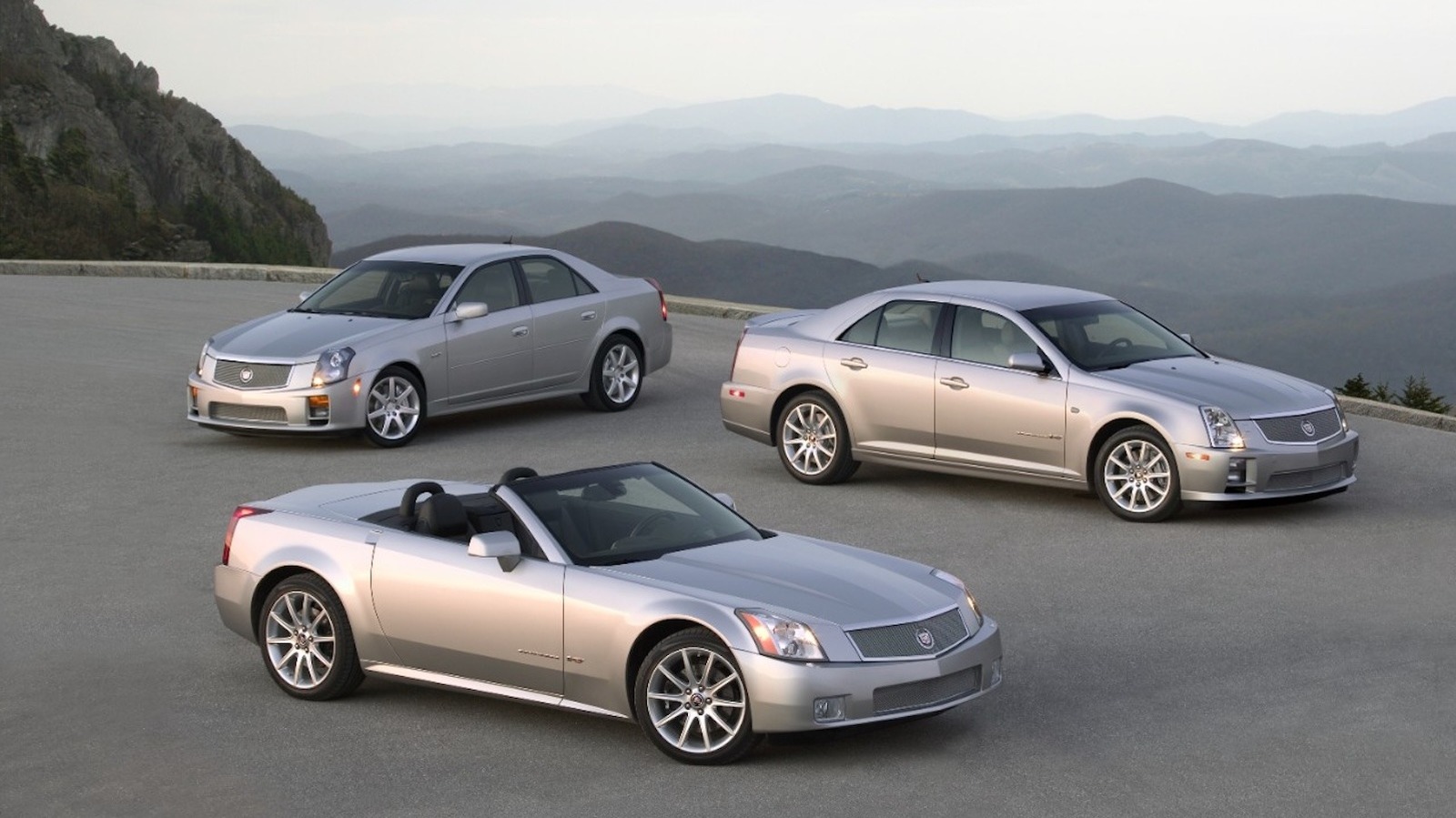
The first-generation Cadillac CTS-V arrived like a surprise punch to the status quo, turning a brand known for soft luxury into something sharper, louder, and far more serious. Built around a manual transmission, a European-tuned chassis, and a 400-horsepower V8, it became the car that proved Cadillac could play in a much tougher league. Its real importance goes beyond the spec sheet, because this sedan helped kick off a new identity for the brand and gave Cadillac a legitimate performance story worth bragging about.
The original CTS-V came out for the 2004 model year, and that alone made it feel like a statement. Cadillac was trying to break away from the image of floaty comfort cruisers and show it could build a sport sedan with real attitude. The result was a car that blended refinement with aggression in a way few people expected from the badge on the grille.
At the heart of it was a 5.7-liter V8 borrowed from the Corvette, paired with a six-speed manual. That combo mattered because it made the car feel focused and honest, not just quick in a straight line. It was a genuine driver’s car, but one that still kept the Cadillac polish people expected when they sat inside.
That balance is part of why the CTS-V stood out so much. It was fast, but not crude. It was comfortable, but not sleepy. For buyers and reviewers used to Cadillac’s older reputation, that mix of speed and civility felt almost rebellious.
Cadillac also made a smart choice by developing the CTS on Europe’s demanding roads and at the Nürburgring Nordschleife. That gave the car a foundation that could handle more than just American highways and boulevard cruising. Instead of chasing domestic muscle-car clichés, Cadillac aimed straight at the German performance sedan crowd.
That target was no accident. The CTS-V was built to challenge cars from BMW M and Mercedes-AMG, which meant Cadillac had to think differently about how it tuned the chassis, steering, and power delivery. Whether everyone agreed it could beat those rivals outright, the effort itself marked a huge shift in how the brand saw itself.
Even the styling and launch strategy showed how unusual the car was for Cadillac at the time. The early color choices were pretty restrained, with black and beige leading the way, which made the car feel a little more serious than flashy. Still, the hardware underneath made sure nobody mistook it for a normal luxury sedan.
The CTS-V also mattered because it launched the V-Series identity that Cadillac still uses today. That badge became the bridge between road cars and racing machines, and it gave Cadillac a performance sub-brand with real credibility. In other words, the CTS-V was not just a model, it was the first loud chapter in a much bigger comeback.
Its racing connection gave that comeback even more punch. The CTS-V.R won its debut race in 2004, which instantly reinforced the idea that Cadillac was not just talking tough, it was showing up and delivering. That same spirit later flowed into modern V-Series performance cars and Cadillac’s top-level motorsports efforts.
Looking back, the first CTS-V feels especially important because it arrived before Cadillac’s performance reputation was fully rebuilt. It helped prove the brand could do more than comfort and chrome, and it did that with a car people could actually buy and drive every day. For Cadillac, that was the beginning of something far more ambitious than a single quick sedan.
