
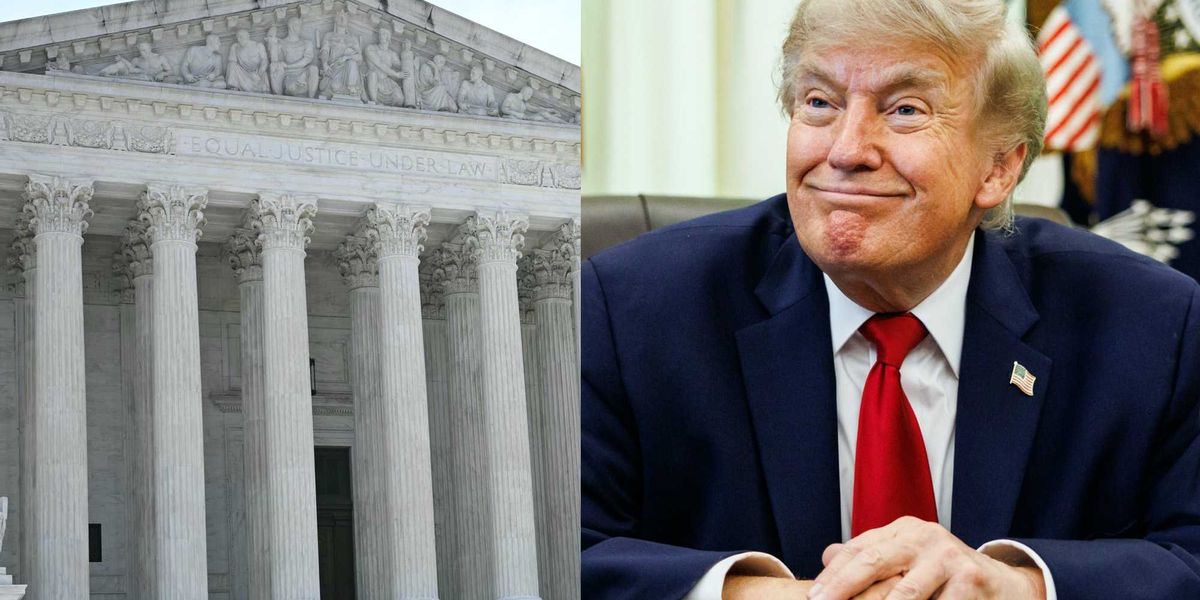
The Supreme Court’s decision in the Slaughter case pivoted the balance of power between the White House and career agency officials, overturning a New Deal era precedent and putting presidential authority over removable subordinates back at the center of constitutional debate.
This ruling reverses a 1935 decision that had insulated many federal officials from at‑will removal, and it does so with a clear six to three vote. Conservatives on the Court saw a restoration of accountability, while dissenters warned of a big shift in how independent agencies will operate. The result is a legal turning point that will shape executive-legislative relations for years.
Chief Justice John Roberts framed the outcome as a simple constitutional reality: “Although it is up to the Senate to decide whether to confirm those with whom the President would prefer to work, neither Congress nor the courts may saddle him with those with whom he cannot work.” That line puts the emphasis back on democratic responsibility—voters elect a president who should be able to rely on people he can direct. The majority argued that accountability collapses if the president cannot remove subordinates who exercise his power.
“Subordinates who exercise the President’s power are subject to removal by him,” he added. “Then, and only then, can they remain accountable to the President, and the President to the people.” Those sentences were the heart of the opinion, and they reflect a straightforward republican view of governance: the executive needs tools to implement policy and answer to voters. For supporters of a strong, responsive presidency this was long overdue.
The case began when Rebecca Slaughter, appointed to the Federal Trade Commission during the president’s first term, resisted removal in the second term and sued to enforce the Humphrey’s Executor precedent from the New Deal. That 1935 decision had insulated certain regulatory commissioners from removal except for cause, creating layers of protection between the White House and agency action. The new ruling dismantles that cushion and clears the way for the president to insist on loyal, accountable leadership in agencies exercising executive functions.
The president celebrated the ruling on his platform, writing “Today’s Historic Slaughter Decision by the Supreme Court is the Greatest Increase in Presidential Power in the last 100 years. Such a Monumental Ruling at such an important time!” That reaction captures why conservatives hailed the decision: it restores tools of governance and makes it easier for an elected president to deliver on campaign promises. It also forces Congress to think harder about how it structures agencies if it wants true independence.
Not everyone agreed. Justice Sonia Sotomayor, joined by Justices Elena Kagan and Ketanji Brown Jackson, warned of sweeping consequences and wrote, “Put simply, today the majority reshapes our Government.” She cautioned that the decision could convert many independent commissions into de facto executive agencies and concentrate power in the presidency. Those are standard liberal concerns about checks and balances, and they highlight the ideological split behind the ruling.
“Dozens of independent commissions are now likely to become purely executive agencies, shifting tremendous power over broad swaths of American life into the President’s hands,” she added. The dissent expresses a fear of politicizing regulatory work, but the majority responded that accountability and responsibility must run together. For Republicans who favor direct electoral responsibility, the risk of politicization is outweighed by the need for a president who can actually govern.
Practically, the decision will ripple through appointments, enforcement priorities, and how Congress drafts statutes that assign powers to commissions. Legislators who want protections for independence can still write them into law, but the ruling makes clear the Court will not easily treat such structures as immune from presidential removal. This forces a new political clarity: if Congress wants true independence it must be explicit and accept the political consequences.


3 Comments
Damned Straight; get it done and clean up the SWAMP NOW!!!
WE the PEOPLE according to OUR CONSTITUTION are the government and those we vote for are subject to the rule of the people who put them in office and those who oppose the rule of the PEOPLE should and must be removed fro office by any and all means available to WE the PEOPLE! ! ! !
This decision… which won’t get much airtime… but is possibly the most important one issued.. .. overturns by a 6-3 vote a 1935 decision that is a major win for Trump and every President that follows… The Supreme Court agrees that any President has the right to fire even career federal employees at his/her will.. The Court said no one in charge of our country, because he answers to the will of the people, should have to work with employees that refuse to work well with the President! America First means America WINS!