
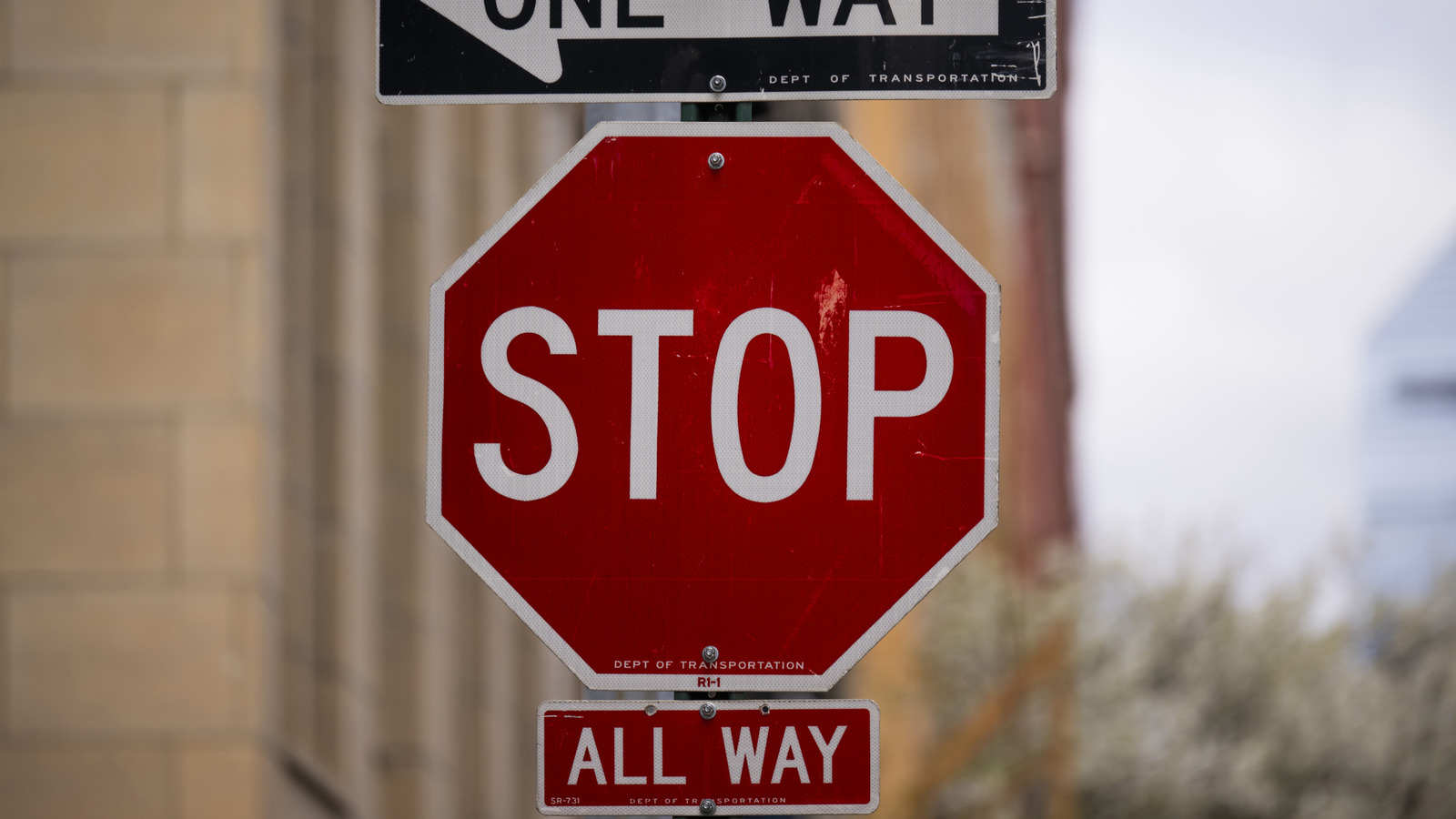
This piece explores why stop signs look the way they do, tracing the choices behind their octagonal shape, vivid color, and consistent lettering, and looks at how those design decisions affect safety, law, and future upgrades.
Walk down a suburban street and the stop sign is one of the few traffic elements you can spot from a distance and recognize instantly. That instant recognition is no accident; the octagon and bright red face were chosen so drivers need no time to puzzle out what they are seeing. Consistency across jurisdictions means the symbol works even when you are traveling far from home. All those tiny decisions add up to fewer collisions and clearer expectations on the road.
The octagon shape is the clearest oddball move we take for granted. Long before reflexive driving, engineers wanted a form that would stand out if the paint faded or a sign was turned. An eight-sided sign gives a unique silhouette, so even in poor light or behind snow a driver can know it means stop without relying on color. That geometric shout works on a subconscious level: your brain identifies shape faster than it decodes text.
Color is the other star of the show. Red grabs attention and signals caution or danger in many contexts, from warning lights to medical alerts. Early stop signs were sometimes yellow, because the red pigments and reflectivity technology weren’t reliable yet, but as materials improved red became standard. The bright red face paired with large white letters ensures contrast at a glance, which is critical when you have fractions of a second to react.
Lettering size and font choices also matter even if they go unnoticed. Big, bold letters reduce the chance of misreading at speed, and the simple block style prevents confusion with other signs. That uniformity is enforced by national standards so a sign in one state reads and looks like a sign in another. When drivers move across state lines, they rely on these tiny type decisions to feel safe and predictable on unfamiliar roads.
Standardization didn’t happen overnight. Agencies studied crash data, conducted visibility tests, and argued over color samples and dimensions. Eventually, manuals and codes codified what had worked best in trials: the octagon shape, red background, white letters, and specific reflectivity standards. Those rules keep a baseline of safety, while local authorities handle placement and timing of signs based on real-world needs. The result is fewer surprises for drivers and clearer enforcement for police.
There’s also a human side to the design. People are far more likely to comply with a sign that looks official and matter-of-fact. The simple, direct command to “STOP” leaves no room for ambiguous interpretation. Combine that with the unmistakable shape and color, and you’ve got a signal that reduces hesitation at intersections, which in turn lowers the risk of rear-end and T-bone crashes. Design here isn’t just aesthetics; it shapes behavior.
Not every country uses exactly the same look, and local adaptations exist for cultural or practical reasons. In some places different colors or languages appear, while in areas with heavy snow some signs get higher mounts or repeated placements. But the core idea—make stop instructions obvious even under less-than-ideal conditions—remains universal. When engineers translate that idea into policy, they pick features that survive dirt, weather, and the occasional vandal.
Modern updates focus on technology without losing the basics that work. Reflective sheeting improved night visibility decades ago, and now LED borders and solar-powered flashers are becoming common at dangerous intersections. Smart signs can alert drivers when a light is red or when a pedestrian is present, but they still rely on the octagon and the red-and-white language everyone already understands. Upgrades should enhance recognition, not replace it.
Maintenance and placement are where theory meets street life. A perfectly designed sign does nothing if it’s hidden behind foliage, leaning, or covered in grime. Municipalities face budgets and priorities, so inspections and timely replacements are key to keeping the system effective. Ultimately the stop sign’s power comes from simple, consistent design plus good upkeep, and together they keep intersections fewer moments of chaos and more moments of clear choice.
