
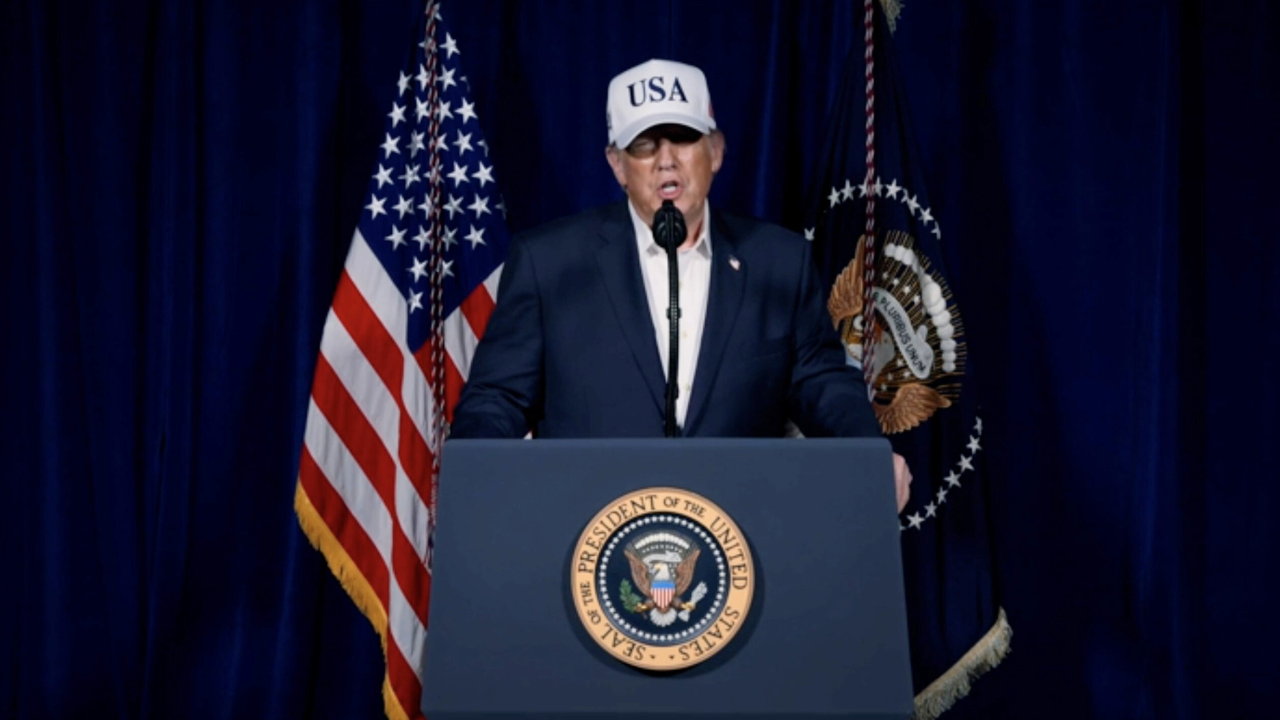
The U.S. struck hard at Iran’s top leadership in a rapid, surgical campaign that removed Ayatollah Ali Khamenei and several senior regime figures, and this piece argues why that action was necessary, lawful, and consistent with the president’s duty to defend Americans.
For decades Iran has sponsored attacks and plotted against the United States, and conservatives see this latest operation as a decisive response after years of provocation and violence. The message here is simple: threats to American lives and forces must be met swiftly and with overwhelming resolve. Supporters of the strike view it as self-defense, not adventurism, aimed at ending an immediate danger to U.S. personnel and interests.
Two recent developments hardened the case for action. Public threats to sink American ships and intelligence detailing assassination plots against the president created a clear and present danger. Those threats forced extraordinary security measures, including decoy tactics to protect the commander in chief, and made a strong response unavoidable in Republicans’ view.
KEY MILITARY SITES TARGETED INSIDE IRAN AS PART OF COORDINATED US-ISRAELI STRIKES
History matters in this debate. Iran’s record — from the 1979 embassy hostage crisis to attacks on American troops and shipping — reads like a long-standing campaign against the United States. Conservatives argue that this is not a single bad actor but a state that has, for generations, supported terrorism and direct attacks on Americans.
Constitutional questions have dominated the post-strike outcry, with critics insisting only Congress can declare war. Yet the Founders carefully chose the word “declare” to distinguish the legislative role from the executive duty to defend the nation in sudden crisis. They left to the president the power to repel immediate attacks, preserving the ability to act when lives are at stake.
As Alexander Hamilton explained in 1801, “When a foreign nation declares, or openly and avowedly makes war upon the United States, they are then, by the very fact, already at war, and any declaration on the part of Congress is nugatory.” That constitutional framing underpins the view that the commander in chief has authority to respond when the nation faces direct aggression. There is no such thing as a one-sided war.
Practical precedent supports rapid executive action. From Jefferson’s naval campaign against the Barbary pirates to modern presidents confronting imminent threats, history shows that waiting for a formal congressional declaration can be deadly. Republicans point to cases where presidents moved to protect Americans without prior congressional votes and argue that the office exists for that reason.
Congress has tools if it disagrees with a president’s decisions, including passing resolutions or controlling funding. The War Powers Resolution tried to constrain executive moves, but presidents of both parties have dismissed it as unconstitutional in practice. When lives and bases are on the line, the executive branch must be able to act decisively while Congress exercises its checks through legislation and funding choices.
OBAMA OFFICIAL WHO BACKED IRAN DEAL SPARKS ONLINE OUTRAGE WITH REACTION TO TRUMP’S STRIKE: ‘SIT THIS ONE OUT’
Critics who call this unlawful often ignore both Iran’s long campaign of aggression and the reality that inaction invites more attacks. Sending money or placating hostile regimes did not stop Iranian malice; those on the right argue that forceful deterrence and degrading enemy capabilities do. The recent operation is framed as practical defense: remove the threat, disrupt the command network, and prevent another catastrophic strike on American forces or allies.
In blunt terms, leadership means protecting the country. If intelligence shows plots to assassinate American leaders or to destroy ships at sea, the commander in chief is expected to act, and supporters of the strikes say he did exactly that. This approach is unapologetically tough and rooted in the conviction that deterrence backed by action keeps Americans safer than diplomatic appeasement.
