
- Cover the Smithsonian’s size, reach, and national footprint.
- Explain its origins and how it grew into a massive museum network.
- Highlight the collection, visitor numbers, and education role.
- Include the controversy over political messaging and historical framing.
- Touch on the White House report and Trump’s response.
The Smithsonian is a giant by any standard, and that is exactly why the debate around it hits so hard. The museum network is not just a tourist stop in Washington, D.C., but a massive cultural machine with a hand in education, research, and the way America tells its own story.
It all started back in 1846, when James Smithson left behind money to create an institution dedicated to “the increase and diffusion of knowledge.” What grew out of that gift is now the world’s largest museum and research complex, stretching far beyond a single building or even a single city.
Today, the Smithsonian owns or leases nearly 700 facilities across eight states, Washington, D.C., and Panama. That adds up to roughly 13.6 million square feet of museums, labs, archives, warehouses, research stations, and support spaces, which is a staggering amount of ground to cover.
The numbers inside the collection are even bigger. More than 157 million artifacts and specimens sit under the Smithsonian umbrella, and the public only gets to see a small slice of that total. About 99% of the collection is stored away in archives, labs, and holding facilities where researchers preserve and study it.
The institution runs 21 museums, the National Zoo, and 14 education and research centers. It also maintains 21 libraries and works with more than 200 affiliate museums and cultural institutions, which gives it influence well beyond its own campuses.
Millions of people pass through its doors every year. The Smithsonian draws more than 30 million in-person visitors annually, while its digital platforms and educational tools reach millions more, making it one of the most visible public institutions in the country.
That reach is a big reason the current fight has turned so heated. Critics on the right, including President Donald Trump, say the Smithsonian has drifted into political messaging and left-wing activism instead of staying focused on history and scholarship.
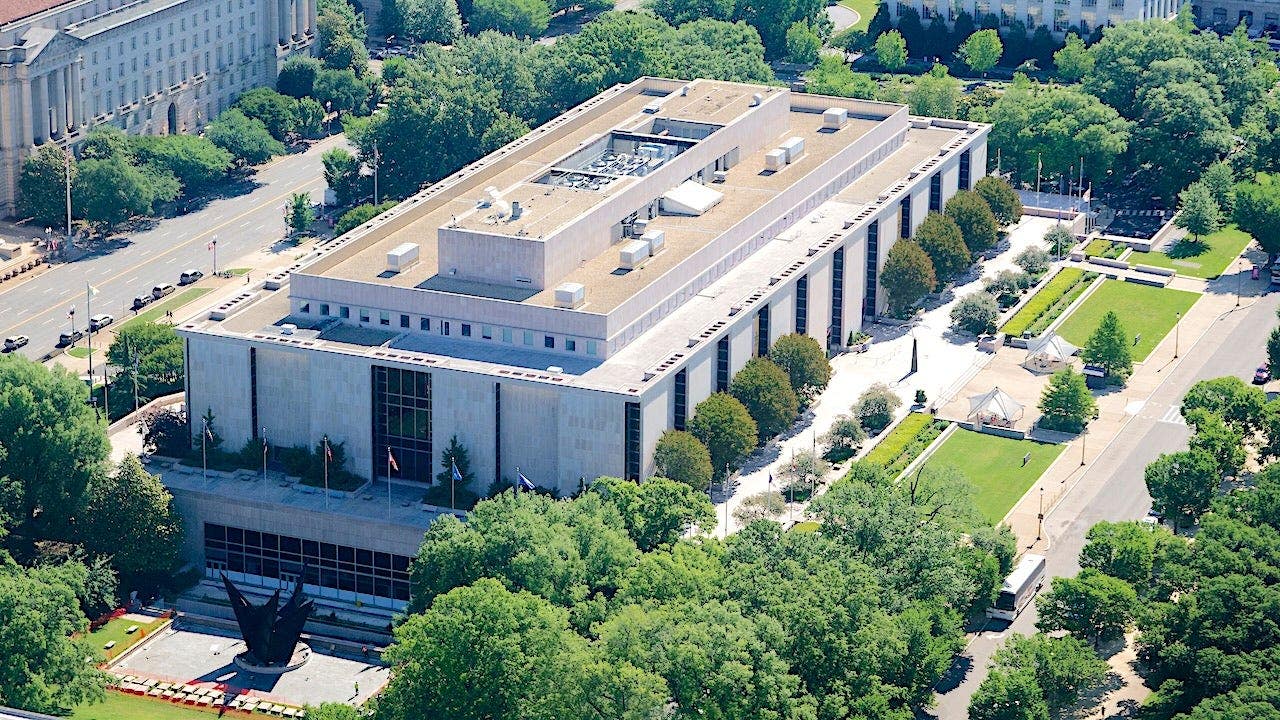
The White House recently put out a report claiming there has been a serious leftist influence inside the institution. The report pointed to comments from Anthea Hartig, the director of the National Museum of American History, saying she views history as a “prime tool of social justice” and sees part of her role as tying “research and scholarship to activism and advocacy.”
Supporters of the crackdown say that kind of language confirms their concerns. They argue museums should present facts, artifacts, and context, not ideological lessons dressed up as education.
The Smithsonian’s education arm is another reason the stakes feel so high. Through the Smithsonian Learning Lab and the Smithsonian Science Education Center, it offers free lesson plans, classroom activities, and virtual field trips used by teachers and students across the country.
It also reaches deep into college life through internships, fellowships, research collaborations, and academic programs. That means the institution is not just shaping what visitors see on the Mall, but also helping shape what students encounter on campuses nationwide.
Trump’s move to direct warning signs outside the National Museum of American History only sharpened the fight. His administration says visitors deserve accurate information about the country’s past, while critics see the move as a blunt challenge to what they call a politically tinted version of American history.
At the center of all this is a simple but powerful question about authority. Who gets to decide how the nation’s story is told, and whether the country’s largest museum network should be a neutral guardian of history or a platform for broader cultural arguments?
