
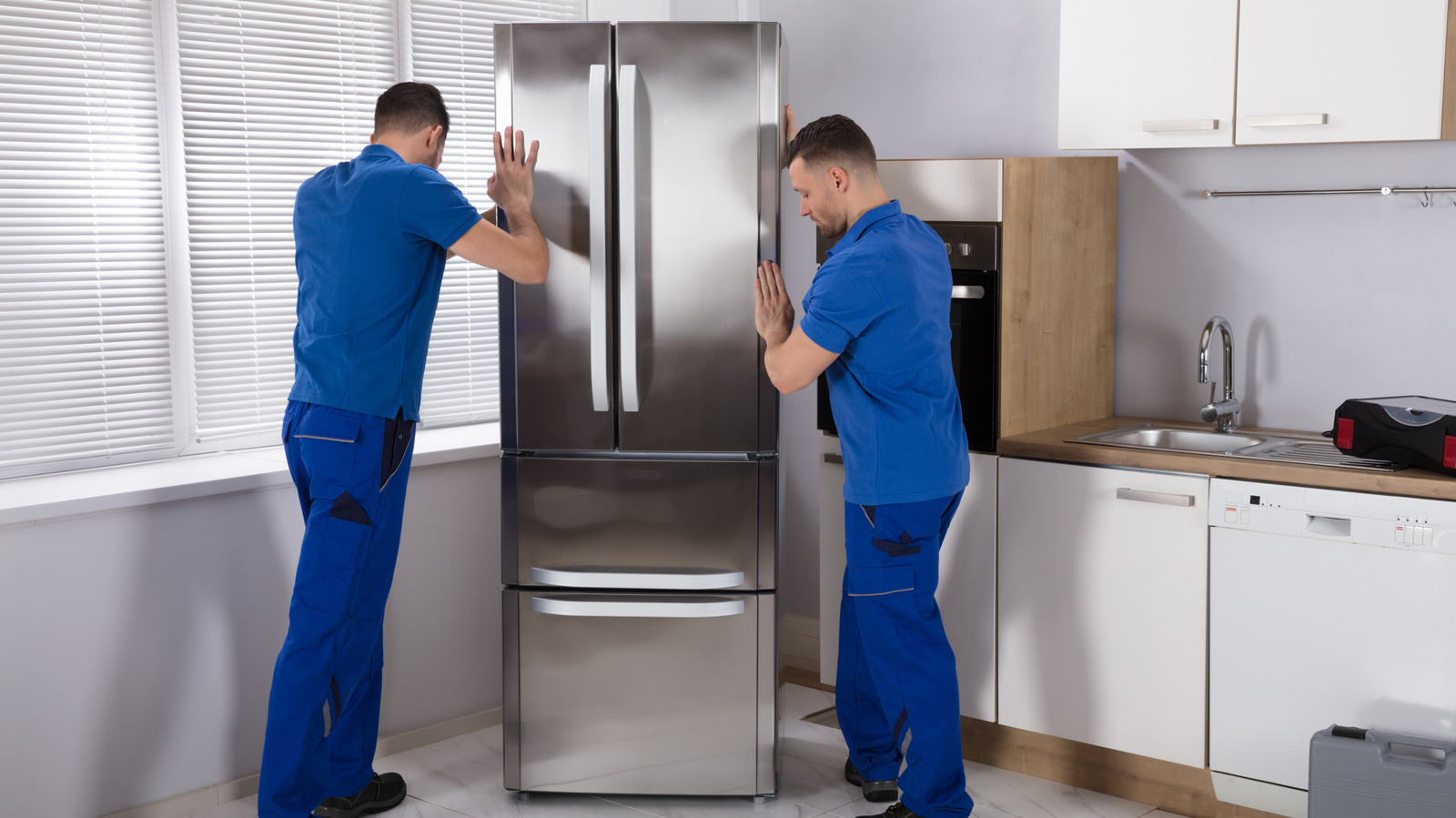
Getting a refrigerator installed right can save a lot of annoyance later. Most units are meant to sit level or just a touch higher in front, and that small detail can affect how the doors close, how the machine runs, and whether odd noises or frost start creeping in.
Some brands ask for a slight backward tilt, while others want the cabinet perfectly level from front to back and side to side. Whirlpool and GE, for example, allow a mild front rise so the doors can swing shut more easily, but Maytag takes a stricter approach and wants everything even.
That difference matters because refrigerators are not all designed the same way. The safest move is to check the specific model instructions before calling the job done, since the manual or brand site usually spells out the exact setup the appliance expects.
When a refrigerator leans too far back, the first clue often shows up at the door. If it snaps shut the moment it is released, the tilt is probably too aggressive, and that can turn a simple kitchen habit into a daily headache.
A fridge leaning the other way can be just as annoying. Doors that fail to latch cleanly may point to a forward lean, which can waste energy and leave food sitting in a less stable cooling environment than it should.
The problems do not stop at the door handle. A crooked appliance can slowly build frost in the freezer, shake more than it should, and throw off a low rattling sound that seems small at first but gets old fast.
That extra vibration is more than a nuisance. It often means the feet are not seated evenly, which puts stress on the appliance and makes the whole setup feel off balance every time the compressor kicks in.
Checking for level is refreshingly simple. Open and close the doors a few times and watch what happens, because a door that slams shut or refuses to stay latched is giving away a lot about the fridge’s angle.
Placement in the room matters too. Even a perfectly level refrigerator should not be shoved tight against the wall, since most manufacturers want at least a couple of inches of breathing room behind it for proper operation.
That gap helps the machine do its job without feeling boxed in. Heat needs a place to go, and airflow around the back can make a real difference in how hard the appliance has to work.
First-time setup brings one more detail people often guess at and get wrong. The wait time before plugging in a new refrigerator is not always the same, so the owner’s manual is the better guide than old kitchen lore or a one-size-fits-all rule.
That last check is worth the extra minute because refrigerator setup is one of those small chores that pays off for years. A unit that sits right tends to stay quieter, close properly, and avoid the kind of slow-burn problems that show up after everyone has already forgotten how it was installed.
