
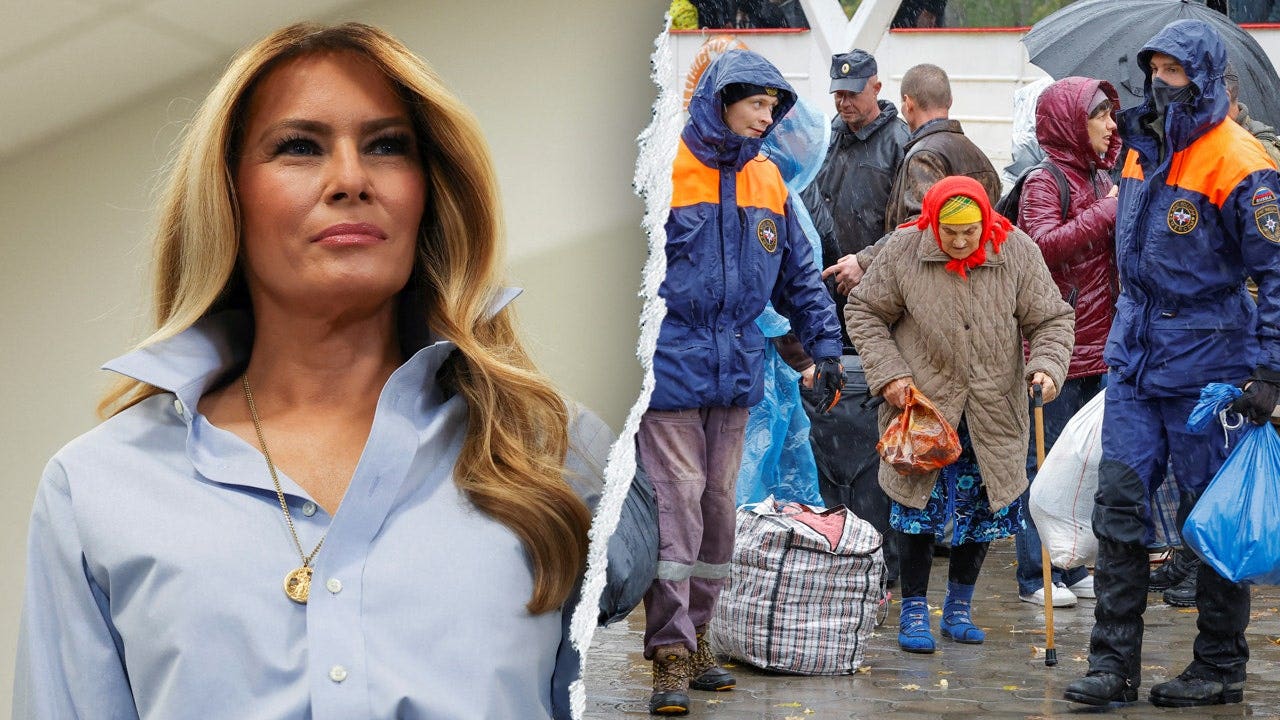
Melania Trump has quietly stepped into a rare kind of diplomatic lane, helping push forward a narrow ceasefire connected to the war in Ukraine. The deal centers on Oleshky, a battered city in Kherson where civilians have been trapped under constant danger, and it opens the door for aid and evacuations. What started as a humanitarian effort grew into a highly specific negotiation between Moscow and Kyiv.
The first lady reportedly spent weeks working between Russian and Ukrainian officials, earning enough trust to act as an exclusive intermediary. That role became especially important in Oleshky, where the fighting had left roads mined, services broken, and food and medicine hard to find. The goal was simple in theory but brutal in practice: stop the shooting long enough to get people out and supplies in.
Oleshky sits just across the Dnipro River from Kherson, and the city has been crushed by the war since Russia took it early in the 2022 invasion. Once home to roughly 24,000 people, it now holds only about 2,000, many of them elderly and unable to leave on their own. The city is still on the front line, which makes any pause in fighting fragile and loaded with risk.
The agreement was worked out through direct engagement with senior officials on both sides and formalized in Belarus. According to the details shared publicly, the arrangement covers humanitarian access, civilian passage, and aid deliveries including food, clean water, medicine, and doctors. It also sets the stage for safe exit routes for residents who choose to leave Russian-occupied territory.
That kind of deal is not just about words on paper. It takes maps, routes, timing, and military boundaries, because one wrong move in a place like this can blow everything up in seconds. The negotiations reportedly went deep into the weeds, down to what equipment could enter the area and how evacuation operations would be staged.
Melania Trump’s involvement in the region did not come out of nowhere. She had already worked on efforts tied to Ukrainian and Russian children, helping reunite families across multiple exchanges before shifting attention to the humanitarian crisis in Oleshky. That earlier work appears to have laid the groundwork for the broader trust needed to get this deal done.
What makes the arrangement stand out is how limited and specific it is. It does not end the wider war, and fighting continues across Ukraine, but it does create one narrow corridor where civilians can be helped without immediate crossfire. In a conflict full of stalled talks and failed hopes, even a small opening can matter a lot.
The timing was also messy, which is no surprise in a war zone. Officials initially planned one start date, then moved it up when momentum kicked in and both sides finally agreed to the terms. The final signing came after hours of extra bargaining, showing just how thin the margin was between a deal and another collapse.
The operation is expected to run for about a week, with the possibility of an extension if needed. That leaves room for more humanitarian work in the Kherson region later on, including regular aid deliveries and repatriation efforts if both governments stay on board. For now, the focus is on keeping the passage open and letting civilians decide what comes next.
Russia and Ukraine may still be locked in a grinding war, but this one corner of the map briefly looks different. Humanitarian convoys are set to move, residents are supposed to have a way out, and civilian-led access is meant to keep soldiers from turning the mission into another battlefield. In a war defined by hard edges, this deal lives in the thin space where relief is still possible.
