
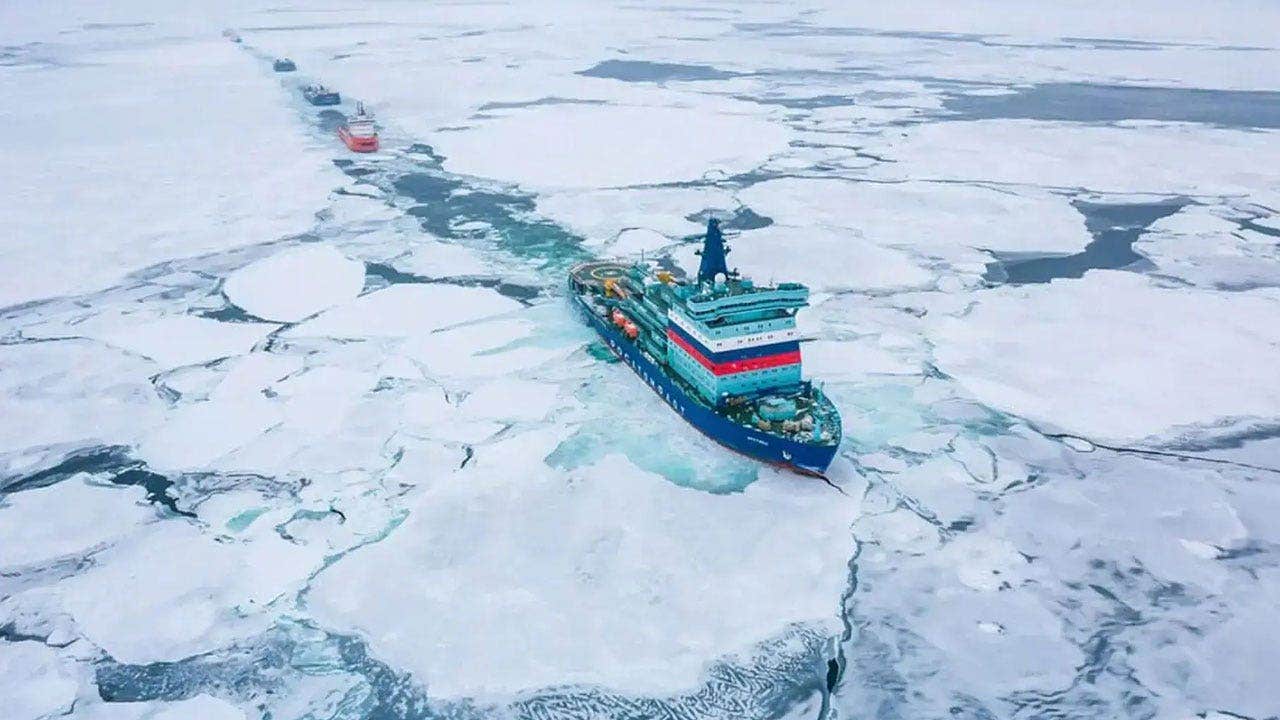
America’s northern flank is getting a lot less forgiving, and the Arctic is no longer some distant blank spot on the map. A Coast Guard icebreaker breakdown this summer cut U.S. capability in half just as Chinese vessels were moving nearby, exposing how thin the American presence really is. The pressure is growing fast, and the race to keep up is playing out in rough water, brutal weather, and long distances that punish every weak link.
Rear Adm. Bob Little, who leads the Coast Guard’s Arctic District, said the failure of the Coast Guard Cutter Healy left only one of the two planned icebreakers available for work in the ice. At the same time, four Chinese research vessels were operating in the region, putting an already stretched U.S. posture under even more strain. That kind of timing makes the problem hard to ignore.
The core issue is simple: the Arctic is opening up, but the U.S. still does not have enough hardware to stay active there with confidence. Shrinking sea ice is making more of the region reachable, which means more shipping, more resource interest, and more military traffic all showing up in places that used to stay locked down. When the environment changes that fast, hesitation turns into weakness.
Little said the need for more icebreakers is obvious, and the Coast Guard is trying to build out its force with billions in new funding. Plans call for 11 new Arctic Security Cutters, with the first expected to arrive in the region as early as 2028. That helps on paper, but it does not solve today’s problem, and today is when China and Russia are already working the waters.
China’s growing presence is drawing attention because research missions can do more than gather harmless data. These ships can study sea ice, underwater terrain, and operating conditions in ways that may help with future commercial ambitions and military planning. The concern is not just what they are doing on the surface, but what they are learning about the region beneath it.
Little said Chinese activity has grown from an occasional single vessel to several ships working in the Arctic more regularly. The Coast Guard Cutter Munro spent 112 days patrolling the region and monitoring those ships, and Little said nothing on the surface appeared to break customary law or international norms. Still, legal behavior does not mean the activity is harmless.
That is where the deeper concern kicks in. Every hour spent in the Arctic gives China more experience in a harsh operating environment where it has historically had little exposure. Analysts say that knowledge can feed into broader military capability, including submarine warfare planning, and that makes research missions worth a much closer look than they might seem at first glance.
Troy Bouffard of the University of Alaska Fairbanks said China is clearly trying to gain operational experience and sharpen its understanding of the Arctic. He noted that the U.S. faces a tougher challenge than just a ship count problem, since the North Pacific side of the Arctic has less infrastructure and fewer support systems than areas where the U.S. and allies have operated for decades. If there is no surface presence, responding to trouble gets a lot harder.
Distance makes everything worse. Getting a ship into the Bering Sea from places like Kodiak, Anchorage, or Seattle can take days, and that delay matters when the region is becoming busier and more contested. Russia already has a major edge because its much larger icebreaker fleet lets it move ships, supplies, and patrols through the region with far more ease.
Little said that advantage clearly favors Moscow, especially when the mission is to maintain access and keep sea lanes open for both commercial and military use. He also pointed to the growing cooperation between Russia and China, including joint surface activity, coordination between coast guard forces, and research vessels that may be sharing information. When those two operate together, the Arctic stops looking like a side story and starts looking like a live national security problem.
