
- Focus on the new self-dressing clothing idea
- Explain why dressing can be hard for older adults
- Describe how the soft robotic garment works
- Cover the research test results and speed
- Look at possible real-world uses and limits
Getting dressed is one of those daily chores most people barely think about until it turns into a hassle. For older adults, people recovering from surgery, or anyone dealing with limited movement, a simple shirt or pair of pants can suddenly feel like a full-body workout. That is why a new self-dressing clothing system from researchers at KAIST and Stanford is getting attention.
The concept is pretty wild in the best way. Instead of asking the wearer to twist, pull, and tug everything into place, the garment uses soft, air-powered robotics built into the fabric to do some of the heavy lifting. It is still a research prototype, but it points toward a future where clothes could help people stay independent at home longer.
The system is designed around a very real problem: dressing can be physically awkward and exhausting. Reaching behind your back, lifting your arms overhead, or balancing on one foot while pulling on pants can be tough even on a good day. Add arthritis, shoulder pain, hip recovery, or unsteady balance, and the routine becomes much more than a minor annoyance.
That matters because dressing is tied to independence. When someone starts needing help with clothes, they often need help with other daily tasks soon after, and that can chip away at privacy and confidence. The researchers say their goal is to reduce that dependence with clothing that can guide itself around the body instead of making the person do all the work.
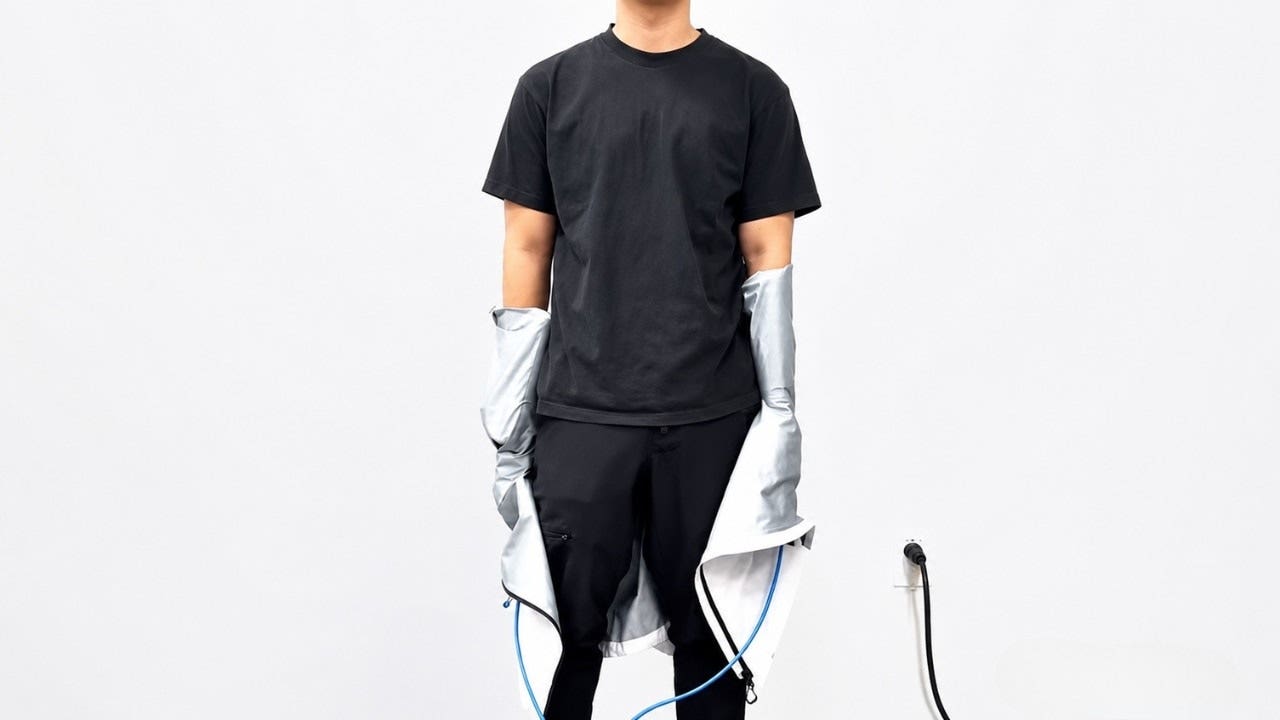
The project is called SWAG, short for Self-Wearing Adaptive Garment. It uses flexible robotic tubes embedded in the clothing, and air pressure makes those soft structures unfold and move along the body. Rather than dragging fabric across skin in a clunky way, the garment turns inside out as it advances, which helps it follow the wearer’s shape.
That motion sounds unusual, but the logic is simple. Think of it like a plant growing outward from a tip instead of being pulled along from behind. Because the mechanism is soft and built into the garment itself, the system can bend around curves and move more naturally than a rigid robotic arm trying to force clothing into place.
The idea started with a very normal annoyance. One of the researchers was riding a bike when rain began to fall, and it sparked the thought that a raincoat would be a lot more useful if it could put itself on. That quick moment of frustration turned into a bigger question about whether clothing could actively help a person get dressed.
From there, the team built prototypes for sleeves, jackets, and pants. In demonstrations, the full suit could be put on in about 10 seconds, with individual pieces taking roughly 13 seconds for a jacket, 21 seconds for pants, and around 14 seconds for a sleeve. The researchers say the garments stayed within safety limits for contact force, which is a big deal for any technology meant to work directly on the body.
What makes this approach different from many dressing robots is the softness. Traditional systems often rely on mechanical arms that must carefully handle loose fabric while keeping a person in place. That can feel stiff, awkward, and honestly a little uncomfortable, especially in a home setting where people want something private and low-stress.
By putting the robotic function inside the clothing, the system tries to make the helper feel less like a machine and more like part of the garment. That could matter a lot for older adults, rehabilitation patients, and people with disabilities who may need help after an injury or medical procedure. The researchers also see possible uses in workplaces where people need protective gear quickly, such as cleanrooms or emergency response settings.
There is still a long road ahead before anything like this reaches everyday life. The prototype depends on a pneumatic base station, so it is not yet something you would toss into a closet or wash like normal clothes. Future versions would need to fit different body types, handle storage and cleaning, and work without bulky equipment attached.
Even so, the idea has real momentum because it tackles a problem people face every single day. If the technology becomes portable, reliable, and comfortable, it could make a quiet but meaningful difference for people who want to keep getting dressed on their own. That is a small-sounding change with a huge impact when the morning routine is the difference between needing help and keeping your independence.
