
California’s redistricting fight has taken a sharp turn, with the strategist behind a Democratic map now arguing that the whole country needs to step back from the partisan knife fight. The story centers on Paul Mitchell, whose work helped Democrats gain ground in California, even as he now urges lawmakers to clamp down on the very kind of map-making that fueled those wins.
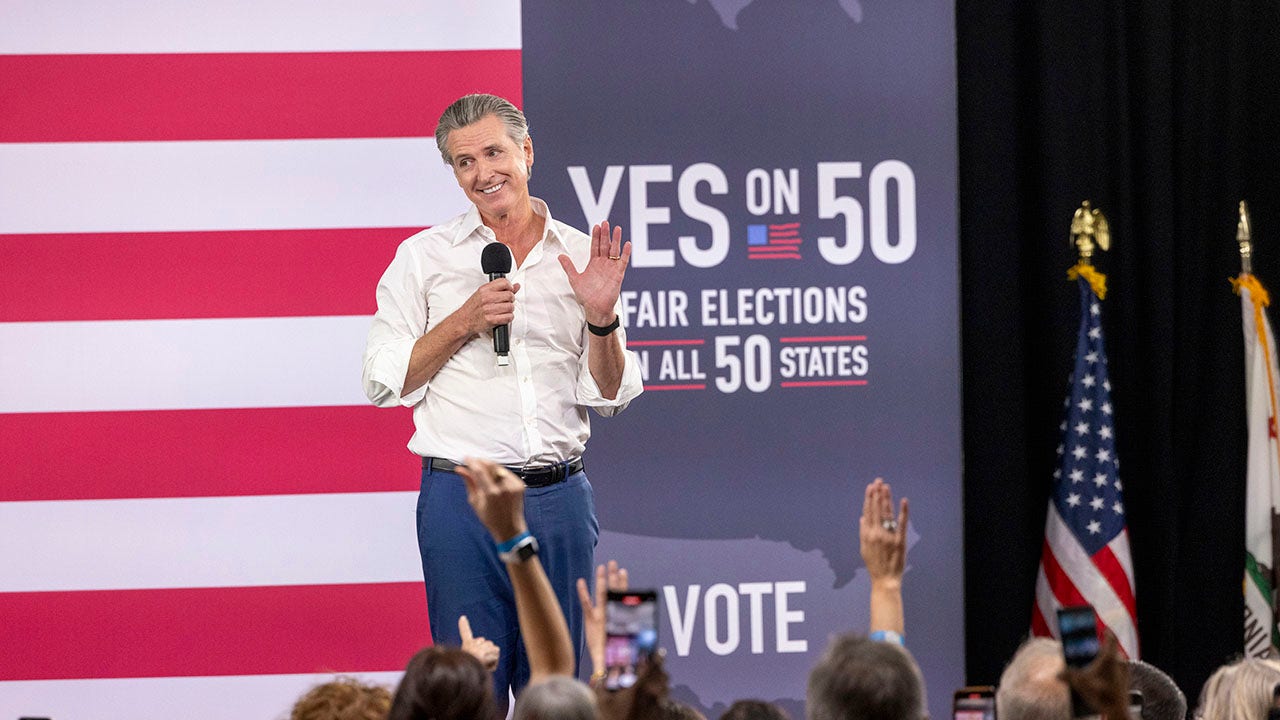
Mitchell said Democrats should support an end to partisan gerrymandering nationwide and push for rules that keep states from slicing up districts for political gain. His latest comments follow California voters’ approval of Proposition 50, a temporary map change that replaced the state’s independently drawn congressional lines with a plan that favored Democrats through 2030.
In his own framing, Mitchell did not hide what Prop 50 was designed to do. He admitted the measure was meant to help Democrats, but he defended it as a response to Republican moves in other states, especially Texas, where map changes triggered a broader battle over who gets to shape congressional power.
He also insisted the timing of his warning against gerrymandering was not some political stunt. Mitchell said the op-ed was always meant to follow the election and pointed to a CNN interview during the campaign where he said the answer was to stop the redistricting war instead of escalating it further.
That message did not soften his view that California’s temporary map was justified. Mitchell called Prop 50 “the right response” to what Republicans in Texas were doing, while also saying that if Congress had stepped in sooner and banned mid-decade redistricting, he would have supported that too.
He went even further, saying a national standard would have been the cleaner fix. In his view, the real goal should be to stop states from treating district lines like a political weapon, especially when they are drawn to lock in advantages long before voters even cast a ballot.
Mitchell argued that Republicans may now be more open to reform after taking losses in the midterms. That’s a key point in his pitch, since he believes hard defeats can sometimes make party leaders more willing to support limits they once rejected outright.
California, though, is still left with the reality of the maps it approved. Mitchell said the Prop 50 lines are likely to stay in place through 2030, and he wants the focus shifted toward fixing the process before the next round of post-census map drawing begins in 2031.
He said Congress should bar mid-decade redistricting, but he also made clear that alone would not solve everything. The deeper problem, he argued, is that even normal redistricting after the census can still be twisted if politicians are left to protect their own interests.
That’s why Mitchell said independent commissions are the best answer. Under that approach, the line-drawing process would be pulled away from party bosses and handled by bodies meant to act with more distance and less obvious political pressure.
Democrats in California have portrayed Prop 50 as a direct answer to Republican power grabs, while Gov. Gavin Newsom has cast it as a fight against Donald Trump and allied state leaders. The messaging has been loud and blunt, and it has fit neatly into a broader national mood where both parties are trying to outmaneuver each other before the next election cycle.
The results in California were hard to miss. Democrats flipped all five of the House seats targeted by their redistricting push, giving the party a major boost and making the state the latest battleground in a fight that keeps spreading from one election to the next.
Mitchell, who works in voter data and has spent years on redistricting projects, has argued that sitting still would have been a mistake. Even with that view, his latest stance puts him in the strange position of defending California’s tactical move while warning that the country cannot keep normalizing the same kind of arms race forever.
That tension hangs over the next phase of the fight. States are already eyeing new map battles ahead of the 2028 cycle, and leaders in both parties know the lines on the map can matter just as much as the speeches on the stump.
