
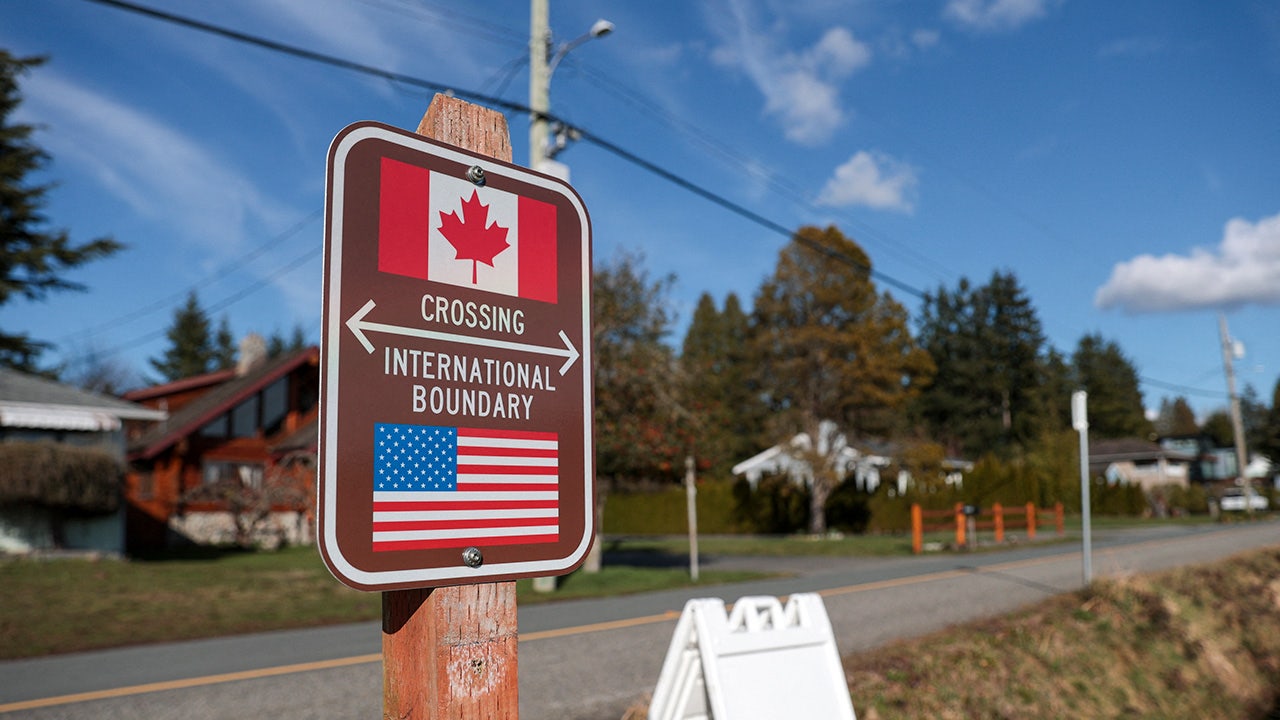
The U.S.-Canada relationship is more than polite neighbors arguing over trade and hockey; it’s a strategic partnership with deep roots in history, shared security systems, and complementary resources that can shape global power and prosperity if leaders choose cooperation over politics.
A recent Olympic win by the U.S. hockey team was a reminder that Americans and Canadians are locked together by culture and competition even when capitals disagree. Five U.S. players, including goalie Connor Hellebuyck, play on Canadian NHL teams, while 22 Canadians skate for American clubs, a small sign of how intertwined our lives and leagues are. Sports bubbles up in headlines, but it’s the behind-the-scenes ties that matter most for policy and security.
Leaders ought to move past petty spats and focus on substance, because the partnership here is real and productive. “Forged in history” captures that bond: it’s not sentimental fluff but a record of joint sacrifice and shared strategic decisions. Washington and Ottawa have the capacity to turn cooperation into clear national advantage when they choose to do so.
Canada’s role in World War II is a good example of how that practical cooperation looks. The Canadian Royal Navy expanded from a mere 13 ships in 1939 to over 400 by 1945, protecting convoys and helping win the Battle of the Atlantic. More than 1.1 million Canadians served in uniform with roughly 45,000 killed, a higher per-capita military sacrifice than the United States during the same era.
That wartime partnership extended into secret atomic research and later into intelligence sharing, where Canada became a core member of the Five Eyes alliance. The Five Eyes division of labor assigned Canada responsibilities that remain vital today, including monitoring the polar approaches and parts of Asia we cannot ignore. Those capabilities matter in an era when great power rivals probe for advantage in the Arctic and beyond.
On the economic front, the two countries together control a huge share of global energy supply—about 30 percent of natural gas and about a quarter of world oil production. Coordinated moves on LNG exports, cross-border pipelines, and shared infrastructure could reshape markets in short order, far quicker than relying on unstable foreign suppliers. Projects like the suspended XL Pipeline highlight the gains possible when policy prioritizes energy security over ideology.
Critical minerals are another arena where U.S.-Canada cooperation can blunt China’s grip on supply chains. Canada already sits on major reserves of lithium, cobalt, nickel, graphite and other materials essential for batteries and defense technologies. A robust partnership could rebuild North American mining, processing, and refining capacity while setting high environmental and safety standards that democratic allies can emulate.
Maritime strength is often overlooked but it’s vital to trade and defense. Canada controls half of what some call North America’s “Fourth Coast” along the Great Lakes, an historic hub of shipbuilding. Recent moves to bring large-scale shipbuilding back to Ontario, including partnerships with global builders, show how Canadian industry can help restore allied naval and commercial shipbuilding capacity.
Defense architecture also benefits directly from Canadian territory and assets, especially in the Arctic. Plans like the Golden Dome missile defense concept depend on northern sensors, radar installations, and logistical basing that only neighbors with intimate geographic access can provide. That kind of cooperation isn’t theoretical; it’s the practical scaffolding for continental defense.
Politics will always toss up moments of friction, but the choices are simple: let short-term squabbles weaken a vital alliance or lean into the clear, strategic advantages that cooperation yields. Ottawa and Washington can build energy resilience, secure mineral supply chains, restore industrial capacity, and harden continental defense if leaders act with purpose rather than pique.
