
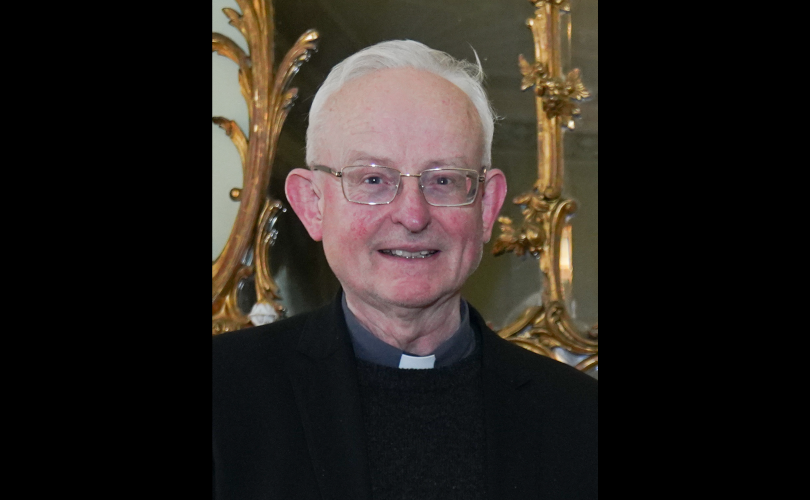
Bishop Hugh Gilbert of Aberdeen has drawn a hard line after the consecration of Michael Mary Sim, the founder of the Transalpine Redemptorists, declaring him guilty of schism and cut off from the sacraments. The dispute sits at the center of a wider break with Church authority, and the fallout now reaches the tiny religious community Sim built on a remote island off Scotland.
Gilbert said the diocese completed its canonical process and concluded that Sim’s actions, along with his public rejection of Pope Leo XIV and the popes before him, left him outside full communion with the Catholic Church. He also said Sim was now excommunicated, removed from ecclesiastical office, and barred from celebrating Mass or any other sacraments.
The bishop’s statement did not stop with Sim alone. He said the consecration pulled the whole Transalpine Redemptorist community into the same rupture, warning the faithful to avoid contact with them and making clear that he saw the move as a deliberate break from Church order.
That warning came after Sim was consecrated as a bishop by Bishop Pierre Roy, an act carried out without permission from Rome and without the papal mandate the Catholic Church normally requires. Sim’s order had already staked out an aggressive position in public, describing recent popes as false and treating the reforms of the Second Vatican Council as a disaster for the Church.
Gilbert made it plain that he viewed those claims as more than a theological argument. “All of this is instinctively repugnant to the Catholic sense of the faith, exposes those involved to ecclesiastical penalties and, unless repudiated, separates them from the communion of the Catholic Church,” he wrote.
In the same announcement, the bishop said that the diocese had now finished its process and reached judgment. “On its side, the Diocese has now completed its canonical process and pronounced its judgment. Regrettably, I find Fr. Michael Mary guilty of the charges brought against him, most notably that of schism,” he stated.
He added that church authorities in Rome had been kept informed throughout the proceedings. He also left the door open, at least in principle, to a future reversal if Sim sincerely repented and made reparation for the rupture.
The consecration itself was the culmination of a long slide. In June, the Transalpine Redemptorists announced that their founder would be made a bishop, and Gilbert quickly described that plan as a grave act of disobedience. He urged the faithful not to attend, saying the planned ceremony only deepened the split.
The group behind the controversy is small but unusual, made up of just over two dozen priests and brothers living on Papa Stronsay, a remote island north of Scotland. Founded in 1987, the community later reconciled with the Vatican in 2012 and also operates in the United States and New Zealand.
Even so, the order has been drifting into open conflict for some time. Last year it published an open letter accusing the hierarchy of breaking the chain of command, and in May it escalated further by calling Popes Paul VI through Leo XIV antipopes while denouncing the Second Vatican Council and calling for an “Imperfect General Council.”
Those moves set the stage for the current showdown. Gilbert had already signaled that such claims were incompatible with Catholic teaching, and he repeated that Sim’s public declarations about the papacy and the Church’s authority were enough to trigger serious canonical penalties if not withdrawn.
At the same time, the bishop has also taken a narrower pastoral approach with some of the community’s priests. Before Saturday’s consecration, he allowed two Redemptorist priests who had separated themselves from the leadership to offer the Traditional Latin Mass weekly at a parish in Fetternear, expanding an earlier arrangement that had allowed the Mass only once a month.
The situation around the island community has grown more tangled in recent months. Several monks and priests have reportedly left suddenly, and one 24-year-old monk vanished in April before his body was later found in the water off Stronsay in May.
There have also been accusations from former members about psychological pressure inside the order, though some supporters and former insiders have said the discipline, while harsh at times, was intended to help members live the rule more faithfully. That mix of loyalty, fear, and conflict now hangs over the group as the latest church ruling lands with real force.
