
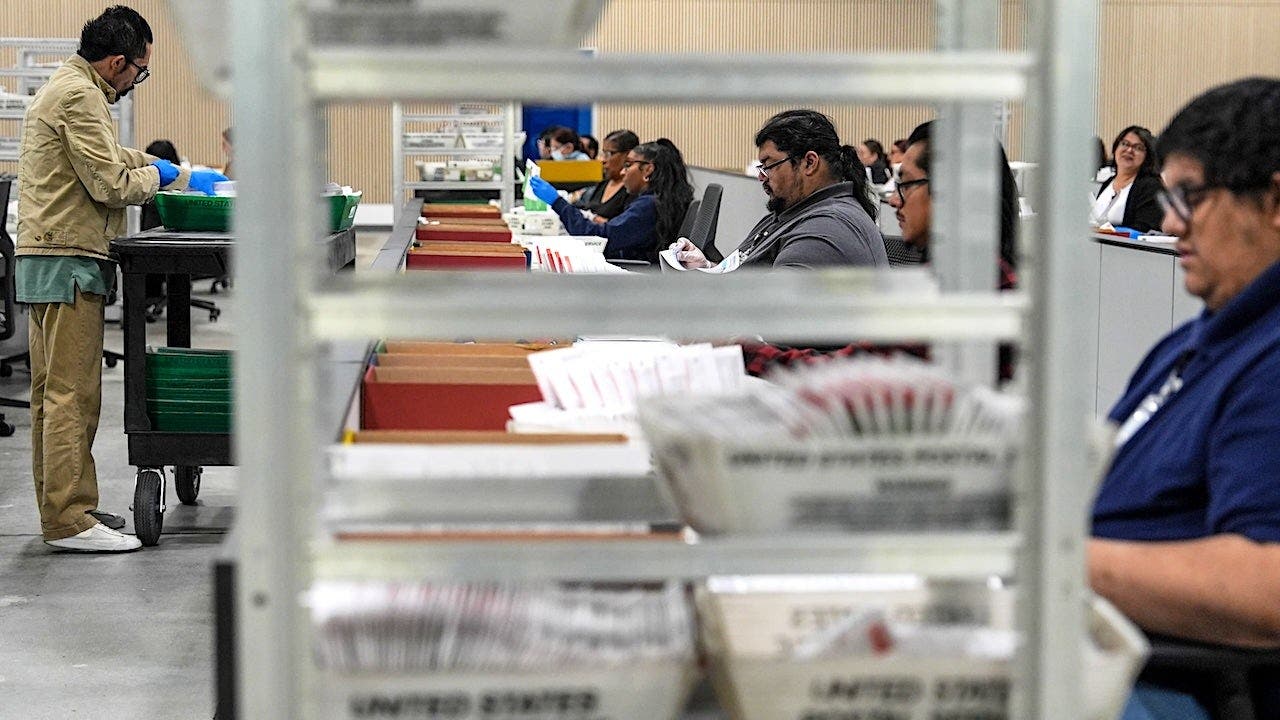
A federal judge has refused to freeze California’s ballot counting process after the Justice Department tried to stop the state from tallying mail ballots tied to alleged noncitizens. The ruling dropped into the middle of an election already in motion, with millions of votes already cast and state officials warning that pulling ballots aside now would cause chaos.
Judge David Carter said the government’s emergency push would go too far, especially with the process already underway. He argued that halting the count would throw the election into disarray, unsettle voters and poll workers, and even risk discounting lawful votes from American citizens.
The fight centers on claims that more than 20,000 noncitizens may be on California’s voter rolls. The Justice Department wanted those ballots set aside right away, but Carter made clear that the timing mattered just as much as the allegation, since ballots were already being processed and sorted.
California’s scale makes the dispute especially messy. The state sends ballots to all 23 million registered voters, and court filings said more than 3.7 million people had already voted, including over 500,000 ballots processed this week after being removed from envelopes.
That detail mattered because local officials said it would be impossible to match many of those ballots to individual voters at this stage. Once the count is rolling and ballots are mixed into the system, the ability to separate one vote from another starts disappearing fast.
The Justice Department did not let the ruling sit for long. It quickly appealed to the Ninth Circuit, and Bill Essayli said the emergency request had been denied, but the fight was not over. He argued that every day more ballots were being processed and said the issue was not abstract, but a live threat to the weight of lawful votes.
Essayli also pushed back on the idea that the case rested on shaky claims, saying the evidence came from public declarations and record comparisons. He said voter rolls were checked against immigration, Social Security, and passport records, and he stressed that the government was not changing rules in the middle of the race, only enforcing them.
On the other side, California leaned hard on the idea that election authority belongs to the states. Carter echoed that broader point, while also saying the federal government had not explained why counting ballots would block any prosecutions or legal action tied to the allegations.
He also used unusually sharp language about the risk to public trust. In his view, once ballots are singled out and separated, the damage is already done, and a court should not help create that kind of lasting harm on the basis of unproven claims.
The case fits into a bigger national battle over noncitizen voting and election integrity. President Donald Trump has repeatedly said states are not doing enough to stop it, and his administration has stepped up pressure in several places where officials say citizenship checks are overdue.
That pressure is showing up beyond California too. In Washington state, the Justice Department sent a letter asking officials not to count ballots from 400 voters it says are not citizens, adding another flashpoint to a fight that keeps spreading across the country.
For California officials, the practical problem is already here, not theoretical. With millions of ballots moving through the system and the election still unfolding, every new legal move carries the risk of slowing the count, stirring more doubt, and making the final tally even more combustible.
