
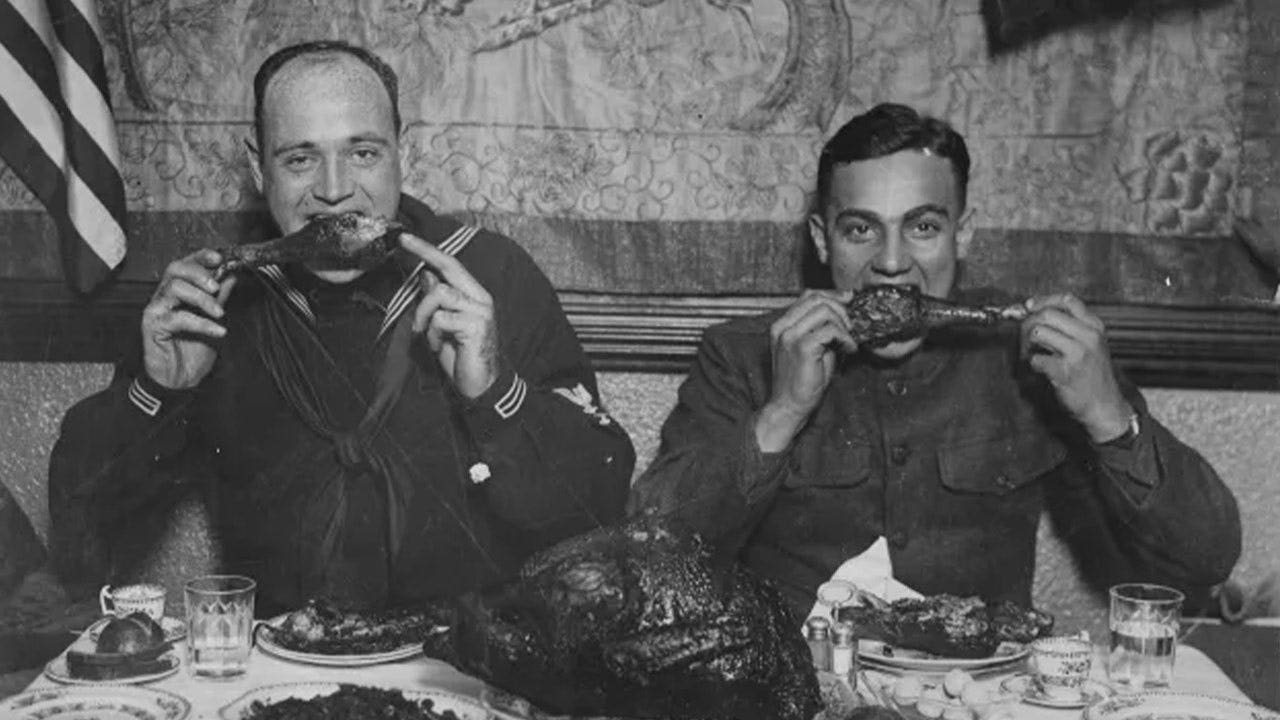
Thanksgiving has a way of following American troops into the toughest places on earth. Across wars, from Civil War campfires to mountain outposts in Afghanistan, getting turkey on the table has often meant ingenuity, risk, and a whole lot of muscle from the military’s supply chain.
In 1966, 12 soldiers at a lonely Vietnamese outpost were not exactly set up for a holiday feast. Their meal had to arrive by air, and the Army still made it happen, sending turkey and trimmings by helicopter to a 5th Special Forces detachment in War Zone D.
That kind of effort had roots going back more than a century. During the Civil War, Lincoln’s 1863 Thanksgiving proclamation helped turn the holiday into a national ritual, and by the next year civilians were pouring energy into sending food to Union troops at the front.
The so-called “great turkey movement” of November 1864 showed how intense that support became. New York organizers reportedly had 20,000 turkeys lined up for shipment, while a Philadelphia committee worked to move another 4,000 toward soldiers under Gen. Philip Sheridan.
By World War II, the appetite for wartime Thanksgiving meals had grown so large it affected the folks back home. In 1943, the government limited most civilian turkey sales as it pulled millions of pounds for the armed forces, first for troops overseas and then for installations closer to home.
The numbers were enormous, and the pressure was real. Wartime records show the government ended up securing roughly 30 million pounds before the restriction was lifted, a clear sign that the holiday menu had become part of the war effort itself.
Not every meal arrived safely. In the Hürtgen Forest, Lt. Paul Boesch of the 121st Infantry Regiment recalled being told that hot turkey dinners had come in for his men even as German artillery made the area deadly. He objected to sending soldiers out to collect the food, but the order stood.
The danger was not hypothetical. According to Boesch’s account, artillery struck as troops moved to retrieve the meal, killing and wounding several men. Even the promise of Thanksgiving could not outrun the front line.
In Korea, the holiday brought its own brutal twist. On Thanksgiving Day 1950, Marines near the Chosin Reservoir were served turkey, cranberry sauce, candied sweet potatoes, fruitcake, and mince pie, but the freezing temperatures turned the feast into a race against the cold.
That same moment sat against a backdrop of rising confidence that the war might be nearing its end. Then everything changed fast, as Chinese forces entered in force and the fighting around Chosin became one of the war’s harshest chapters.
Years later, in 1951, another Thanksgiving dinner in Korea showed the same mix of grit and routine. Pfc. John A. Arnett received a turkey leg during a meal set up only about 200 yards from the main line of resistance, where soldiers were still close enough to hear the war breathing down their necks.
Then came Iraq and Afghanistan, where Thanksgiving became a mix of surprise visits, helicopter lifts, and meals stitched together from far away. In 2003, President George W. Bush secretly flew into Baghdad to sit with about 600 troops, crack a joke about looking for a warm meal, and help serve dinner.
In Afghanistan, the logistics got even more dramatic. In 2007, helicopters carried turkeys and side dishes from Bagram Airfield to remote firebases in the Tagab Valley, giving some troops their first hot meal in months while others took turns between eating and standing watch.
“The white meat was magnificent,” Pfc. Matt Lorimer said, a simple line that says a lot about how much a familiar meal can matter when the setting is anything but familiar. Two years later, another outpost relied on a patchwork solution, with local turkeys fattened up for a month, extra birds flown in from the United States, and then dinner lifted by helicopter to soldiers at a mountain observation post nearly 6,900 feet up.
