
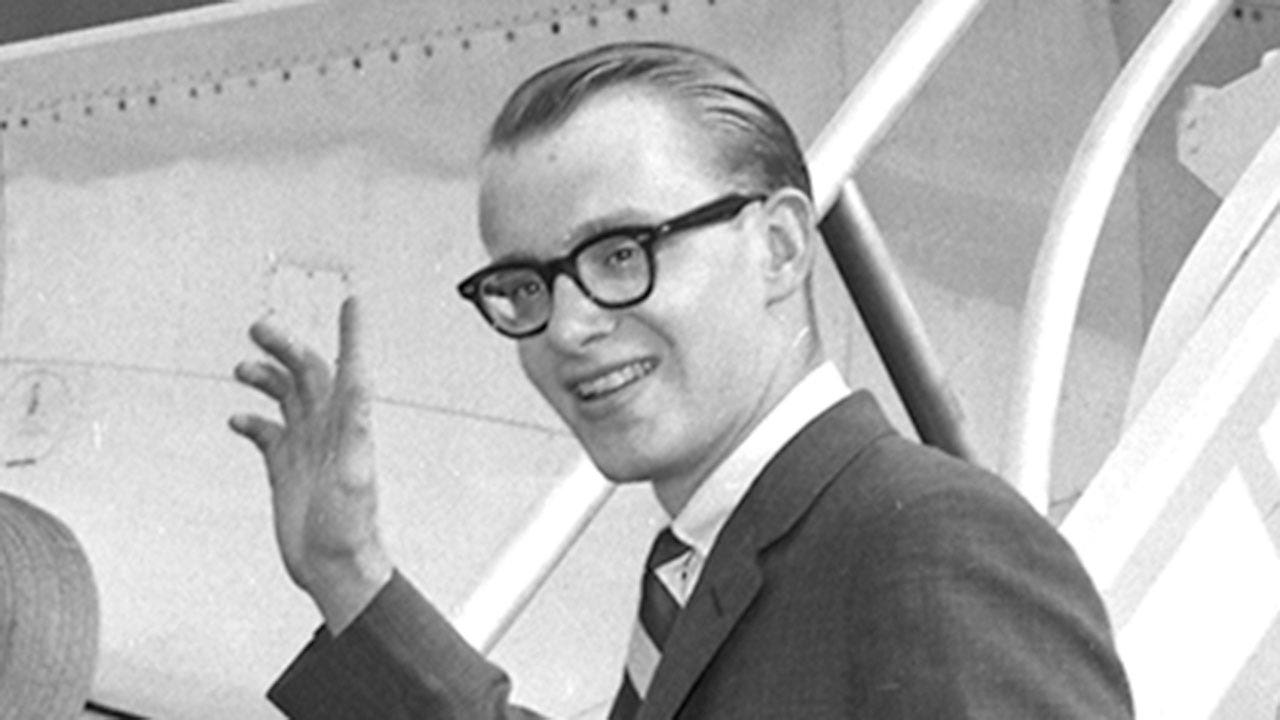
Decades have passed since Michael Rockefeller, a descendant of one of America’s prominent families, vanished near a remote island known for its perilous inhabitants. At 23, Rockefeller, fresh from Harvard, embarked on a journey to Dutch New Guinea, eager to gather indigenous art for a Museum of Primitive Art exhibition. The Asmat people, renowned for their intricate woodcarving, were also known for headhunting and cannibalism, practices tied deeply to their spiritual beliefs.
In 1961, Rockefeller, along with anthropologist René Wassing, found themselves in distress when their catamaran capsized. Stranded with two local teenagers, Michael made the fateful decision to swim to shore for help, a decision from which he never returned. “When people vanish, it is incredibly unsatisfying and there’s no closure,” remarked Carl Hoffman, author of “Savage Harvest.”
Hoffman, who explored the mystery of Rockefeller’s disappearance, immersed himself in archival research and local interviews. After the catamaran flipped, Rockefeller, determined to find help, tied gasoline cans to his waist and set off swimming. “Michael said, ‘I’m going to do it, I am going to swim,'” Hoffman shared, noting the young man’s determination.
While René Wassing was eventually rescued, the young Rockefeller was not found despite a thorough two-week search. Various theories emerged about his fate, from a possible encounter with a shark or crocodile to the belief that he drowned. “The most sensational rumor was that he had encountered men from the Asmat and they had killed and eaten him,” Hoffman noted.
Hoffman uncovered accounts from two priests who heard stories suggesting Rockefeller met members of a nearby tribe. “[They] immediately started hearing stories that men from one particular village… had encountered an exhausted [Rockefeller] swimming up to them,” Hoffman explained. These accounts suggested that the young Rockefeller was killed and subjected to sacred Asmat rituals.
The priests’ findings were reportedly shared only with the Dutch government and the highest Catholic official in the Netherlands. The Rockefeller family, informed of these rumors, allegedly approached Dutch authorities, who then dismissed the claims. Despite the mystery, Rockefeller’s passion for indigenous art endures, notably in the Michael C. Rockefeller Wing at New York City’s Metropolitan Museum of Art.
This wing, featuring 16 galleries, showcases art from Oceania, Africa, and ancient Americas, including Rockefeller’s collected Asmat sculptures. “Opened to the public in 1982,” the Met’s website notes, the addition honors Michael’s dedication to exploring Pacific cultures and art. The Met did not respond to Fox News Digital’s request for comment on the matter.
While the mystery of Rockefeller’s disappearance might remain unsolved, his legacy is enshrined in the art of those who might have played a part in his fate. “There was nothing primitive about the Asmat at all,” Hoffman asserted, highlighting their rich and complex culture. He emphasized their art as a profound reflection of the human psyche.
Hoffman’s insights into the Asmat culture reveal a civilization with deep intellectual and artistic roots. Their art offers a “direct view into archetypes and of the human unconscious,” illustrating the depth of their cultural sophistication. This perspective challenges misconceptions and celebrates the enduring impact of Rockefeller’s interests.
The Rockefeller family’s tragedy underscores the complexities and allure of exploring uncharted territories and cultures. Michael’s journey, though ending in mystery, reflects a broader narrative of seeking understanding across cultural divides. His story remains a poignant reminder of the risks and rewards inherent in such explorations.
The intrigue surrounding Rockefeller’s disappearance is matched by the enduring fascination with his life and ambitions. As time passes, the legacy of his passion for art and culture continues to inspire new generations. This ongoing interest ensures that his story, though shrouded in mystery, will not be forgotten.
Rockefeller’s disappearance continues to spark debates and investigations into what truly happened during his final moments. His legacy, intertwined with the art he sought, lives on as a testament to his adventurous spirit. Though his fate remains elusive, the impact of his journey is undeniably profound.
As the years roll on, the art collected by Rockefeller serves as a lasting tribute to his dedication and vision. His story, woven into the tapestry of history, remains an enigmatic chapter that continues to captivate. Through the art he cherished, Michael’s spirit endures, bridging cultures and generations.
The Rockefeller saga, rich with intrigue and cultural exploration, continues to evoke both mystery and admiration. Michael’s life and work have become an integral part of understanding the complex beauty of the Asmat people. His journey, though ending in the unknown, remains a compelling tale of curiosity and courage.
