
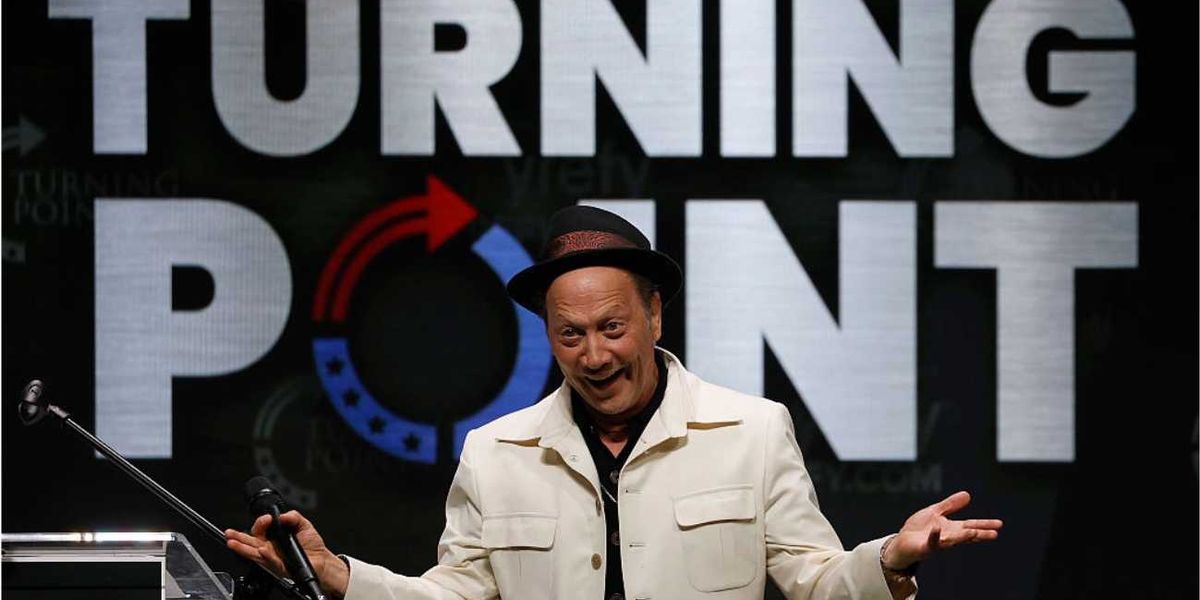
Rob Schneider has never been shy about speaking his mind, but his bond with Charlie Kirk seems to have hit a deeper nerve. What starts as a casual friendship story quickly turns into something bigger, with Schneider describing a shift in how he thinks about culture, conviction, and the people who push back against the status quo.
Schneider says Kirk’s influence reached past politics and into the way he sees everyday life. That kind of impact does not come from a passing conversation or a quick photo op. It comes from repeated talks, shared values, and a willingness to challenge the easy answers that dominate Hollywood and media circles.
The connection also says a lot about Schneider himself. Known for his comedy and a career built on broad appeal, he has spent years moving between mainstream entertainment and more outspoken public commentary. That makes his admiration for Kirk feel less like a random headline and more like a sign of where his thinking has been heading.
Kirk, for his part, has made a habit of drawing in people who feel out of step with the cultural crowd. He thrives in spaces where debate is loud and assumptions get tested, and that approach clearly left an impression on Schneider. In a business where keeping quiet is often the safest move, that kind of boldness can feel refreshing.
For Schneider, the relationship appears to have sharpened his outlook rather than softened it. He frames the experience as one that changed how he processes ideas and how he responds to pressure from the entertainment world. That matters, because Hollywood tends to reward conformity, and anyone willing to break from the script usually pays a price.
There is also a larger generational angle here. Kirk has built a following by speaking directly to younger conservatives and by pushing back hard against institutions he sees as out of touch. When someone like Schneider responds to that energy, it suggests the message is crossing usual boundaries and landing with people who have lived through decades of cultural shifts.
Schneider’s career gives him a unique vantage point on all of it. He has seen the entertainment machine from the inside, watched trends come and go, and witnessed how quickly public opinion can turn. That background makes his comments about Kirk stand out, because they come from someone who knows exactly how carefully Hollywood polices its own lanes.
The friendship also reflects a broader hunger for authenticity. People are tired of polished talking points and safe applause lines, especially from public figures who pretend not to know the difference between popularity and principle. Schneider’s remarks suggest he values someone who says what he means and does not dress it up for easy approval.
In that sense, the story is less about celebrity gossip and more about influence. One man built a career making people laugh, the other built a movement around direct confrontation, and the meeting point between them says plenty about where cultural attention is moving. The result is a conversation that feels personal, but the ripple effects reach far beyond one friendship.
