
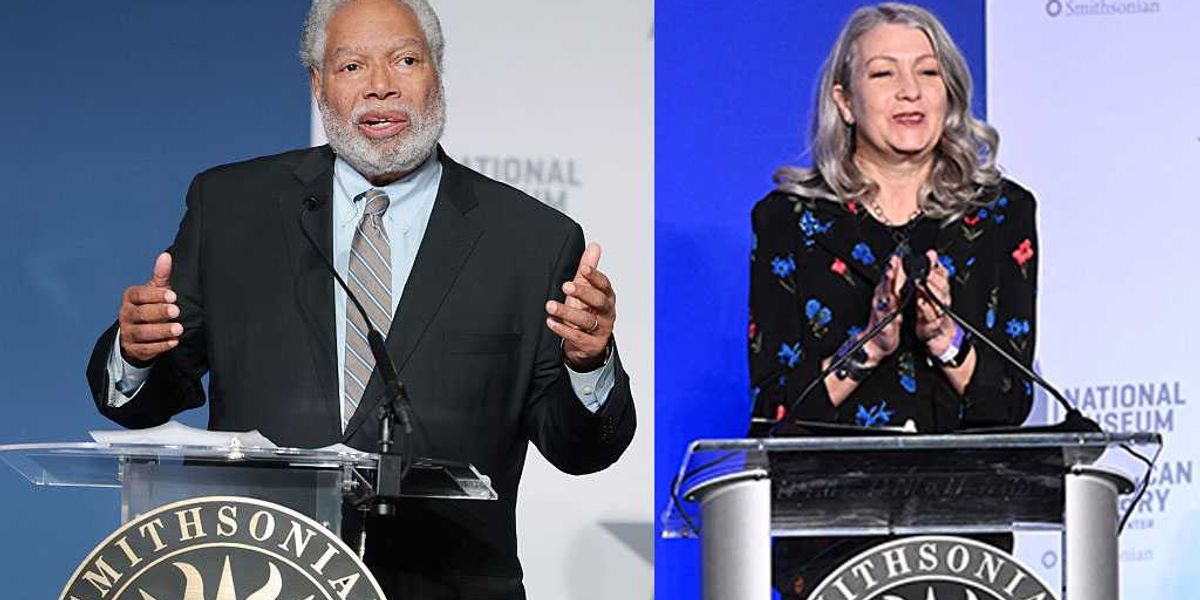
The White House released a hard-hitting review of the National Museum of American History that accuses leadership of turning a taxpayer-funded institution into a vehicle for activist messaging. The 162-page “Saving America’s Story” report, issued on Independence Day, singles out exhibits, curricula, and internal guidance it says push anti-American, anti-Western, and identity-based narratives. Smithsonian officials and many historians pushed back, calling the effort political overreach, while Republicans pointed to evidence of ideological capture and demanded accountability.
The report lays out a string of examples where the museum’s choices stray from plain historical presentation into advocacy. It calls out moves from reinterpreting cultural icons to internal tool kits that label traits like objectivity and individualism as “characteristics of white supremacy culture.” The authors concluded that the museum, under its current leadership, “cannot be trusted to tell America’s story honestly.”
Smithsonian Secretary Lonnie Bunch III responded to the critique with a defense of the institution’s record and mission. He told staff that “the report is not a fair characterization of the work and totality of the National Museum of American History.” He also wrote that “the Smithsonian is the glue that holds the nation together” and insisted the team’s “work is driven by scholarship, accuracy, and an uncompromising commitment to tell the fullness of America’s story.”
Bunch thanked the museum staff and activists working inside the Smithsonian and pledged ongoing stewardship. “Every day, we are honored to tell America’s stories and hold that responsibility with the utmost regard, respect, and fidelity. We remain committed to fulfilling our mission for generations to come.” Critics say those assurances don’t address the specific practices the report documents.
The Organization of American Historians blasted the White House review as an attack on professional independence and called it “another example of executive branch overreach.” The group warned the document reads like an effort “to coerce Smithsonian leadership to shape its presentation of U.S. history so that it serves the administration’s political agenda.” That pushback frames the report as a campaign to restore a particular patriotic narrative at the expense of broader scholarship.
‘US history was taught as the history of white Christian men who conquered a continent.’
Defenders of the museum argue that narrowing history into triumphant national myths would erase diverse experiences, but the report’s authors worry current programming replaces historical balance with political messaging. Marc Stein, the president of the Organization of American Historians, said, “Released on July 4, 2026, the 250th birthday of the U.S. Declaration of Independence, the report is a declaration of independence from history.” That line captures the clash: who decides how we present the past?
The review points to statements attributed to NMAH leadership that make the divide plain. It quotes the director as viewing history as a “prime tool of social justice,” urging curators to “get out of the ‘America First’ mentality” and discussing a desire to “problematize the 250th anniversary of the signing of the Declaration of Independence in 2026.” Those goals alarmed critics who see advocacy, not neutral scholarship.
The report catalogues a long list of specific concerns about exhibits, educational materials, and program choices. It says the museum has told teachers the “U.S. economy depends on an influx of migrants to augment the workforce in a number of industries” and that “there is no single American culture, language, or narrative.” It claims internal materials label traits like perfectionism, individualism, and objectivity as signs of “white supremacy culture.”
- The museum described Jared Jennings — the boy called “Jazz” whose genital mutilation was promoted on reality television — as someone who “always knew she ‘was a girl trapped inside a boy’s body'” and devoted an entire “A Girl’s Life” display to discuss his “transgender” experience;
- It displayed sexual paraphernalia in a Stonewall exhibit and elevated radical activists like Angela Davis;
- It adopted a pro-abortion tone after the Supreme Court’s Dobbs ruling, quoting leadership that “a future without federally protected reproductive health care rights is not informed, just, or compassionate”;
- The museum promoted gun-control activism in at least one exhibit, suggested America rests on stolen land, and in some materials “consistently denigrated and displaced whites, males, Christians, and Americans in educational materials and programming, failing to highlight how Christians and Christian principles also have contributed to America’s founding and flourishing.”
Conservative politicians hailed the report as long overdue oversight. New York Rep. Claudia Tenney (R) , “Deeply concerning to see the Smithsonian embrace politicized history over historical truth. Woke does not belong in our taxpayer funded museums. Our history deserves to be told honestly, faithfully, & with the respect owed to the nation that changed the world.” Florida Gov. Ron DeSantis (R) , “Politicizing American history to weaponize it in service of leftist activism. Not surprised they did this, but good to see it getting exposed.”
Republican lawmakers are already acting on the findings, arguing for changes to ensure taxpayer-funded museums prioritize balanced historical narrative. Sen. Jim Banks has introduced legislation aimed at directing appointees to the Smithsonian Board of Regents to address what he calls “improper ideology and divisive racial narratives” on museum property. Supporters say that step would restore accountability.
The fight over how to tell America’s story is now playing out in official reports, memos, and proposed laws. The debate is about museum exhibits, classroom curricula, and what a national institution funded by taxpayers should promote. Expect more hearings, more messaging from both sides, and a battle over institutional control that will shape public history for years to come.
https://x.com/RepTenney/status/2074838051356811767?s=20
