
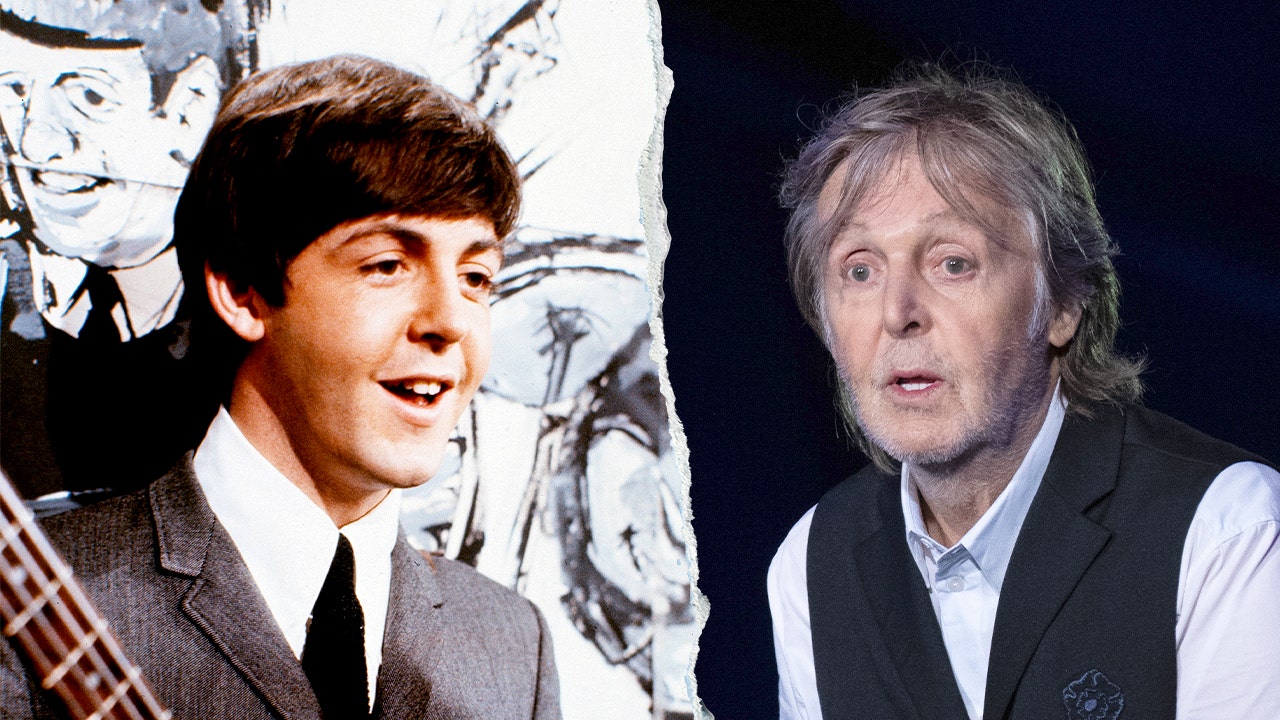
Paul McCartney’s new work arrives as a reminder: a living legend still tinkering with melody, memory and studio tricks, turning decades of life into songs that wobble between polished rooftops and quiet rooms. The album mixes orchestral swells, acoustic intimacy and the occasional falter, while the man himself remains a genial presence who knows how to put an audience at ease. These tracks revisit Liverpool, love, loss and the sheer craft that made him a defining voice in modern music.
He opens with a portrait of family and upbringing that feels earned rather than nostalgic. “My father was a salesman” “My mother was a saint” “Working every God-given minute” “To make enough to pay the rent.” Those lines land as a compact origin story, and they set the tone for an album that balances everyday detail with sweeping imagination. McCartney treats memory like a set piece he can rearrange to suit the song.
The production is meticulous and often playful, drawing on studio techniques he and his bands have used for years. He double-tracks harmonies, flips tempos on a dime and lets instruments surprise the listener by arriving where you least expect them. Chrissie Hynde appears as a guest voice on a few cuts, offering contrast to his familiar timbre and reminding listeners that collaboration keeps him curious.
Instrumentally, the record is both ambitious and oddly uniform at times; he plays many of the parts himself, which gives the album a coherent personality but sometimes a sameness too. One track leans on harpsichord and recorder, another is stripped to acoustic guitar, and then orchestral arrangements explode in places where the album might have otherwise settled. The variety is there, even if some tracks blur into a similar sonic palette.
He can still write lines that cut through. On one song he sings, “I saw your silhouette on the blind” “Do you think of me?” “Do I ever cross your mind?” Those small images do what great pop songs do: they make private moments public and stick in your head. With new generations discovering the catalog through stadium shows and dedicated channels, his music feels simultaneously personal and woven into the air.
There are moments of genuine tenderness, like a duet with Ringo Starr celebrating their shared roots. The two veterans trade lines about the place they came from and what it meant to them, conjuring scenes before fame and before the wild panic of Beatlemania. Those songs sit beside more theatrical numbers, and together they map a life in music that has room for both quiet recollection and dramatic flourish.
He has made mistakes in public life; that honesty shows up in the record without being exploited. At the height of their fame the band fractured and he weathered bad press, legal fights and deep personal loss, including Linda’s death, which the music still acknowledges. Now in a later marriage and with decades behind him, McCartney uses those experiences as texture rather than headline fodder.
Vocally he moves through registers—crooner, falsetto, rocker—sometimes showing strain, sometimes surprising with power and stamina. Seeing him live recently makes that clearer: three-hour sets where voice and endurance still hold up are more than a curiosity, they’re proof of continued relevance. If anything, his stage presence underlines that he performs out of habit and affection more than obligation.
Not every song lands as a classic; a few tracks feel safe or overly cute, the kind of “silly love songs” that have made him an easy target for critics who prefer harder edges. Yet the breadth of his songwriting—from tender ballads to buoyant rockers—remains striking. Bass lines he once wrote to keep the band moving still echo in the way he thinks about melody and rhythm.
References to old friends and bandmates appear throughout, nods rather than full-time trips down memory lane. Lines like “The place we used to live in / You could say it wasn’t much / But it was home to us,” he sings with Ringo, are small time capsules that capture both regret and affection. The album keeps looking back, but it refuses to be merely a greatest-hits reflection.
At its best the record feels personal and vulnerable without collapsing into self-parody. He still wants to entertain and to surprise, and that impulse drives some of the album’s most memorable moments. “People say why do you do it? I just do it because I love it,” he says, and that confession threads through the whole collection, making it less a commercial product and more a late-career conversation.
SUBSCRIBE TO HOWIE’S MEDIA BUZZMETER PODCAST, A RIFF ON THE DAY’S HOTTEST STORIES
