
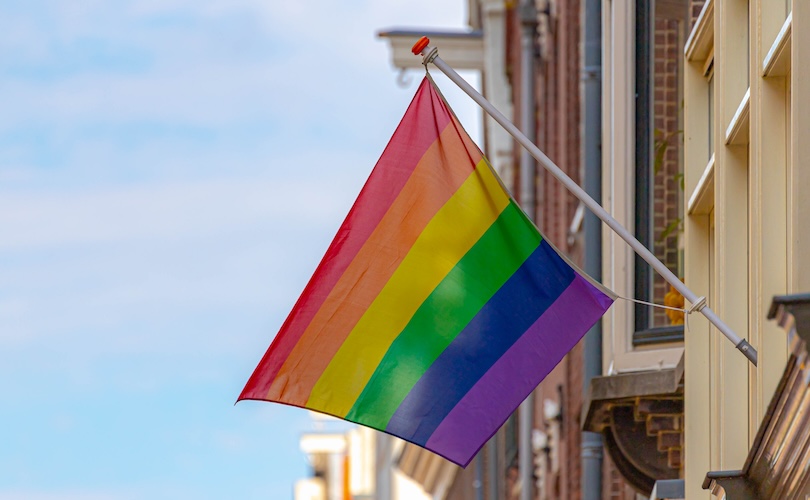
A Berlin vigil meant to mourn the victims of a violent attack at a LGBT pride event quickly turned into a flashpoint over identity, politics, and grief. One activist’s blunt reaction stunned many in the crowd, especially after she admitted her first thought was that she hoped the attacker was not Arab, but Christian or white instead.
The attack happened during Berlin’s Christopher Street Day celebration and left one woman dead and at least 29 others wounded, with several people still fighting for their lives. Authorities say the suspect is 21-year-old Abdul Ballout, a German citizen of Lebanese descent with a long criminal record and a reported history of extremist connections.
According to prosecutors, Ballout had traveled through Turkey to Lebanon in 2025 and was allegedly trying to make his way into ISIS-controlled territory. He was also said to have contacted people he believed were tied to the group, which added another layer of alarm to a case already raising hard questions about security and supervision.
At the vigil, the activist said, “What was also shocking to me was that the first thing I thought was: ‘Hopefully it isn’t a K-, hopefully it’s a Christian (or a) white person, but it wasn’t,” and the remark landed with force. It exposed not just raw emotion after the attack, but also the ugly way fear can reshape the way people think in the middle of chaos.
The prosecutor’s office said Ballout was arrested in Lebanon in July 2025 for stirring religious and sectarian conflict, then later sentenced to three months in prison. After serving that term, he was sent back to Germany and faced additional charges tied to planning a serious violent act that threatened the state.
By May 2026, he had been convicted and given a sentence of one year and 10 months, but the punishment was suspended. That decision placed him under parole supervision, and critics are now pointing to that outcome as a glaring example of how a man accused of dangerous behavior was still able to remain free.
The activist’s comments also tapped into a deeper public argument about who gets blamed when violence erupts at politically charged events. In moments like this, people often reach for the easiest label, but the reality is usually messier, uglier, and far more damaging than a quick stereotype can explain.
Christian churches, including the Catholic Church, have consistently rejected violence against homosexuals, transgender people, or anyone else, even while teaching against sexual sin. That distinction matters, because it separates religious doctrine from the acts of individual people who may claim a faith they do not actually live out.
Still, the reaction to the attack is happening against a backdrop of multiple deadly episodes involving people who identified as LGBT. Last August, Robert “Robin” Westman opened fire at Annunciation Catholic Church in Minneapolis during morning Mass, killing two children and injuring 17 others before taking his own life.
Those kinds of cases keep feeding a tense national conversation about ideology, violence, and the breakdown of basic safety. They also leave families, churches, and communities trying to absorb the shock while politicians and activists argue over what the headlines mean and who is supposed to answer for them.
Berlin’s latest tragedy has now become part of that same fight, with grief on one side and outrage on the other. And as investigators continue sorting through Ballout’s background, the city is left with the kind of open wound that does not close quickly, especially when a memorial for the dead becomes another stage for bitter division.
