
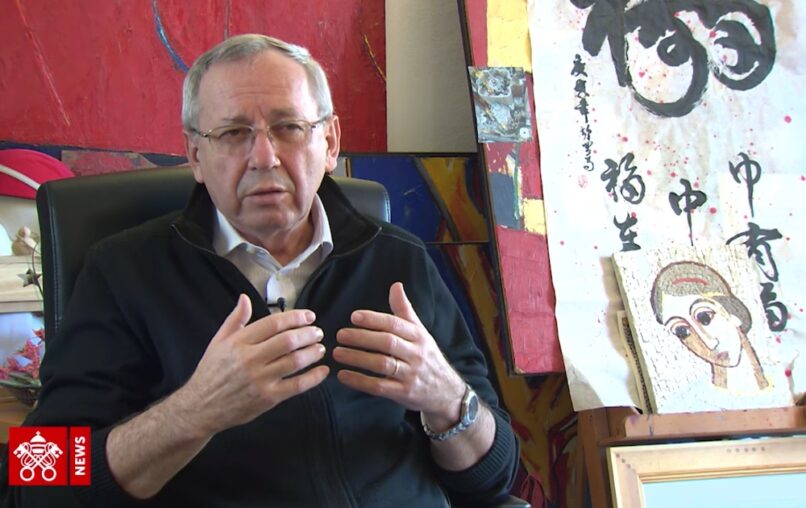
A lawyer for five women accusing Father Marko Ivan Rupnik of abuse is blasting the Vatican’s handling of his canonical trial, saying the process has been wrapped in secrecy and stripped of the basic transparency needed for real justice. The dispute now centers on a simple but loaded question: how can victims trust a trial they cannot see, cannot follow, and are barely even told about?
Laura Sgrò, who represents several of the accusers, says the women have not been summoned and still do not know who is judging the case. That alone has set off alarm bells, especially in a matter already shadowed by years of allegations and slow-moving church action. For the victims, the silence is not just frustrating, it feels like another wound.
Sgrò said the situation amounts to “total secrecy,” and she has argued that her request to participate as legal counsel for the injured party has not even been answered. She also says repeated attempts to reach Cardinal Victor Manuel Fernández and Monsignor John Joseph Kennedy, who are tied to the Dicastery for the Doctrine of the Faith, have gone nowhere. Calls, emails, and follow-ups have reportedly been ignored.
Her complaint is not that the trial should be turned into a public spectacle. Instead, she says there is a basic floor of information that should be shared so the process can still deserve the name of justice. In her view, a case this serious cannot be handled like a locked room with everyone on the outside guessing what is happening inside.
That concern only grows because of the reports that circulated earlier this month suggesting Rupnik had been acquitted in his Vatican canonical criminal trial on charges of “violence” tied to the alleged sexual abuse. The Vatican pushed back on those claims, leaving the public with conflicting signals and very little clarity. When even the basic status of a case is disputed, confidence in the process gets even shakier.
Sgrò warned that hidden conflicts, old grudges, or unknown ties could shape the outcome in ways no one can check. She also pointed out the obvious absurdity of asking victims to trust judges whose names they do not even know. In her words, that kind of setup is not just secretive, it can feel like another form of violence.
In a letter to Fernández after a leak about the trial, she said her clients were being hurt again by the lack of communication. The women, she wrote, had been kept in the dark while rumors swirled and certainty remained out of reach. The message was blunt and raw, painting a picture of people who feel left behind by the very institution that was supposed to hear them.
Rupnik has faced accusations involving sexual, spiritual, psychological, and physical abuse, with allegations reaching both nuns and male victims. Former Jesuit superiors have reportedly viewed the claims as highly credible, which has only made the silence around the trial harder to explain. The larger scandal is not just the accusations themselves, but the sense that the system moves slowly until pressure forces it to move at all.
One reason this case keeps drawing attention is that it comes from a church court operating under seal unless the Vatican chooses otherwise. That means even a high-profile proceeding can stay hidden from public view, with the Holy See deciding what, if anything, gets out. For many observers, that looks less like prudence and more like insulation from accountability.
The allegations against Rupnik have also spilled beyond the courtroom and into the world of religious art. His distinctive work, marked by unsettling depictions of Christ and the saints, has been displayed in major Catholic sites, though some pieces have since been removed or covered. The contrast between sacred spaces and the accusations surrounding the man behind the art has made the entire story feel even more disturbing.
The case was handed to the Vatican’s doctrinal office in 2023, and later that year five judges were appointed to decide it. Even so, the lack of visible movement, the reported secrecy, and the unanswered questions have kept the story alive far beyond the church circles that first took notice. For the women at the center of it, the real issue is still whether anyone in authority is actually listening.
