
Lawmakers are sounding an alarm about foreign influence that does not always look foreign at first glance. Their concern is not just about governments pushing propaganda, but about activist groups, nonprofits, and online voices that can help carry those messages into American debate. The big fear is simple: if the public cannot see who is funding and steering the message, the message can do plenty of damage before anyone notices.
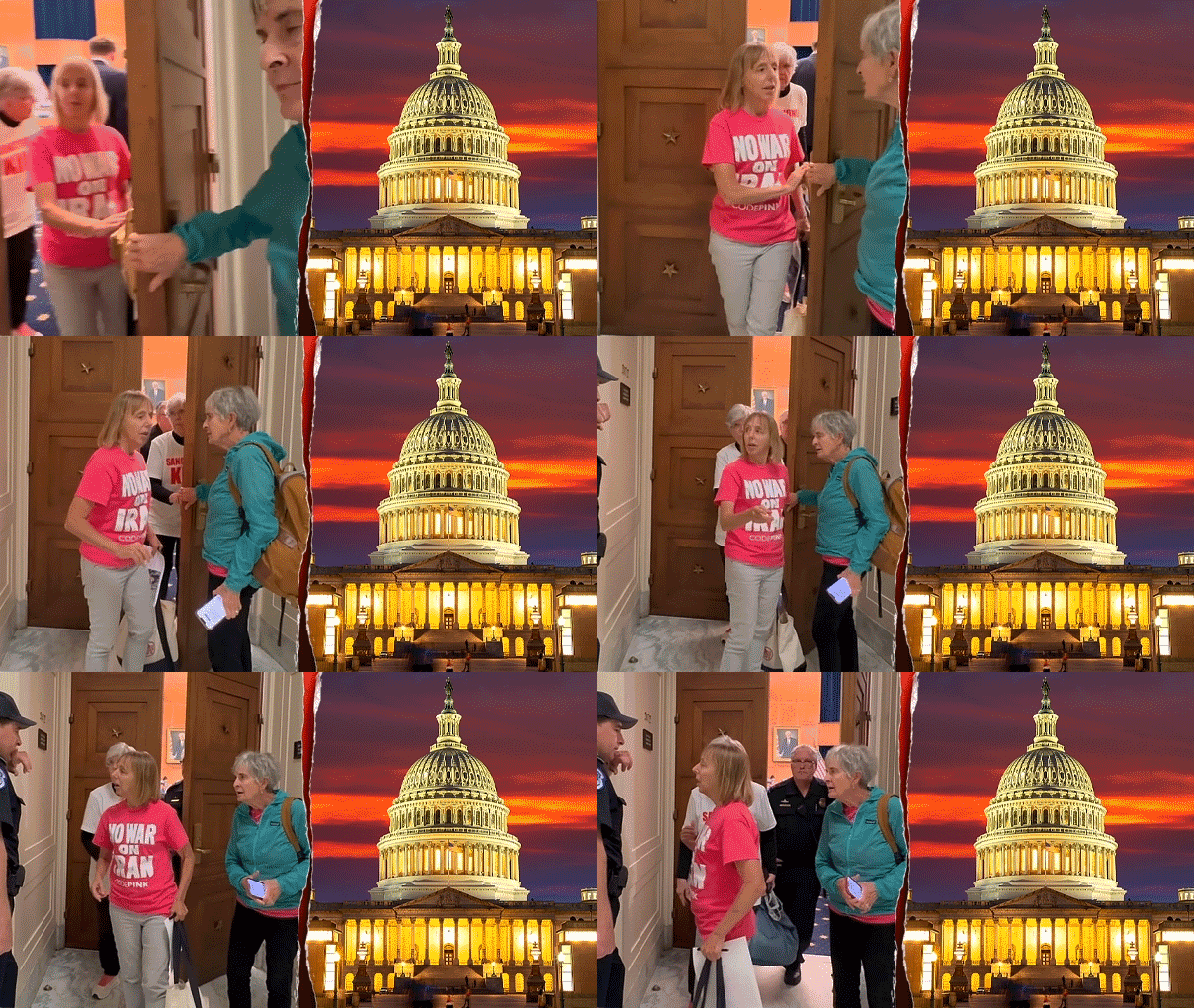
The issue came into sharp focus during a House Foreign Affairs Committee hearing that turned into a tense scene. CodePink co-founder Medea Benjamin and other activists showed up in support of Iran and Cuba, then drew immediate attention for where they sat and how they presented themselves during the proceedings. Capitol Police eventually escorted them out after lawmakers said the display crossed a line from protest into provocation.
Rep. Bill Huizenga said the episode captured a bigger problem than one noisy hearing room. In his view, modern influence campaigns often hide behind a friendly face, then reveal their true purpose once they are inside the room. That is why he keeps coming back to transparency, disclosure, and the need to know who is really behind the operation.
Much of the concern centers on what lawmakers described as a network of activists and organizations that can spread messages aligned with hostile foreign interests. The groups may present themselves as grassroots voices, but members of Congress argued that funding streams and partnerships can point in a very different direction. The worry is that a polished public image can mask a deeper agenda.
The name Neville Roy Singham came up again and again because of his alleged ties to several nonprofits that lawmakers say have pushed pro-China or anti-American messaging. According to the concerns raised in the hearing, the problem is not just one donor or one group, but the way money can move through an entire ecosystem of organizations. Once that happens, the message can look local even when the support behind it is anything but.
Huizenga said Americans should not assume every loud political voice is automatically organic. He argued that people can believe in a cause for real, honest reasons and still end up carrying a message that was funded or amplified from outside the country. That is why he said the fight has to focus on tracing the source, not just reacting to the spectacle.
Other lawmakers on the committee echoed that view and pointed to the Foreign Agent Registration Act as one tool that can help expose hidden influence. Rep. Michael Baumgartner said the public needs to understand who is behind major policy pushes, whether the message is coming through social media, podcasts, campuses, or protests. Rep. Randy Fine added that foreign adversaries do not need a physical horse when they can use online platforms to stir division and poison public debate.
Fine described the effort as a kind of cognitive warfare, where information channels are used to fracture trust from the inside. Rep. Darrell Issa took the point further, warning that the same pressure can show up in debates over artificial intelligence and other strategic technologies. In his view, slowing American progress can be a win for foreign rivals, even if the campaign is wrapped in talk that sounds harmless or noble on the surface.
The hearing also showed how quickly political theater can spill into public messaging. After being removed from the room, Benjamin continued recording, then later posted a clipped version of the confrontation online. That kind of follow-up is exactly why lawmakers say the real audience is often far beyond the committee chamber and why the battle over influence now plays out on phones as much as in hearing rooms.
As the discussion kept circling back to secrecy, financing, and coordination, lawmakers returned to the same phrase: transparency and disclosure. They argued that the country can handle honest disagreement, loud protest, and even sharp criticism without issue. What it cannot afford, they said, is hidden foreign influence dressed up as everyday activism, slipping through the gate while pretending to be something else.
