
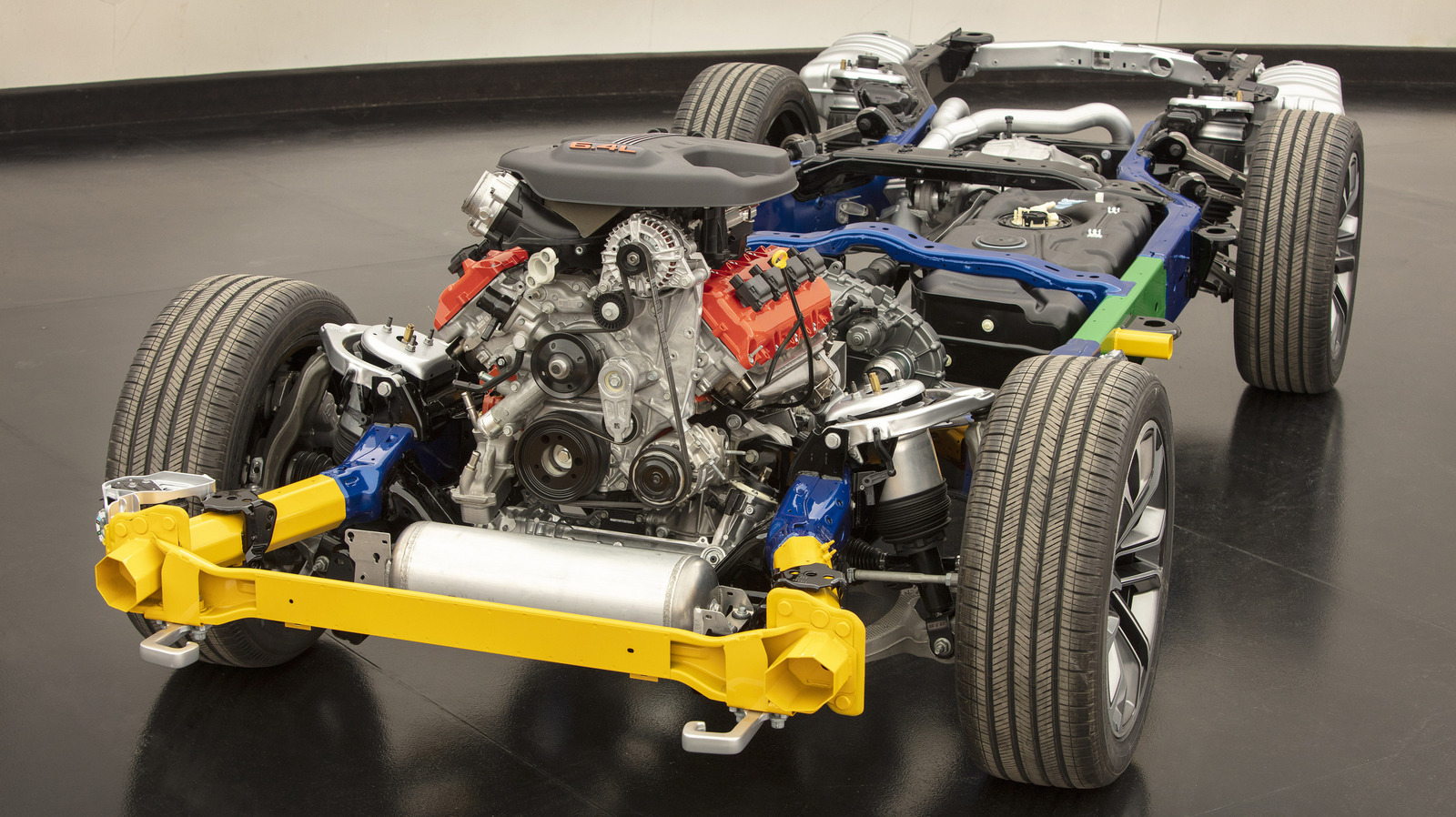
Body-on-frame and ladder-frame often get tossed around like they mean the exact same thing, and in most everyday conversation, that is close enough. A ladder frame is a specific kind of body-on-frame setup, built with long rails and crossmembers that resemble a ladder. That simple layout has stuck around because it is tough, familiar, and still useful in the right vehicles.
A ladder frame sits under the body and carries the heavy work. The frame and body are separate pieces, which is the big idea behind body-on-frame construction, while the ladder-style layout describes the shape of the frame itself. So yes, every ladder-frame vehicle is body-on-frame, but not every body-on-frame vehicle uses that exact arrangement.
That distinction matters because older vehicle designs were all over the map. Decades ago, body-on-frame construction was the standard for just about everything, not only pickups and SUVs. Over time, automakers moved most passenger cars to unibody construction because it better matched changing priorities like crash performance, efficiency, and weight savings.
Even so, the ladder frame never really disappeared. It kept doing the jobs it was built for, especially in vehicles that need a strong backbone for towing, hauling, and rough use. That is why the design still shows up under heavy-duty trucks and big SUVs, where strength often matters more than shaving off a few pounds.
There is a reason old-school examples still come up in these conversations. A 1970s Ford Bronco, for instance, used a frame structure that would look familiar to anyone who has crawled under a modern full-size SUV. The basic idea has not changed much, because the formula still works when durability is the priority.
Modern vehicles may look much more advanced on the surface, but the underlying logic can be surprisingly simple. Even in an era filled with hybrids and electric powertrains, manufacturers sometimes still need a stout foundation to support heavy components and demanding use. That is one reason ladder frames remain a practical choice instead of a relic from the past.
They are also common in vehicles that are expected to deal with serious loads without getting flustered. Full-size SUVs like the current Nissan Armada and Jeep Wagoneer lean on this setup because it gives them the kind of rugged support buyers expect. The frame helps spread out stress, which is handy when a vehicle is asked to pull, carry, or survive more abuse than a typical car.
What gets people tripped up is the wording. “Body-on-frame” describes the broad architecture, while “ladder frame” describes the most recognizable version of that architecture. The phrase sounds more technical than it really is, but at the end of the day it points to a straightforward and time-tested design that still earns its keep.
