
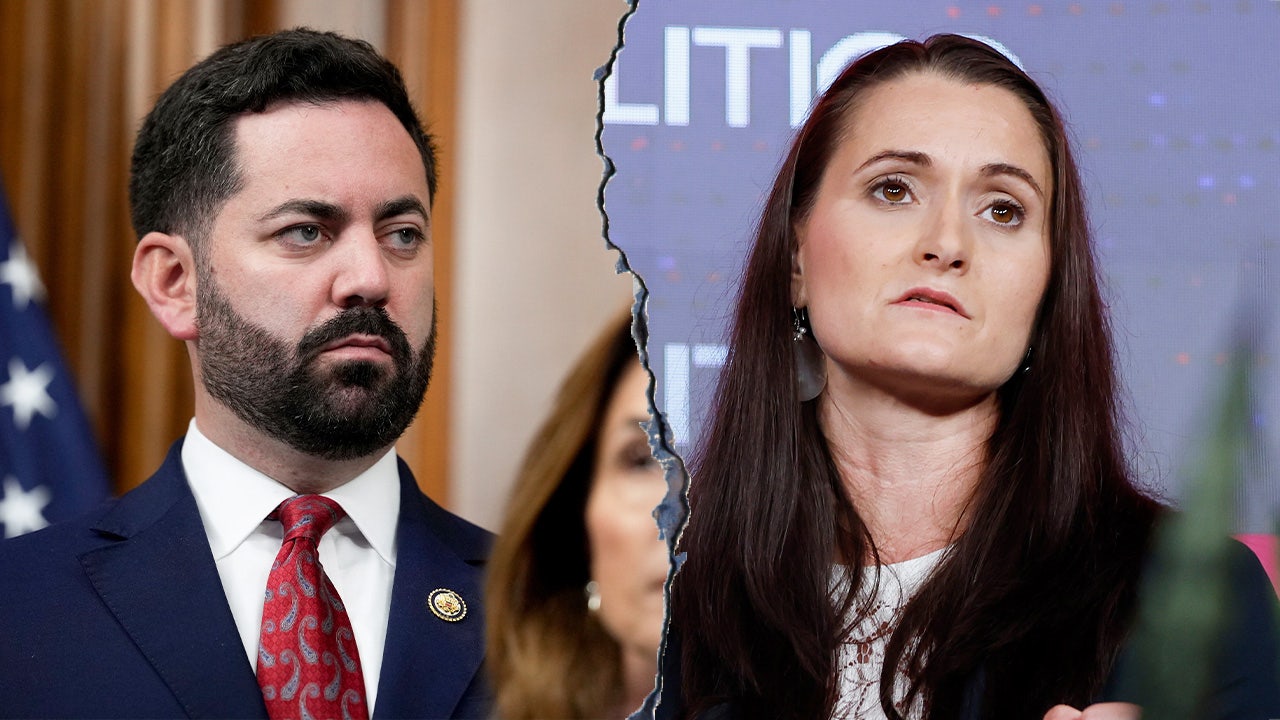
The race for New York’s 17th Congressional District has turned into a full-throttle battle with national stakes, and the projected winner is Cait Conley, a former Biden administration official and military veteran who narrowly outlasted Rep. Mike Lawler, R-N.Y. The contest drew heavy money, intense messaging, and constant attention because it sat squarely in the fight for control of the House. Lawler tried to hold the line in a district that leaned into Democratic territory at the presidential level, but the final stretch was unforgiving.
Conley’s background gave Democrats a clean, disciplined contrast: national security experience, military service, and a profile built around seriousness rather than flash. She served on the White House National Security Council as counterterrorism director from 2021 to 2023, then moved into election security work at the Cybersecurity and Infrastructure Security Agency. That résumé helped her present herself as a steady hand in a race that kept spinning around immigration, taxes, and trust.
For Lawler, the campaign was a tightrope from start to finish. He spent much of it trying to show loyalty to President Donald Trump without looking boxed in by the national Republican brand, a balancing act that got harder as the race sharpened. In a district where every word about border security, local safety, and tax pressure landed with extra weight, there was barely any room for error.
The immigration fight became one of the ugliest and most emotionally charged parts of the race. Lawler leaned hard into the issue, arguing that sanctuary policies and weak enforcement put families at risk, and he tied that argument to the killing of Sheridan Gorman, a college student from his district. Conley condemned the killing and said she opposed illegal immigration, but she stopped short of taking direct aim at sanctuary laws, leaving a clear opening for her opponent to hammer away.
That emotional edge gave the contest a harsh, personal feel that went beyond normal campaign sparring. Lawler’s side treated the case as proof that public safety arguments were not abstract talking points, while Democrats tried to keep the focus on broader governing competence and national security credentials. The result was a race where policy and grief kept crashing into each other, and neither side could fully control the narrative.
The district itself made the whole thing even more dangerous for Republicans. Sitting just north of New York City, it had already shown its blue streak by backing Kamala Harris in 2024, and analysts had circled it for months as one of the most likely Democratic pickups in the country. Outside money and national operatives treated it like a bellwether, because it had the power to shift the balance in the House.
That broader map pressure mattered because both parties knew the stakes were bigger than one suburban seat. Republicans were trying to protect a thin margin and keep their grip on the chamber, while Democrats were hunting for enough swing districts to flip control. In that kind of environment, even a small shift in suburban opinion can ripple across the whole country.
Lawler’s supporters pointed to the Sheridan Gorman case as a brutal example of what they see as the consequences of lax immigration rules, especially in places where sanctuary policies limit cooperation with federal authorities. That message was meant to be a warning shot, not just a campaign line, and it landed with raw force in a district where crime, immigration, and community safety had become inseparable in the political conversation.
Conley, meanwhile, benefited from a profile that let her speak the language of service and security without sounding overly ideological. Her veteran status and work on national security issues gave Democrats a candidate who could appeal to moderates uneasy about chaos but still frustrated with the GOP. In a year when House control hung in the balance, that combination proved strong enough to push her over the top.
The result leaves Republicans staring at a familiar problem in suburban New York: appealing to voters who like order and stability but are wary of hard-edged politics. Lawler ran as someone willing to split from the crowd when needed, yet the district’s mood and the national headwinds made that pitch harder to sell. Conley’s victory shows how quickly a carefully contested seat can tip when national security credentials, local frustration, and House control all collide at once.
