
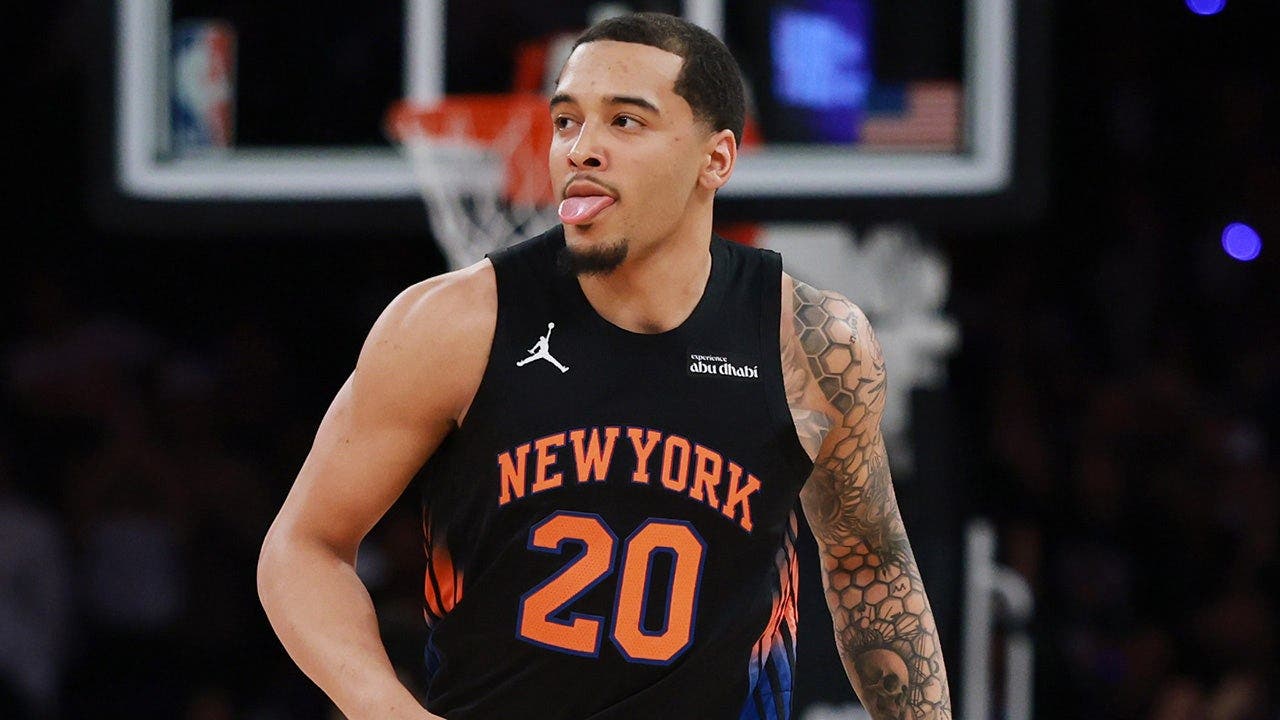
The Knicks closed out Game 2 with a 108-102 win over the 76ers at Madison Square Garden, and tempers boiled over after the final buzzer when Jeremy Sochan and VJ Edgecombe got into a heated postgame exchange. This piece walks through what unfolded at center court, the atmosphere in the arena, and the larger tension that rivalry playoff games bring. Expect a close look at the moment and what it reveals about both teams’ mindset without rumors or sensational claims.
The scene at Madison Square Garden was electric and raw, the kind of environment that magnifies every shove and shout. Players were still catching their breath after a physical fourth quarter when Sochan and Edgecombe crossed paths near the baseline. Whatever began as a brief word quickly escalated into a visible confrontation that drew immediate attention from teammates and security staff.
Fans at the Garden reacted the way they always do when emotions flare, with a mix of boos and loud encouragement that made the exchange impossible to ignore. Bench players leaned in and coaches rose from their seats, the sideline becoming a small scrum of bodies and voices. The arena’s noise and the game’s intensity amplified the moment, turning it into a focal point for commentators and viewers alike.
Sochan, a young player known for his energy and physical play, carried that competitive edge into the postgame moment. Edgecombe, associated with the Knicks’ staff, stood his ground and matched the heat directed his way. The result was a tense, unsanctioned clash that required swift intervention to keep things from spiraling further.
Security and coaching staffs moved quickly to separate the two, showing how organizations train for these flashpoints even when they happen off the clock. Neither side used force beyond grabbing and guiding, but the body language made it clear both parties were fired up. In playoff series like this, that kind of intensity can carry into the next game and shape matchups on the floor.
For New York, the win and the postgame flare-up underscored the team’s momentum and sense of entitlement at home. The Garden crowd feeds off confrontation, and moments like this can become a psychological tool that shifts energy in favor of the home team. Philadelphia, meanwhile, left with a narrow loss and the reminder that tempers can cost focus if teams don’t manage them correctly.
Coaches on both sides will likely remind players of discipline and composure as the series progresses, focusing on what can be controlled in practice and preparation. Players will hear that physical play is fine, but unnecessary confrontations are distractions that can alter rotations and minutes. The officials and league office will also pay attention, even if formal reviews are unlikely when the incident occurs after the final whistle.
Moments like the Sochan-Edgecombe exchange are part of the playoff fabric: intense, human, and unpredictable. They reveal the emotional stakes and the razor-thin margins teams navigate when every possession matters. Whether this particular flare-up influences on-court strategy or simply becomes one of the series’ memorable footnotes depends on how players and staff respond in the heat of the next matchup.
The game itself stayed competitive until the end, with the Knicks edging out the 76ers in a contest defined by hustle plays and contested shots. That tight finish set the stage for the postgame showdown and highlighted how small sparks can ignite in high-pressure settings. As the series moves forward, both teams will have to balance edge with discipline if they want to avoid letting emotion determine the outcome in future games.
