
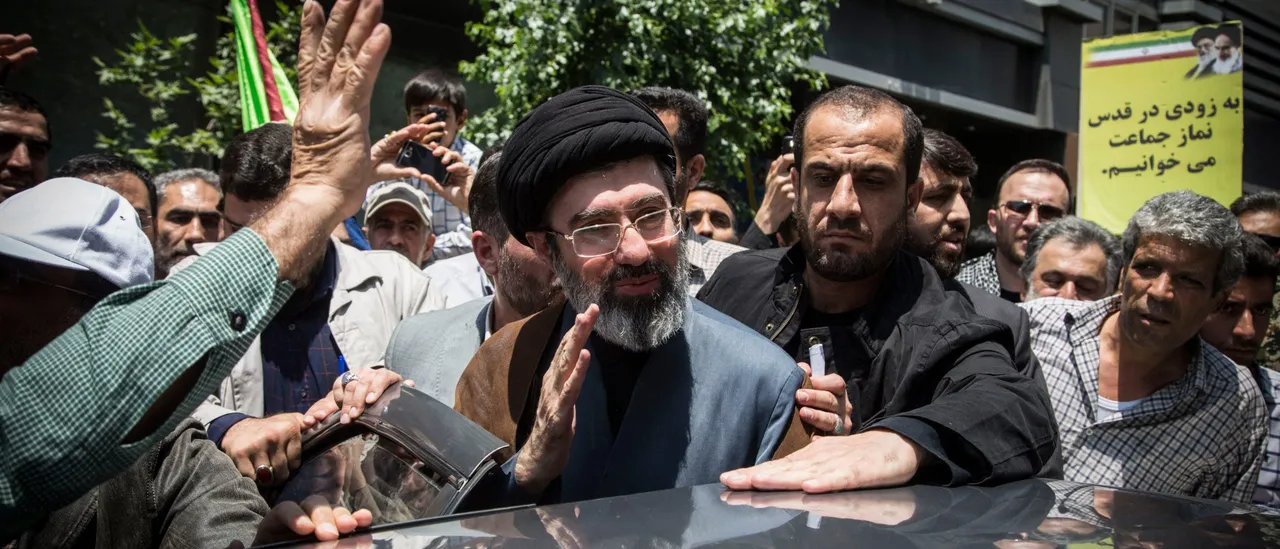
This article examines allegations from a U.S. intelligence briefing that Mojtaba Khamenei, a leading contender to succeed Iran’s supreme leader, made multiple hospital visits to the U.K. for impotence treatment, how those personal issues intersect with power plays inside Tehran, and why Western observers should watch how the Islamic Revolutionary Guard Corps and clerical elites steer any succession.
U.S. intelligence documents reportedly describe repeated trips by Mojtaba Khamenei to British hospitals for treatment labeled as impotence, a detail that complicates the picture of Iran’s succession politics. Those visits are said to have occurred amid intense family pressure to produce an heir, and the medical episodes are framed as part of the backstory to how Mojtaba’s standing evolved. In a regime where lineage and image matter, private health matters can take on outsized political meaning.
The briefing alleges four visits to U.K. medical centers, with three shorter stays and a fourth extended stay lasting about two months, after which Mojtaba’s wife is said to have become pregnant with a son named “Ali.” That sequence is presented as evidence of family pressure and a pragmatic rush to secure a male heir, not as a smooth dynastic handoff. Personal health, according to these accounts, was handled privately but had immediate public stakes for the Khamenei family and the clerical establishment.
Reports note Mojtaba’s late third marriage and claim his fertility issues were treated and eventually resolved during extended treatment in the U.K., framing the medical visits as consequential to his family life. Those private developments are portrayed as one element among many that shaped his emergence as a contender. In Tehran’s closed circles, the boundary between family and state is thin, and the personal quickly becomes political.
Mojtaba’s name has circulated not just because of family ties but because of his operational footprint inside the regime, where he is described as a forceful operator within his father’s office. U.S. officials have alleged he was close to senior IRGC figures, controlled access to the supreme leader, and often accompanied him across the country. That pattern suggests influence built on personnel control and institutional ties rather than clerical credentials alone.
“Ali Khamenei is reportedly seen by some within the Leader’s Office as treating and consulting Mojtaba as he would an eventual successor to his responsibilities, rather than purely as an advisor,” the briefing said. That wording signals a managed grooming process, one driven by insiders who want continuity and centralization rather than open debate. For American policymakers, the prospect of an engineered succession should raise red flags about stability and who actually calls the shots.
“[H]e is not expected ever to achieve by his own scholarship the status of ‘mujtahid,’ far less that of ayatollah,” the briefing claimed. The same document says Mojtaba is reportedly aware of his clerical limitations and does not appear to expect to become sole supreme leader purely on scholarly grounds. That weakness in theological legitimacy makes political backing from bodies like the IRGC and the Assembly of Experts all the more decisive.
Some accounts assert the Assembly of Experts moved to elect him under pressure from the IRGC, a claim that, if true, points to power brokers bending formal institutions to fast-track succession. Other reports say the relevant meetings were forced online after bombing disrupted planned gatherings, underscoring the chaos that can follow major strikes. Whatever the precise mechanics, these developments suggest succession could be less about clerical consensus and more about who controls the levers of power.
From a Republican perspective, these reports should sharpen concern about stability in Tehran and the extent to which unelected military elites can shape leadership transitions. The mix of personal vulnerability, family maneuvering, and IRGC influence presents a scenario where American strategy needs to account for opaque decision making and the risk of rapid consolidation by hardline elements. Washington and its partners should keep close watch and prepare for a range of outcomes as Iran navigates this fraught moment.
