
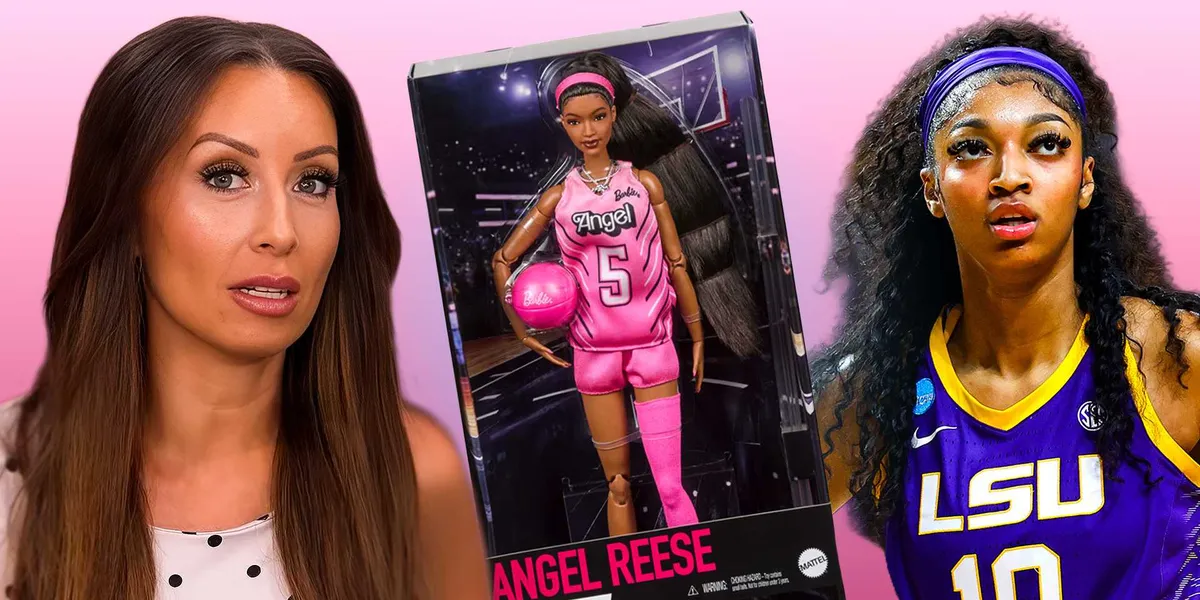
Angel Reese has stepped into the doll aisle with a new Barbie built to mirror her image, and the move has already sparked a fresh round of debate. The story lands somewhere between branding, childhood memory, and a bigger cultural argument about representation, corporate messaging, and how celebrities turn personal narratives into products.
Reese’s decision to launch a lookalike Barbie was tied to a familiar claim: that she didn’t have Black dolls growing up. That kind of statement carries weight, especially when it is attached to a public figure with a powerful platform and a massive fan base. It also invites scrutiny, because the facts around toy shelves, marketing eras, and what was actually available do not always line up neatly with the story being told.
Mattel’s history has long included Black dolls and diverse lines, which is why the claim has rubbed plenty of people the wrong way. When a company has produced dolls of different races for decades, the conversation stops being just about one athlete’s childhood and starts drifting into something broader, like whether nostalgia is being used as a sales tool. That tension is what makes the controversy stick.
Celebrity dolls are nothing new, and that is part of the appeal. They turn fame into a physical object, something fans can buy, display, and connect to in a way that feels personal. For brands, it is a shortcut to attention. For athletes, it is a chance to expand into culture beyond the court, where image can matter almost as much as performance.
Still, the reaction shows how fast these moments can become political, cultural, and commercial all at once. A doll can be marketed as empowerment while also being criticized as revisionist storytelling, and both things can be true in the same breath. That is especially true when the pitch leans heavily on identity, childhood, and exclusion, because those themes are emotionally charged by design.
Reese’s popularity makes the whole thing bigger than a simple merchandise drop. She is one of the most visible names in women’s basketball, and every move she makes tends to attract loud support and loud pushback. In that kind of spotlight, even a toy can become part of a larger argument about image, authenticity, and who gets to shape the narrative.
There is also the business side, which never stays far from the surface. Dolls tied to celebrities are built to sell, and they sell best when the story around them feels personal and urgent. That is why companies keep reaching for emotional branding, because consumers are more likely to buy into a product when it feels like it stands for something bigger than plastic and packaging.
But the stronger the emotional pitch, the more people look for inconsistencies. If a claim sounds off, audiences do not just shrug and move on anymore. They check, compare, and push back in real time, and that forces brands and public figures to live with a level of accountability that was much softer in the past.
The Barbie rollout also highlights how representation has become one of the most heavily marketed ideas in modern consumer culture. It can be meaningful, sure, but it can also be used as a shield against criticism or as a way to sidestep deeper questions. That is why these launches often create more noise than calm, even when the product itself is meant to feel celebratory.
For Reese, the doll is another sign that her brand reaches far beyond basketball. For Mattel, it is another reminder that every character, every story, and every marketing choice can be picked apart in the open. And for everyone watching, it is one more example of how fast a childhood symbol can turn into a full-on culture war.
