
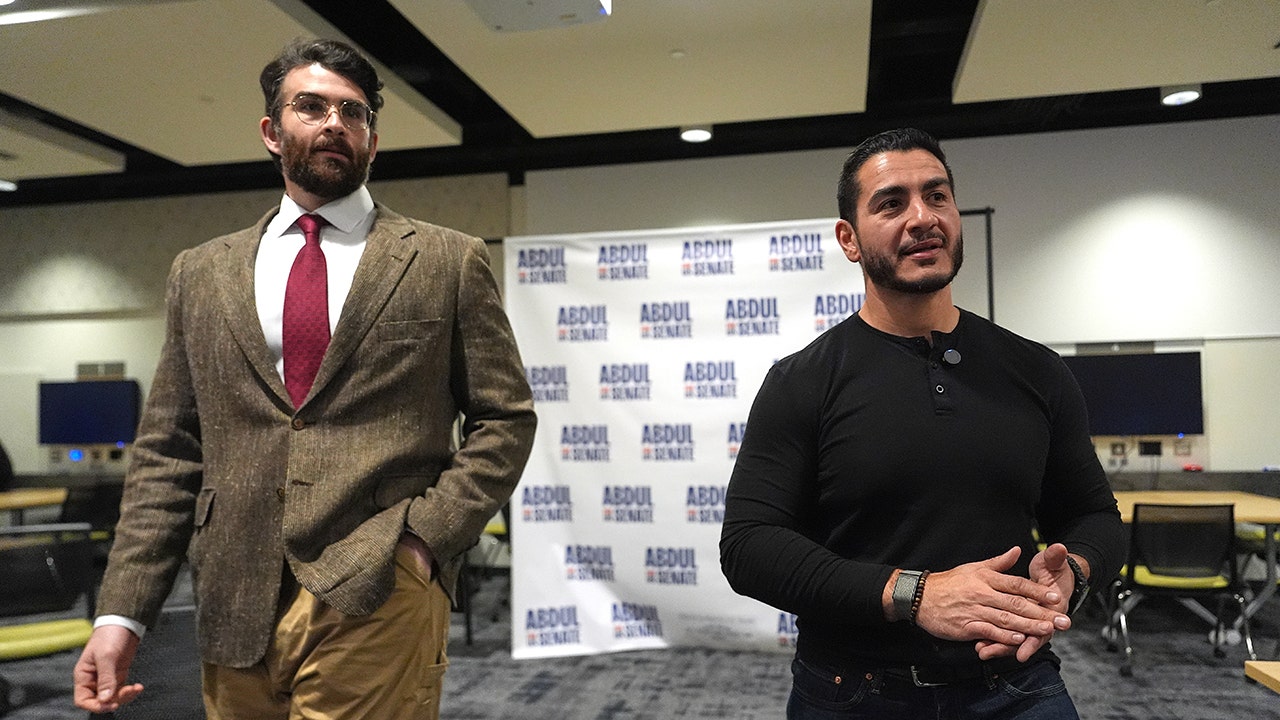
Abdul El-Sayed’s 9/11 post lit up social media fast, with critics zeroing in on both the message itself and his ties to Hasan Piker. The backlash quickly spilled into the Michigan Senate race, where every word, gesture, and past association is getting dragged into the spotlight.
El-Sayed, the Democratic candidate for U.S. Senate in Michigan, set off a wave of outrage after posting a 9/11 message on X. His note said, “They didn’t just attack America that day they attacked the idea of America,” .
He went on to say, “The notion of a nation brought together by ideals — a place where freedom and commitment to justice bind us, even if, at times, we struggle to fully realize it,” and then added, “Today on 9/11 we remember the lives that were taken from us in a terrible act of terrorism.”
The reaction online was immediate, and most of it was not kind. Critics quickly pointed to El-Sayed’s public friendship with Hasan Piker, the progressive streamer who has repeatedly drawn heat for saying the U.S. “deserved 9/11.”
One conservative X account blasted the post bluntly, writing, “Shut up, you FRAUD,” Friday. Other Republican figures piled on with the same basic message, arguing that El-Sayed could not distance himself from Piker while still appearing beside him in public.
https://x.com/AbdulElSayed/status/2098387991718769151?s=20
Steve Guest, a former staffer for Sen. Ted Cruz, shared a photo of El-Sayed and Piker together and posted, “This you?” He also included one of Piker’s own lines in the caption, turning the moment into a bigger political jab.
GOP consultant Ryan Girdusky also fired off a sharp response, saying, “Campaigning with a guy who said we deserved 9/11… his brazen dishonesty makes him all the bigger piece of s—,” The tone from critics was less about nuance and more about disbelief that El-Sayed would keep running close to a figure carrying that kind of baggage.
National Republican Senatorial Committee communications director Joanna Rodriguez added to the pressure, writing, “You’re a disgrace. You remain unwilling to disavow your chief spokesman who said “America deserved 9/11,” She followed that up by saying, “You belittled the American lives lost year after year while giving excuses and showing sympathy for terrorists.”
GOP digital strategist Mike Hahn also mocked El-Sayed’s response, saying, “Good job reading from that script buddy,” The pile-on showed how quickly the story moved from a single social media post to a full-blown messaging fight over judgment, loyalty, and political credibility.
Joey Mannarino, co-founder of the Overton Institute, went even harder, questioning how El-Sayed had any real momentum at all in the race. He argued that a candidate who keeps close company with someone making comments like that is asking for trouble, especially in a state where the Senate contest is already competitive.
El-Sayed has tried before to draw a line between himself and Piker. After Piker called Israel a “Jewish ISIS,” El-Sayed said, “But I want to be crystal clear, nobody speaks for this campaign besides me and my campaign spokesperson,” and then shifted attention back to everyday issues like gas, groceries, schools, and healthcare.
That message has not stopped the criticism from sticking. For opponents, the problem is not just one post, but the broader pattern of explaining away Piker’s rhetoric while still showing up around him, which makes every fresh statement feel like damage control.
There was also a sharp-eyed reading of how El-Sayed framed the anniversary itself. Chuck Ross of The Washington Free Beacon noted that the post stayed focused on 9/11, unlike some of El-Sayed’s past anniversary comments that leaned heavily into the wars that followed and the larger “War on Terror” aftermath.
Ross wrote, “El-Sayed, reading off a teleprompter, gives a statement about 9/11. This time he sticks to just 9/11 and not the ‘War on Terror’ aftermath that he usually mentions in his 9/11 anniversary posts,” That difference did not calm the controversy. It only gave critics more to chew on as they tried to frame his message as carefully managed rather than heartfelt.
El-Sayed has also described the war on terror as an example of military aggression, including in comments tied to the Gaza conflict in 2023. That history keeps resurfacing whenever he speaks about 9/11, since his critics see a consistent pattern of turning a national tragedy into a broader political argument.
His campaign did not answer questions about why he has not done more to publicly disavow Piker. With Michigan’s Senate race already under a microscope, even a single post can trigger a storm that hangs around long after the timeline moves on.
