
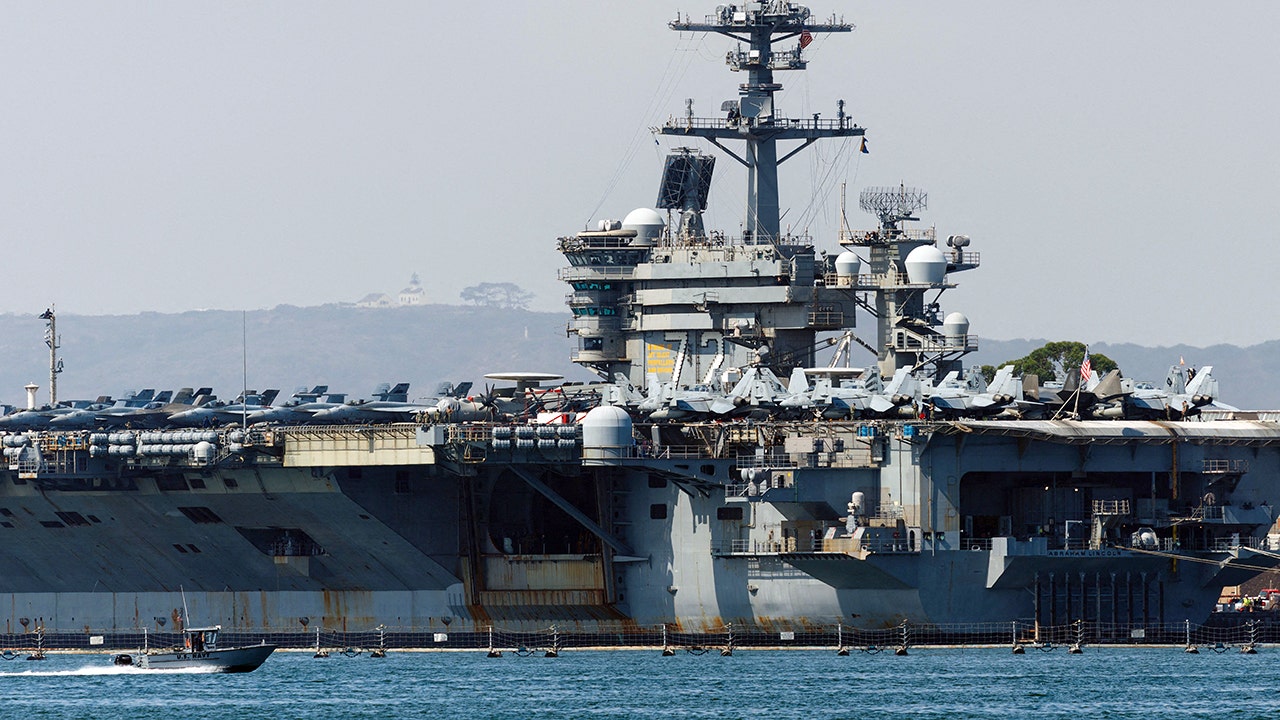
The latest carrier shuffle lays bare a problem Washington can’t spin away: every surge into the Middle East has a price in the Pacific. With the USS George Washington moving to relieve the USS Abraham Lincoln, the U.S. is showing how fast an Iran fight can pull attention, ships, and readiness away from the challenge of deterring China.
That does not mean Beijing is ready to move on Taiwan tomorrow. It does mean American power is finite, and a carrier sent to one theater is unavailable in another. That simple fact is now driving a bigger argument about whether U.S. strategy matches the world as it is, or the one leaders wish they had.
The pressure on the force is not just about hulls in the water. Adm. Brad Cooper’s recent trip through the Middle East, along with the roughly 50,000 U.S. service members spread across the region, shows how much bandwidth Iran is consuming. Ships, aircraft, munitions, logistics, and command attention are all getting pulled into a conflict that sits beside, not below, the Indo-Pacific priority.
This is where the real dilemma gets sharp. The U.S. can fight in more than one place, but deterrence is a different test. Deterrence depends on convincing Beijing that the cost of making a move in the Pacific will be too high, and that becomes harder when American combat power is tied down elsewhere.
The National Defense Strategy makes the hierarchy clear. It emphasizes denial defense along the First Island Chain and puts deterring China near the top of the list, while expecting allies to carry more weight in other regions. That kind of strategy only works if the country is willing to make hard choices when crises collide.
History is full of warning signs for nations that overextend. Britain learned that the hard way before Singapore fell in 1942, when its commitments stretched across too many theaters and its naval strength could not cover everything at once. The issue was never courage, but capacity, and the gap between promises and what the fleet could actually handle.
The United States drew a different lesson in World War II. Roosevelt and Churchill kept the main Allied effort aimed at Germany first, even while the Pacific war raged after Pearl Harbor. They understood that strategy means ranking threats, not treating every front as if it deserves equal attention and equal resources.
That same discipline is missing when officials talk as if every crisis can be met with the same force, every time. The country still has serious military power, but power alone is not strategy. Strategy is the art of deciding what matters most and what can wait, even when the pressure to do everything at once is intense.
Naval power makes the tradeoff especially visible. Airpower can be shifted faster, but ships, crews, maintenance, and munitions all come with limits that do not bend to slogans. When a carrier is committed to the Middle East, it is not sitting in the Western Pacific helping keep China honest.
The Abraham Lincoln is a perfect example of that strain. Its deployment has run beyond 260 days at sea, and questions about the impact on the ship and its nearly 5,000-person crew keep piling up. Rotating in the George Washington may be necessary, but necessary moves still force the same uncomfortable math.
More ships would help, but not in time to solve this crisis. New carriers take years, not months, and the bigger problems are deeper anyway: shipbuilding capacity, maintenance delays, and missile stockpiles that are getting hammered by constant demand. The fleet that exists today is the fleet that has to carry the load right now.
That is why the longer the Iran conflict drags on, the more the cost spreads beyond the region itself. Every extra commitment in the Middle East raises the stakes for U.S. readiness in Asia and makes it harder to keep deterrence credible. Washington can keep making the same move, but it should stop pretending the tradeoff is free.
The White House and Congress need to look at that choice with open eyes. Which interests are truly vital, which can be carried more by allies, and which forces need to stay reserved for the most dangerous contingency are not academic questions anymore. They are the kind of questions that decide whether America is still shaping events, or just reacting to them one crisis at a time.
