
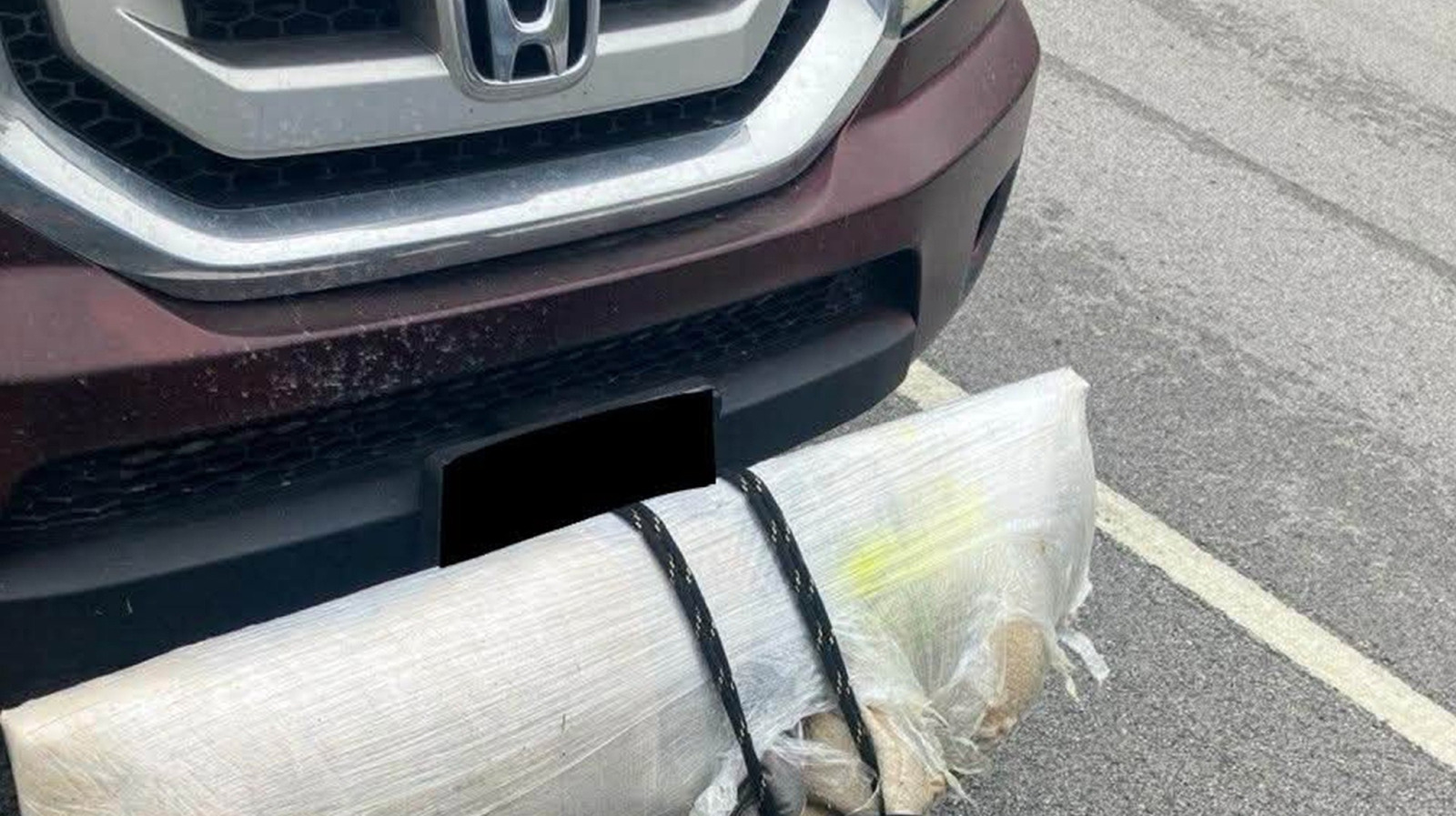
Iowa highway patrol troopers recently ran into a roadside stunt that turned a routine traffic watch into something much stranger. Two passenger cars were linked together in a way that looked improvised, risky, and just plain odd, with one vehicle doing the pushing while both crept along far below normal highway speed.
The scene unfolded on I-80 and was unusual enough that the Iowa State Patrol Commercial Motor Vehicle Unit decided to post about it publicly. According to the account, a trooper stopped a vehicle that was attempting to push another vehicle toward Nebraska while traveling at only 31 mph.
The setup itself was hard to miss. A homemade shock-absorbing bumper sat between the two cars, apparently intended to soften the contact and keep the front vehicle moving without a tow truck in sight. It showed a lot of ingenuity, but not much regard for how traffic is supposed to move on a major interstate.
What made the whole thing worse was the pace. The pair was reportedly rolling at about 35 mph for what could have been more than 100 miles, even though the road carried a 40 mph minimum in that stretch. On a highway built for faster, steadier traffic, that kind of crawl can create its own brand of danger.
The response from law enforcement was not especially dramatic, but it was firm. The driver behind the stunt received a citation for failure to maintain minimum speed and a warning tied to moving an unsafe vehicle.
That citation focused on something many drivers overlook until it becomes a problem. Going too slow on a highway can be just as disruptive as speeding, since other vehicles have to react suddenly and traffic can bunch up behind an obstruction that does not belong in the lane. The whole point of minimum-speed rules is to keep traffic predictable.
In Iowa, the law spells that out pretty clearly. Drivers are expected to stay above the minimum speed unless they have a legitimate safety reason to slow down, and law enforcement can step in when someone is blocking the normal flow of traffic.
There is also a penalty attached when a driver refuses to comply. While safety-based exceptions exist, they are meant for real conditions, not for improvised cross-state car hauling with one vehicle physically pushing another.
The online reaction to the patrol’s post added a little humor to the mix. One Facebook reply asked, “So you’re saying if they were at the 40 minimum they would have been okay? Asking for a friend of course…”
Still, the joke points to the larger issue. Minimum-speed rules are not there to nag drivers for being cautious, but to keep highways from turning into rolling bottlenecks where every lane change, brake tap, and merge becomes a gamble.
The oddity of the whole situation is what made it stand out, but the lesson behind it is pretty ordinary. Homemade fixes can look clever for a minute, yet highways are not the place to test them, especially when the plan involves dragging a broken car along behind another one at freeway speeds in the wrong direction of common sense.
For anyone tempted to get inventive after a breakdown, the better move is to use proper towing equipment or a vehicle built for the job. When a roadside solution depends on luck, a patched-together bumper, and the hope that nobody notices, the trip is already in trouble before it really starts.
