
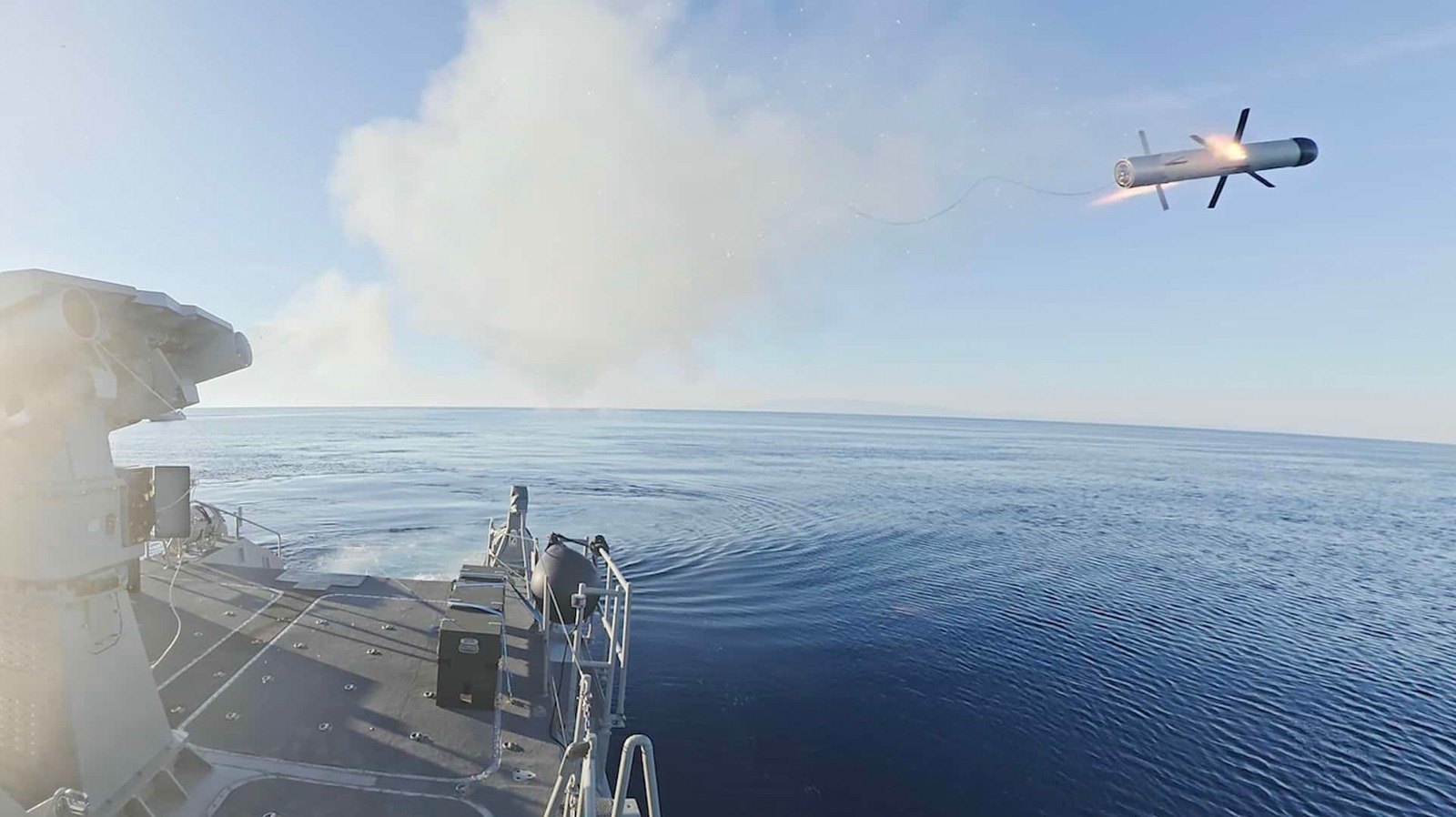
The latest naval missile trial put new precision weapons to work in a brutal real-world style test, and the result was hard to miss: a retired frigate ended up on the bottom of the sea. The exercise highlighted how allied navies are using compact, high-tech missiles and torpedoes together, with the Spike NLOS and Spike ER getting a close look as modern strike tools built for flexibility, range, and speed. It also showed how quickly older ships can become practice targets when navies want proof instead of promises.
The U.S. Navy has long used SINKEX events to test weapons against decommissioned ships, and the concept is simple enough to grab attention. Rather than chasing a live enemy vessel, crews fire on a ship that has already reached the end of its service life, turning it into a floating test case for missiles, torpedoes, and tactics. That approach gives commanders a more honest look at what a weapon can do when steel, water, and explosives all meet at once.
This round of testing took place in the northern Cretan Sea on October 21, 2026, with Greek and Israeli forces involved. The target was the Hellenic Navy’s Elli-class frigate Bouboulina, a ship commissioned in 1983 and used here as the final stage of a highly coordinated strike. The missile launch platforms were modest too, coming from a Machitis-class patrol vessel and a Mk. V Special Operations Craft, which made the whole event a useful demonstration of what smaller boats can carry.
Spike NLOS is the kind of weapon that gets plenty of attention because it is built to hit hard without needing a direct line of sight. It is a long-range precision strike missile developed by Lockheed Martin and designed for use from multiple platforms, which gives allied navies and ground forces more ways to reach distant targets. In this exercise, the missile proved it could bring serious damage from relatively small launch platforms before the final blow came from something even heavier.
The torpedo that finished the job was an AEG SUT 264 fired from a Hellenic Navy Papanikolis-class submarine. That layered attack mattered because it showed how missile and submarine power can work together against a single target, each weapon serving a different purpose in a larger strike chain. The frigate absorbed the punishment, took the hits, and eventually went under, leaving behind a very visible sign of what coordinated modern naval firepower can do.
One reason the Spike family keeps drawing interest is its “fire-and-forget” style paired with real-time targeting support. The missiles use electro-optical and infrared sensors, which means operators can receive video during flight and even gather intelligence, surveillance, and reconnaissance data while the missile is still in the air. That makes the weapon more than just a punch, since it also helps crews see what they are hitting and adjust to fast-moving conditions at sea or on land.
Greece has already equipped eight of its vessels with the missile system, and that kind of adoption says plenty about confidence in the weapon’s value. The missiles are also combat-proven and already used by the U.S. military along with several international partners, including Israel and Greece. With sea-to-shore support, sea-to-sea engagements, helicopter launches, and beyond-line-of-sight targeting all on the table, the system is built for the kind of messy battlefield where versatility matters more than flash.
The sixth-generation version represents a clear step forward from earlier models, and the recent exercise gave it a tough, public workout. It is one thing to talk about range and precision on paper, and another to watch a frigate get shredded in a live test that blends missiles, torpedoes, submarines, and small attack craft. As more allies watch results like these, the appetite for flexible naval strike weapons is likely to keep growing, especially for forces that want options without needing giant ships to make them happen.
