
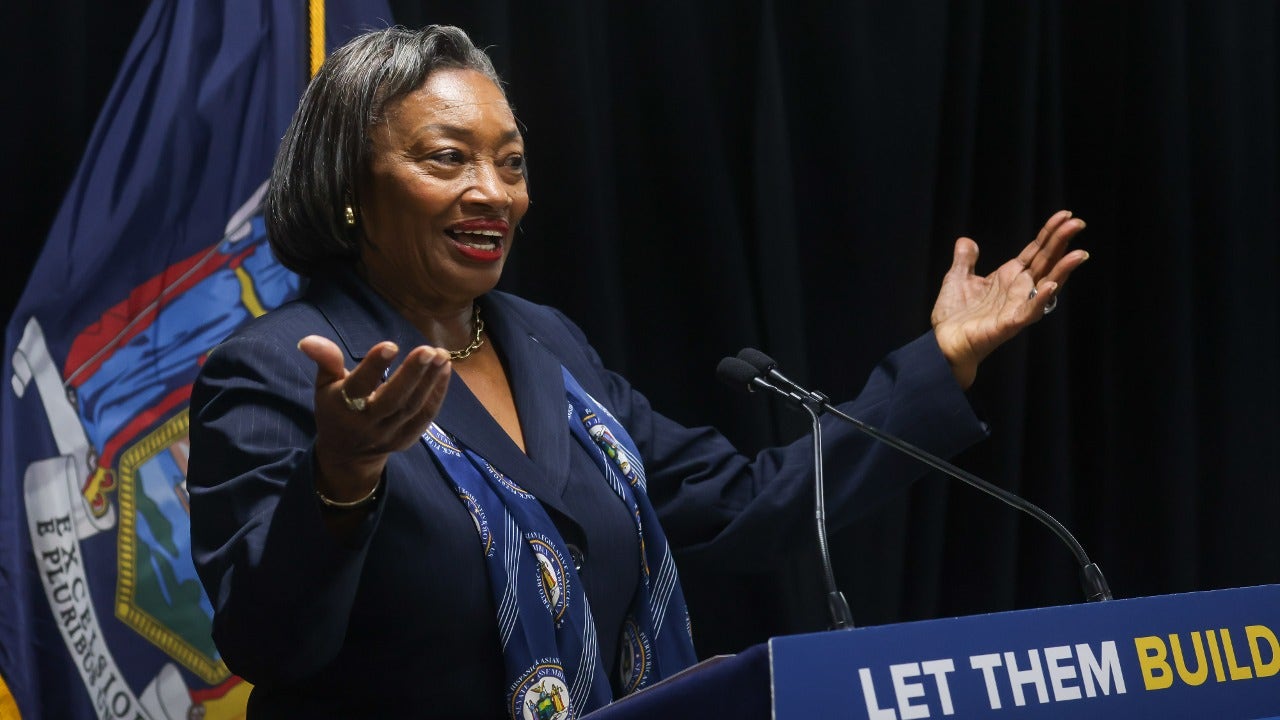
Andrea Stewart-Cousins, a towering figure in New York Democratic politics and the first Black woman to lead the state Senate, has died at 76, according to multiple reports. Her death closes the book on a long run that stretched from local lawmaking to the top of one of the state’s most powerful chambers, where she became a familiar and forceful presence. The reaction has been immediate, with allies and colleagues pointing to a career built on persistence, discipline, and political grit.
Stewart-Cousins was found dead in her Yonkers home on Friday morning, police sources told the New York Post. Her daughter reportedly tried to reach her on Thursday night before a welfare check was requested. The suddenness of the news has added a sharp edge to the outpouring of condolences, especially for those who knew her as a steady, commanding voice in Albany.
Her rise inside state politics was not fast, but it was unmistakable. First elected to the New York State Senate in 2007, she spent years working through the chamber as Democrats battled internal fractures and a shifting political map. By January 2019, after Democrats captured the majority in the 2018 midterms, she was elevated to majority leader, becoming the first Black woman to hold that role in the chamber’s history.
That moment mattered beyond party lines because it marked a real break from Albany’s old guard. Democrats had struggled for years to lock down control of the Senate, and Stewart-Cousins stepped in as the conference finally gained a stable majority after decades of turbulence. Her leadership helped shape a period when lawmakers pushed hard on issues like immigration, abortion protections, and tenants’ rights.
Her influence also showed in the way people around state government talked about her. Mike Murphy, a spokesman for the Democratic majority, called her a groundbreaking leader who shattered one of New York’s highest glass ceilings. That kind of language came naturally to those who saw her as more than just a title holder, but as someone who changed the power structure by simply occupying the room and leading it.
The tributes have stretched across politics, business, and public life. The Business Council of New York State said it was deeply saddened by her passing and praised her for making history as the first woman to lead a conference in the New York State Legislature. The group also said she was willing to listen and work toward common ground, a quality that often separates a short-lived power player from someone who leaves a real mark.
Rep. Ritchie Torres, D-N.Y., said he was saddened to hear the news and described her as a trailblazer whose leadership helped shape New York. He said her commitment to public service and the people she represented would not be forgotten, a sentiment that fit the broader tone of the day. For many in New York politics, her legacy is tied not just to titles, but to the doors she opened for others who had long been kept outside.
Stewart-Cousins’ career unfolded during a period when New York politics was often messy, loud, and deeply divided. She navigated that environment with a style that was measured but firm, making her one of the most recognizable Democratic leaders in the state. Even as the chamber shifted and the debates kept coming, she remained a central figure in the state’s political life, and her absence is going to be felt in Albany for a long time.
