
A 2-liter engine might sound modest on paper, but modern tuning, turbocharging, and hybrid help have turned that size into a real power playground. From family cars that punch way above their weight to wild concept engines that flirt with supercar numbers, the ceiling keeps climbing fast.
Engine size still matters, sure, but it no longer tells the whole story. In today’s performance world, a small four-cylinder can hang with engines that used to need twice the displacement to reach the same territory.
There’s a reason big engines have always earned respect. A huge V8 or a monstrous W16 usually brings serious horsepower and torque, and the numbers can get outrageous in a hurry. That old rule of thumb still holds up most of the time, but it does not lock smaller engines out of the conversation.
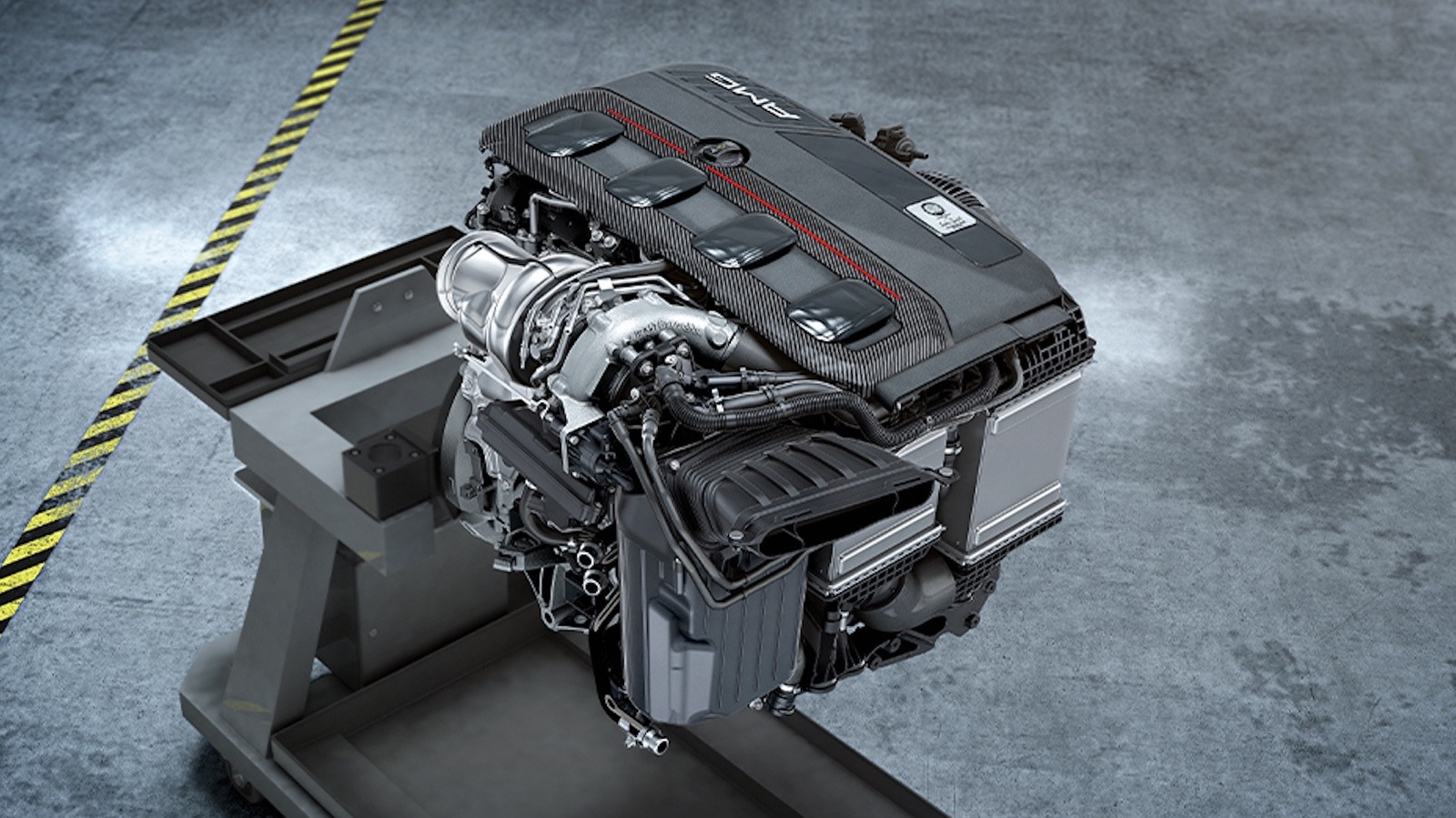
The best proof comes from the Mercedes-AMG C63. Its 2.0-liter turbocharged four-cylinder, working with an electric motor, delivers a combined 671 horsepower, while the gas engine alone makes 469 horsepower. That is a wild figure for such a compact setup, and it even outguns the 420-horsepower 6.2-liter V8 in a new Chevy Suburban.
That kind of output would have sounded like fantasy not all that long ago. Now it shows just how far engineering has come, especially when a manufacturer decides to squeeze every last bit of performance out of a small displacement platform.
If the conversation expands beyond what is actually sold at dealerships, the numbers get even more dramatic. Koenigsegg’s “Little Friendly Giant,” a 2.0-liter three-cylinder created for the Gemera, was designed to make 600 horsepower. It never reached production in that form, but it still stands as a jaw-dropping example of what a tiny engine can be built to do.
That same Gemera later went in a different direction, pairing a massive 1,500-horsepower V8 with 800-horsepower electric motors. Even so, the earlier three-cylinder idea proved the point loud and clear: displacement is not the boss anymore.
Looking back, the performance world has been testing those limits for decades. BMW’s 1.5-liter M12 Formula 1 engine made around 1,400 horsepower in race trim, which is the kind of output that makes a street engine seem sleepy by comparison. Racing has always pushed the edge, but those ideas eventually seep into production cars too.
Among road-going machines, the Mitsubishi Lancer Evolution deserves a spot in the conversation. Its 2.0-liter turbocharged four-cylinder in Final Edition trim made 303 horsepower, which was a serious number in 2016 and still feels lively today.
Even outside the Evo crowd, the industry has been happy to prove that a small engine can still bring attitude. The sixth-gen Chevrolet Camaro was available with a turbocharged 275-horsepower four-cylinder, and that alone was enough to change a few minds about what a muscle car formula could look like.
The turbocharger has been the quiet game changer in all of this. It lets a small engine breathe like a much larger one, then hybrid support and smarter tuning turn that extra airflow into real-world shove. The result is a new kind of power logic, where a 2.0-liter can stop feeling like the “base” choice and start acting like the hot ticket.
That is why the question of how much horsepower a 2-liter engine can actually make has such a fun answer. The honest ceiling keeps moving, and every new benchmark makes the old ones look a little tame. Somewhere out there, engineers are probably already working on the next small engine that will make people rethink what “small” even means.
