
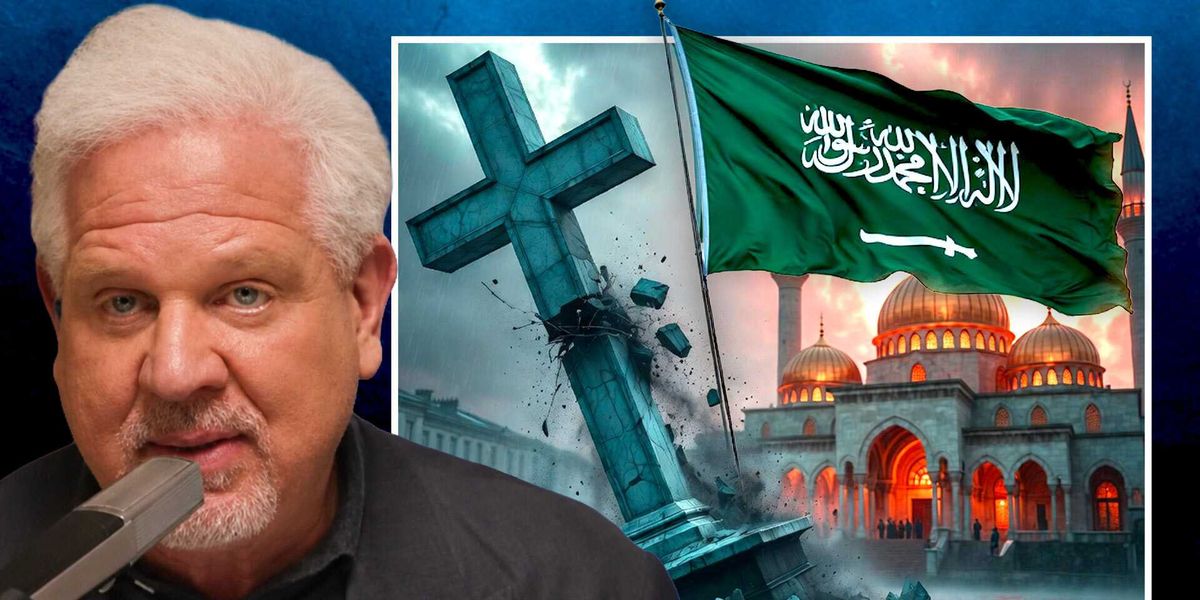
Glenn Beck is sounding a clear warning about cultural shifts he believes conservatives must stop before they become irreversible, arguing that failing to carry forward the Trump-era momentum opens the door to social change that sidelines Christianity and traditional identity. He and guest Peter McIlvenna trace a path from Ireland’s dramatic turn to liberal social policy to broader trends in the United Kingdom and beyond, framing those changes as a lesson for American conservatives. The conversation centers on identity, religious erosion, and the political consequences of letting cultural institutions collapse without a counterforce. The piece presses a Republican view that preserving identity and faith is central to resisting a fast-moving cultural transformation.
Beck makes the political stakes explicit, warning that the movement’s future depends on who takes the baton. “If we don’t get a Marco Rubio, or whoever is running and is the candidate, in line with what Donald Trump is doing right now — if we don’t get that, we’re going to be back here with a vengeance,” Beck warned. That line is a raw reminder that conservative gains are not permanent; they require candidates who will carry the same priorities forward. The urgency is striking: electing the wrong successor risks undoing what years of political engagement have achieved.
There’s a personal angle to the urgency because Peter McIlvenna brings a front-row seat to the collapse Beck describes. McIlvenna grew up in Northern Ireland and in the Republic of Ireland, and he says what he saw on the ground looked nothing like the Ireland of old. “We’ll be right behind you,” he tells Peter McIlvenna. His voice gives texture to Beck’s warning, turning abstract political risk into lived cultural loss.
They use Ireland as a striking case study for how rapid cultural change can happen in a generation, and McIlvenna lays out the shift without hedging. “Ireland is an interesting test case, going from probably the most staunchly Christian Catholic country to now the most liberal country. What happened on the abortion laws was unbelievable. The rush to same-sex marriage so quick,” he explains. The speed of those changes is presented as proof that institutions can be dismantled faster than people expect when momentum goes unchecked.
McIlvenna points a finger at how scandals were weaponized to hollow out moral authority rather than fixed from within. “Part of that was the sex scandals that were in the Catholic Church were then used to destroy any remnant of Christianity within the country. Instead of saying ‘this is happening in parts of Church; we need to address it,’ the Church was decimated,” he continues. That framing treats scandal as a tool exploited by cultural opponents, not only as a failing that needed internal repair.
He also highlights a double standard critics rarely confront, making an uncomfortable comparison to how other faiths are treated in the public square. The hypocrisy, McIlvenna points out, is when you point out that Islam has the same problems — or worse — the response is that it’s “a few bad apples.” By calling this out, he argues society applies different rules depending on which religion is under scrutiny, and that inconsistency has political consequences.
McIlvenna goes further to describe the organized nature of the campaign against Christianity in Ireland, suggesting it wasn’t merely incidental erosion but an intentional push. “It was a concerted attack on the Church, destroying the Church’s role as a guiding light for Irish society to now being dismissed and ridiculed and rejected,” he explains. That language positions the transformation as ideological and purposeful, which adds urgency to Beck’s broader political warning.
They say this pattern is not isolated to Ireland; the same pressures show up across the United Kingdom and in pockets across the West. The decline of Christianity and the visible rise of other identities combine with a vacuum of national self-understanding to create a volatile mix. “Islam presents itself as dominant and gives them an identity. And I think that’s the thing we are lacking as a nation. We don’t know our identity,” he says. “We have ripped out Christianity from the nation.” That claim paints identity politics as both a symptom and a cause of social fragmentation.
From a Republican standpoint the takeaway is blunt: cultural institutions matter, and political victories don’t automatically protect them. The argument is that conservatives must do more than win elections; they must hold and reassert the cultural pillars that give a nation cohesion. That means organizing, speaking plainly about faith and identity, and electing leaders who will match policy with cultural confidence rather than assuming momentum will persist on its own.
The conversation ends as a call to vigilance rather than a comforting conclusion, leaving readers with a clear implication: letting momentum slip invites rapid cultural changes we might not like. The tone is cautionary and mobilizing, urging conservatives to see culture as a battlefield that requires attention as much as any campaign trail. The urgency underlines a Republican plea to act now, not later, if the country’s identity and faith are to be preserved.
