
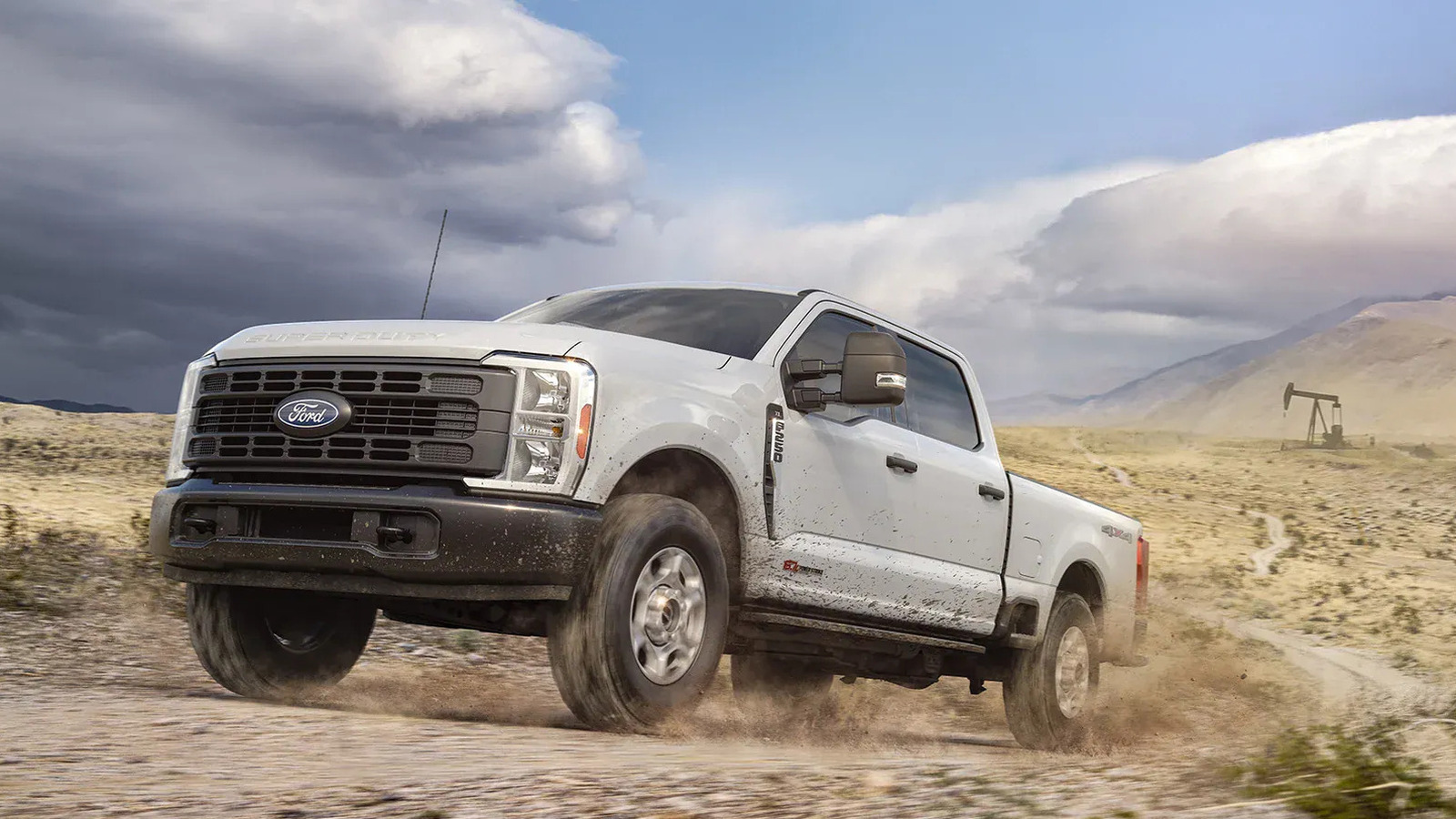
- Ford’s 7.3-liter Godzilla V8 and its work-truck mission
- Simplicity, displacement, and durability as design strengths
- Power and towing-focused performance in Super Duty applications
- How the engine’s layout helps reduce failure points
- Known tradeoffs, including fuel economy and a few flaws
Ford’s 7.3-liter Godzilla crate engine stands out because it leans into old-school strength instead of chasing gimmicks. Built for heavy-duty jobs, it delivers the kind of straightforward muscle that makes sense in a work truck, where durability and usable power matter more than flashy tech. That simple formula is a big reason so many owners trust it for hauling, towing, and long miles.
At its core, the Godzilla is a large-displacement gasoline V8 with a layout that keeps things refreshingly familiar. It uses an iron block, aluminum heads, and a pushrod overhead-valve design, which means fewer complicated systems crowding the engine bay. Ford paired that traditional setup with modern touches like variable valve timing, giving the engine a useful blend of proven hardware and updated efficiency.
The whole point of the engine was to replace the outgoing V10 and give Super Duty trucks a strong, dependable option that could go toe to toe with the competition. When it launched, it brought 430 horsepower and 475 lb-ft of torque, which is plenty for serious truck duty. For buyers wanting even more, the Megazilla crate version turns the volume up hard with 612 horsepower and 670 lb-ft of torque.
What makes the Godzilla so appealing is not just the numbers, but the way those numbers are delivered. There is no turbocharging or supercharging here, so the engine is not depending on extra layers of forced induction to make its muscle. Instead, it relies on sheer displacement and a straightforward valvetrain, the kind of setup that tends to be easier to understand, easier to service, and easier to trust over the long haul.
That simplicity matters because every added part is another possible failure point. A modern engine can absolutely be strong and reliable, but the Godzilla takes the more direct road by trimming complexity wherever it can. That is part of why it fits the same broad tradition as Ford’s older workhorse engines, from the legendary 7.3 Power Stroke to earlier V8s that earned their reputations the hard way, mile after mile.
There is also a long history behind Ford’s confidence in this kind of engine architecture. Pushrod V8s have been around forever, and Ford has spent decades refining the formula across everything from muscle cars to heavy-duty trucks. The Godzilla feels like a product of that experience, built not to impress on a spec sheet alone, but to keep showing up when the job gets rough.
That does not mean it is flawless. Some owners have reported issues like lifter or cam problems, rough idle behavior, and wiring quirks, which is enough to keep expectations grounded. Even so, the engine’s reputation has stayed strong because its bigger story is about resilience, not perfection, and real-world use has shown it can rack up serious miles without drama.
Fuel economy is not the Godzilla’s party trick, and nobody buying a big gas V8 in a Super Duty expects miracles at the pump. What it gives back instead is a no-nonsense kind of confidence, the sort that comes from an engine built to work hard without overcomplicating the job. In a truck world full of shrinking engines and layers of boost, that alone makes the 7.3-liter Godzilla feel almost rebellious.
