
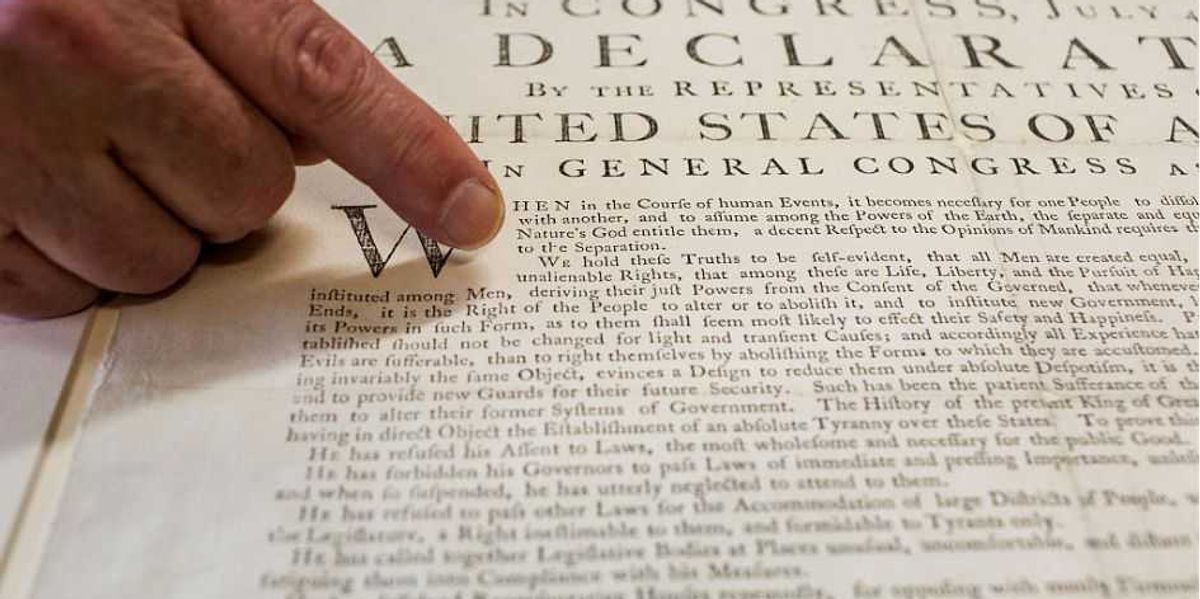
On a single night in July 1776, a press in Philadelphia turned the radical act of declaring independence into words the public could read, and one of those sheets later crossed an ocean, vanished into government files, and reappeared centuries later as a quiet witness to a dramatic break between Britain and its colonies.
When Congress approved the Declaration, John Dunlap and his crew worked through the night to print broadsides meant to move fast and vanish faster. Those sheets were built to be read aloud, folded into pockets, tacked to walls, and carried by riders to tell soldiers and citizens that something irreversible had begun. Most of those first copies did not survive; they were used up or lost in the chaos of rebellion.
One Dunlap broadside, however, took a very different route. Within weeks it had been intercepted by British forces and shipped back to London, arriving with a dispatch from the Howe brothers, the commanders who also wore the odd hat of peace commissioners. That sheet became evidence that the colonists had taken the final step: they were “absolved from all allegiance to the British Crown.”
What might have been a straightforward instance of wartime capture turned into long-term obscurity. The broadside and its accompanying papers were cataloged with the kind of bureaucratic indifference that makes archives strange time machines — a landmark political text treated like routine correspondence. It stayed in government files for more than two centuries, doing its patient work as history simmered elsewhere.
Modern researchers eventually traced this particular copy back to a Jewish merchant in Philadelphia named Jonas Phillips, who appears to have posted the sheet to Amsterdam to spread the news of independence in Europe. To try and slip past searches, he enclosed the package with a short note in Yiddish that referred only to “a declaration of that whole country,” but that gamble failed. The letter, the broadside, and other papers were seized and absorbed into British records.
After its long dormancy, the document reemerged in the 21st century when archivists recognized it as one of the rare Dunlap printings. That discovery placed it among about two dozen known survivors of the first edition, making it both common in provenance and exceptional in survival. Today the sheet is on public view again as part of commemorations marking the nation’s founding era, carrying with it the odd intimacy of something once pocketed and forgotten.
The intercepted broadside also played a role on the other side of the Atlantic. Once copies reached London, Parliamentarians debated the meaning of American defiance and some even read the text aloud in the Lords. The presence of the Declaration in British political life turned it from an American manifesto into a piece of empire-wide argument; it tested assumptions about authority, consent, and whether a distant crown could hold an unwilling people.
The story underlines how information moved in the 18th century: slowly and unpredictably. Transatlantic travel meant that by the time ministers in Whitehall learned of events in America, those events were often already settled facts. That lag shaped decision making, military orders, and diplomatic moves, and it turned intercepted papers into strategic trophies as much as curiosities of record keeping.
What survives now is not just a printed sheet but a layered object — a messenger, evidence of interception, and a relic of bureaucratic routine. Its annotations and labels offer a glimpse of ordinary office work touching an extraordinary political moment. In that way, the broadside keeps surprising us: small, browned paper that once announced a revolution and later sat on a clerk’s desk, waiting for the right eye to spot its significance.
