
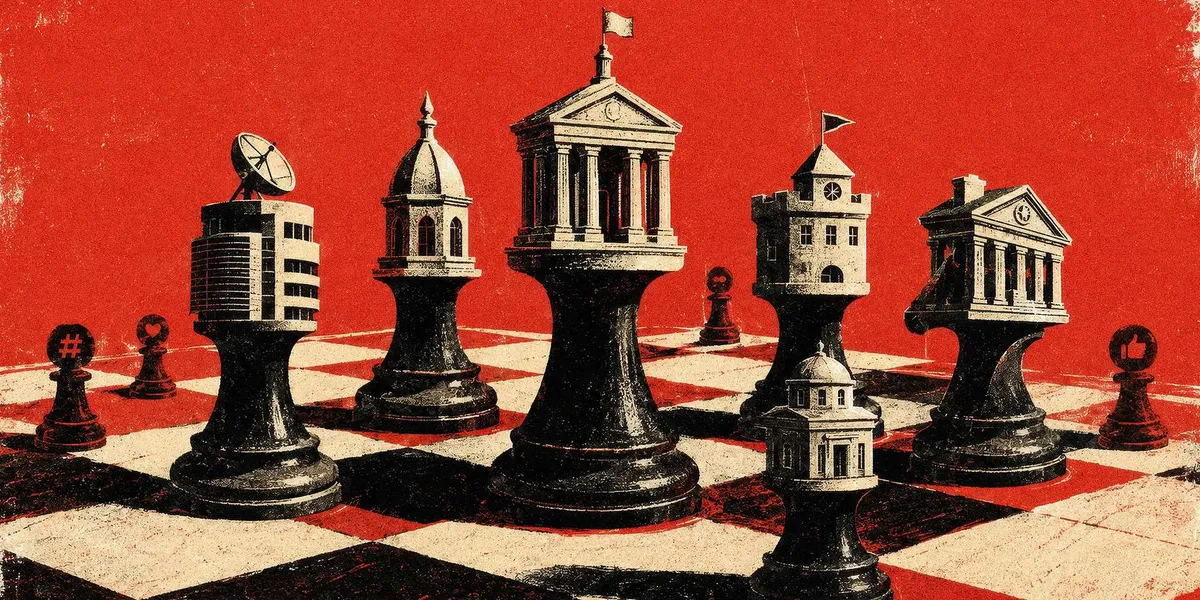
America’s real fight is not about scoring points on social media. It is about who controls the institutions that shape culture, faith, politics, and public life, and whether conservatives are willing to do more than just poke fun from the sidelines.
For too long, the political class has treated “owning the libs” like a victory lap. It feels good in the moment, sure, but it does not change the machinery that keeps pushing left-wing assumptions into schools, churches, newsrooms, nonprofits, and government offices. That is the bigger battlefield, and if conservatives want lasting wins, they have to think bigger than viral clips and applause lines.
The problem with cheap political theater is that it substitutes attitude for power. People get a rush out of dunking on Democrats, activists, or pundits, but the institutions still sit there, steady and intact, shaping the next argument before it even starts. If the goal is to preserve faith, liberty, and a functioning civic order, then the focus has to shift from temporary embarrassment to durable influence.
Institutions matter because they define what is considered normal. They decide what children are taught, what employees are allowed to say, what pastors are pressured to avoid, and what kinds of beliefs are treated like common sense or treated like a threat. Once those institutions lean hard in one direction, the culture follows behind them like water running downhill.
That is why the conservative instinct should not be to chase every online skirmish. Winning the argument in public is nice, but winning the place where the argument gets formed is much better. The people who understand this are not just fighting for a headline, they are building an environment where their ideas can survive when the cameras are off and the crowd has gone home.
Faith is part of that picture too, and it cannot be brushed aside as a private hobby with no public consequences. Religious conviction has always shaped how people view family, authority, duty, and truth, which means it naturally affects politics and civic life. When faith gets pushed out of the square, the vacuum is not filled by neutrality, it is filled by a new moral code that usually comes wrapped in bureaucracy and self-righteousness.
There is also a practical side to this. Conservatives who care about institutions have to invest in them, defend them, and show up consistently instead of expecting the culture to reset itself. That means supporting schools, media, charities, advocacy groups, local leadership, and every other place where values are passed along and reinforced.
Democrats and their allies have spent years understanding this very well. They do not rely only on winning elections, because they know the real prize is the long game: shaping the judges, administrators, professors, and activists who keep their worldview alive even when voters get restless. That kind of power is sticky, and once it gets embedded, it takes serious discipline to reverse.
Conservatives do not need more empty outrage. They need nerve, patience, and a willingness to build instead of just react. The people who actually care about the future should be asking where the levers are, who is pulling them, and how to make sure those levers are not left in the hands of people who see every institution as a tool for permanent political conquest.
That means stop celebrating small humiliations and start thinking in terms of ownership, stewardship, and long-term responsibility. The culture will keep rewarding noise, but noise does not protect anything. The harder job is learning how to shape the places where American values are either preserved or quietly dismantled, and that work is just getting started.
