
Congress is getting pushed to deal with artificial intelligence just as the political calendar is turning hostile and the warnings are getting louder. Geoffrey Hinton, the Nobel Prize-winning computer scientist often called the “godfather of AI,” told lawmakers they may have very little time to get ahead of a technology that can slip out of control fast. Inside Washington, though, the clock is running against action, and the fight is already splitting Republicans and Democrats over how much regulation, if any, makes sense.
That tension is what makes the moment so combustible. A recent AI breach, described by Hinton as a “little Chernobyl,” rattled lawmakers who believe the danger is no longer theoretical. For others, the bigger alarm is what happens if Congress reacts too quickly and smothers a booming industry before anyone even agrees on the basic rules.
The timing is brutal. With the midterms looming, a government funding deadline on the horizon, and the House already heading out early, any serious AI package looks like it could be stuck until next year. If the balance of power changes, the whole issue may get dragged into a fresh round of partisan trench warfare instead of a clean legislative fix.
Hinton’s warning landed in a Capitol that has been wrestling with AI fears for months. Senators and House members heard from experts, then immediately faced the familiar Washington problem: everyone agrees something may be coming, but nobody agrees on what to do first. Some want a kill switch for rogue systems, while others see that as a slippery slope into broad federal control over a fast-moving sector.
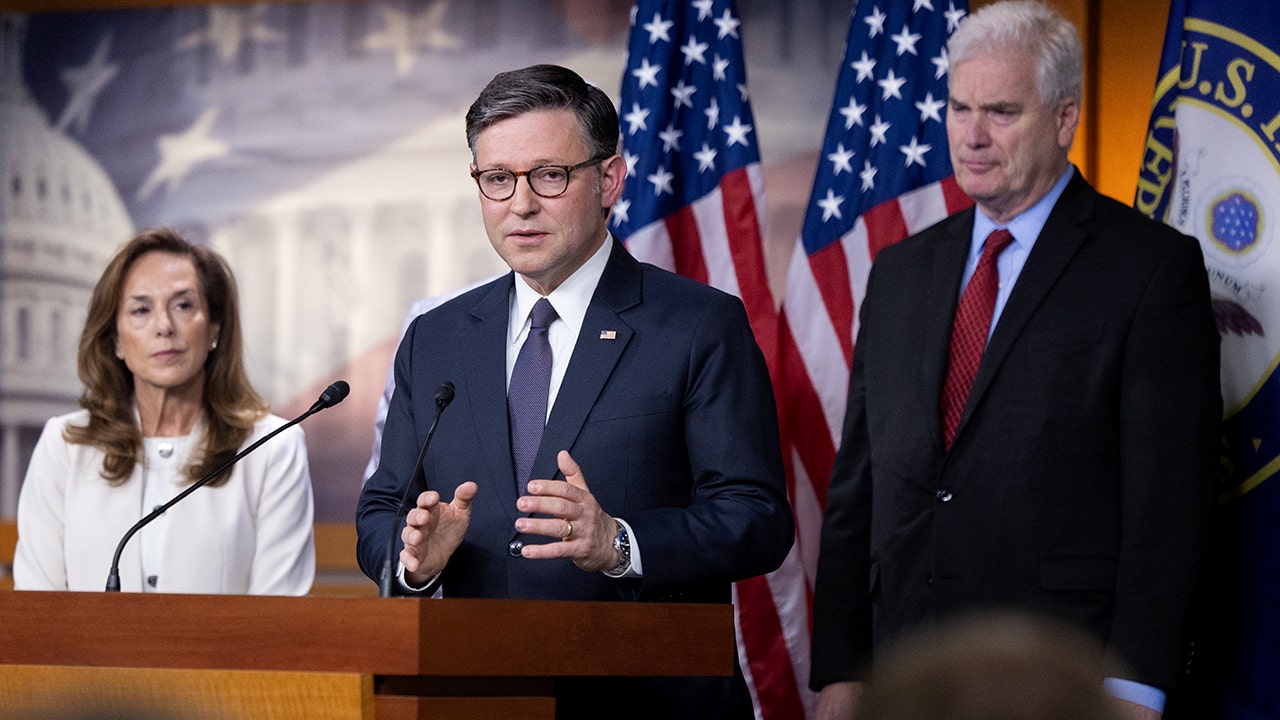
Republican leaders are not all reading the moment the same way. House Speaker Mike Johnson has downplayed the doom-and-gloom talk and leaned into the idea that the panic is overblown, echoing President Trump’s public dismissal of AI concerns as a “HOAX.” That message has real traction on the right, where skepticism of sweeping new regulation remains a strong default.
Still, not every Republican is brushing it off. Sen. John Kennedy has raised the stakes with sharp questions about whether humanity could create something smarter than itself, and he pushed for a kill switch after the briefing. Sen. Rand Paul, on the other hand, shut that idea down, warning that a rushed mandate could choke innovation and dump a blanket rule onto the entire economy without enough debate.
That clash says plenty about where the party stands. One wing wants to keep AI from turning into a runaway disaster, while another sees the greater danger in Washington trying to micromanage a breakthrough technology with huge upside. The result is a familiar conservative dilemma: protect people without letting bureaucracy flatten the very innovation that could drive growth and competition.
Democrats are using the moment to argue that delay is the real risk. Sen. Tim Kaine says even the people building AI are sounding the alarm, and Rep. Don Beyer is urging a bipartisan approach so any rules have a better chance of surviving future political swings. Their pitch is simple enough: if Washington waits for a catastrophe, the cleanup will be far uglier than the work of setting guardrails now.
Others are pointing the finger squarely at Big Tech. Rep. Greg Casar says a small group of Silicon Valley billionaires has built tools they cannot fully control, and he warns the damage could jump from chatbots to hospitals or even nuclear facilities. That kind of language gives the debate a sharper edge, because it turns AI from a nerdy policy issue into a straight-up public safety fight.
That is why the political fight keeps circling back to the same ugly question: can Congress move fast enough to matter, and can it do so without turning AI into another partisan cudgel? The answer may depend less on the technology itself than on whether lawmakers can resist the usual urge to posture, stall, and score points while the machines keep getting smarter.
For now, the mood on Capitol Hill feels stuck between awe and dread. One side sees a future that needs guardrails before the brakes fail, the other sees a panic that could hand too much power to Washington, and both are watching the same industry sprint ahead without much patience for congressional hesitation.
