
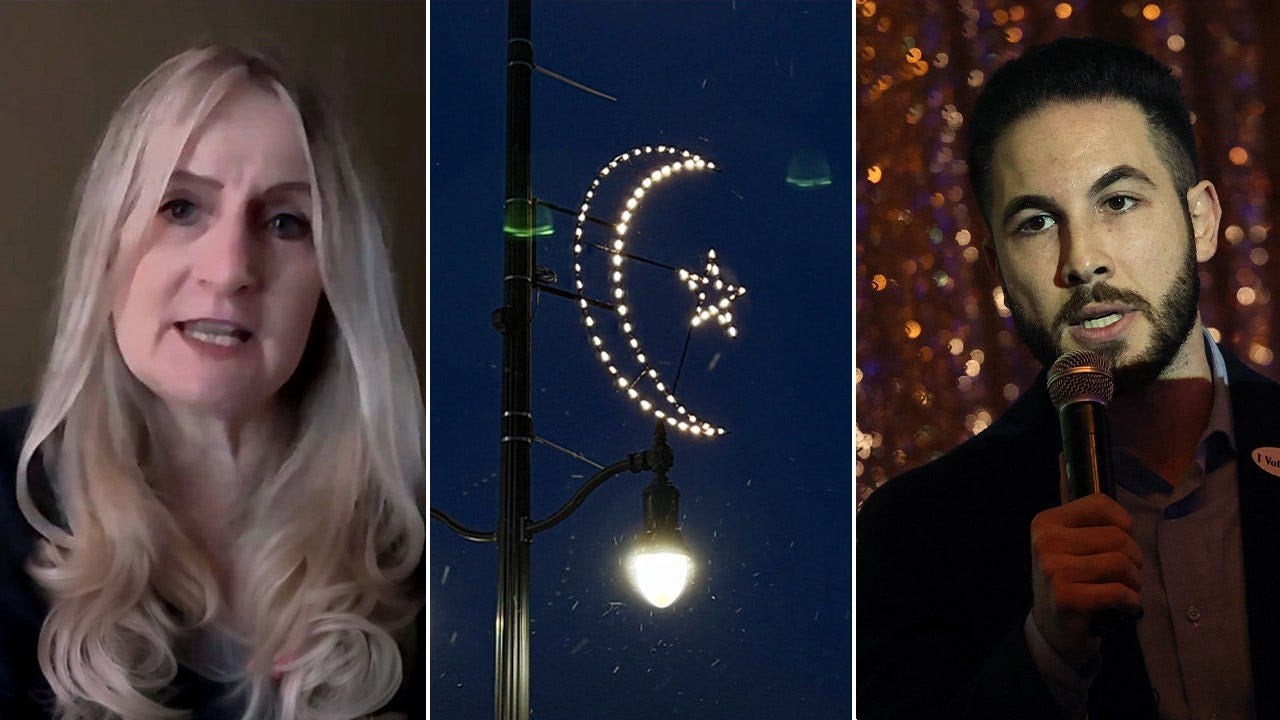
Margot Cleveland’s lawsuit against Dearborn, Michigan puts a sharp spotlight on a fight over public religious displays, city government neutrality, and whether local leaders are playing favorites. The dispute centers on Ramadan decorations, crescent moons, and claims that requests for Christian and Jewish symbols were brushed aside, turning a seasonal display into a constitutional clash.
Cleveland, a senior legal correspondent at The Federalist, says the city crossed a line by putting up Islamic holiday imagery in public spaces while refusing to extend the same treatment to other faiths. She argues that this kind of one-sided messaging sends a clear signal that some residents are welcome while others are being told to stand back and take it.
Her complaint says the issue first caught her attention while she was downtown and saw banners marking Ramadan along the street. With Lent underway and Easter and Passover approaching, she says the contrast was hard to ignore, especially with crescent moon displays standing alone as the city’s visible religious holiday message.
That’s where the case gets bigger than holiday decor. Cleveland says she asked the city attorney whether Dearborn would also recognize Christian and Jewish observances, but she did not get a response. From there, she shifted to public records requests and began digging into how far the city’s religious branding might extend.
According to her allegations, the pattern did not stop with street banners. She says she uncovered police department merchandise tied to Ramadan, including T-shirts marked with department branding and crescent moon imagery, which deepened her concern that the city was using public resources to back one faith tradition.
When she tried to raise the issue with city officials, Cleveland says she hit a wall. She claims messages went unanswered and that one council member later told her the council had been instructed not to engage with her, which only added fuel to the confrontation and made the whole thing feel more deliberate.
She then brought the matter directly to a city council meeting and asked for equal treatment. Her point was simple enough: if the city can put up Ramadan banners, then it can also make room for Easter, Passover, a Star of David, or a cross, along with symbols that reflect the broader community.
The lawsuit frames that as a First Amendment problem, not a complaint about religion itself. Cleveland has said she is not asking the city to stop acknowledging Ramadan, only to stop treating Christians and Jews as second-class when it comes to public expression and official recognition.
The city, for its part, has rejected the accusation and says it serves residents fairly regardless of faith or background. That response matters because the case is now less about a seasonal display and more about whether government neutrality means equal access for every major faith or just a selective welcome for one.
Dearborn’s mayor, Abdullah Hammoud, has also been pulled into the lawsuit, and his office has not offered public comment on the dispute. That silence has done little to calm the controversy, especially as the case has attracted attention far beyond southeast Michigan.
At the center of it all is a familiar American tension: how a city balances inclusion without sliding into favoritism. Public spaces can reflect community traditions, but when those reflections look one-sided, the backlash can be fast, loud, and legally messy, especially when constitutional rights are part of the argument.
For Dearborn, the challenge now is whether it can defend its actions without sounding dismissive of residents who want equal treatment. For Cleveland, the lawsuit is a chance to force that question into the open, where the answer has to be more than a slogan about diversity or a promise of fairness.
