
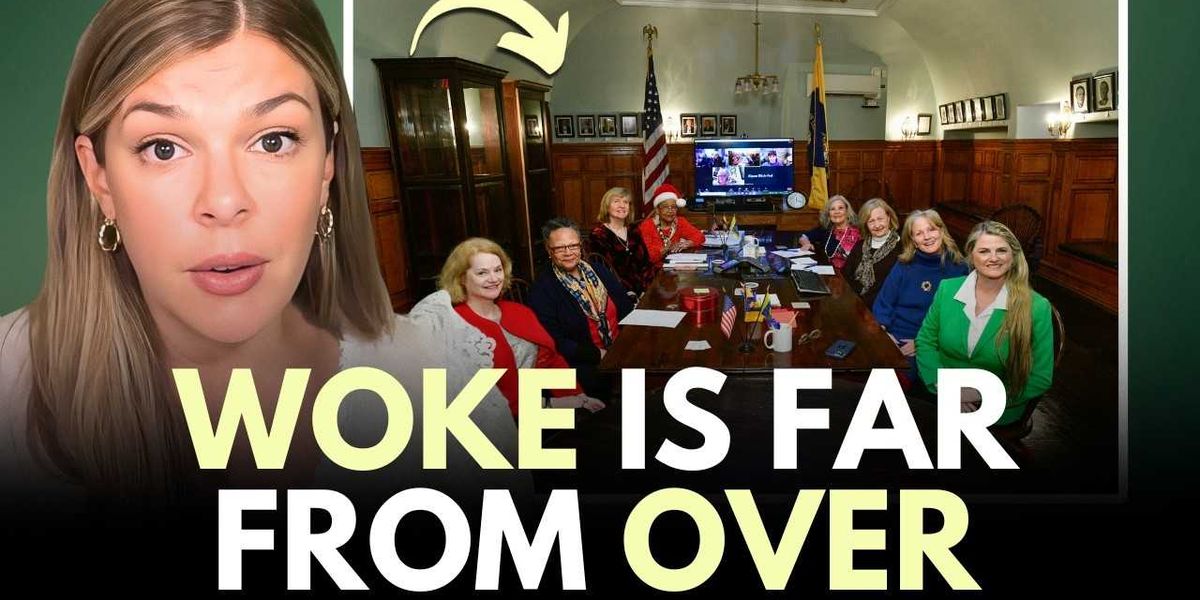
The Daughters of the American Revolution, a 135-year-old lineage group, just voted in a way that hands a cultural victory to activists and leaves many conservative members stunned and vocal. The organization’s decision to allow men who identify as women into membership and to reject a proposal defining “woman” by birth has sparked sharp debate about identity, tradition, and who gets to protect historical institutions. Voices on the right see this as a sign that cultural fights are far from over and that clarity is urgently needed. This piece lays out what happened, why it matters, and the arguments being made in plain terms.
The DAR historically limited membership to women with ancestors who fought for American independence, a simple lineage requirement that lasted for more than a century. That changed at the group’s 135th Continental Congress, when delegates voted down a resolution that would have specified that “woman” means someone born female. The tally was decisive enough to signal a real shift: 1,481 against and 984 in favor. For many conservatives, that count is less about numbers than about principle and institutional identity.
The leadership had already been treating gender identity as the deciding factor rather than biological sex, and five men who identify as women are now listed as members. Critics argue this undermines the very point of a women’s lineage society and opens the door to more changes driven by cultural trends rather than historical fidelity. Supporters of the move claim bylaws did not define “woman,” which created a legal and procedural opening they decided to use. That argument does not satisfy everyone, and it has become the flashpoint for broader fights over language and membership rules.
Allie Beth Stuckey framed the outcome in unmistakable terms when she said, “The wokesters have now accomplished institutional capture in one of our age-old historical institutions here in the United States,” Stuckey says, noting that while conservatives have had some “major wins” recently, “woke is not dead.” Her wording matters because it captures a common conservative fear: that cultural change can quietly reshape longstanding organizations without broad input from members who want to preserve original intent. For those who see the DAR as a cultural safeguard, the decision feels like a loss of ground where clarity used to be taken for granted.
There is a practical side to the debate, too. The resolution put forward by Daughters Advocating for Restoration read in part, “The term ‘woman’ shall be understood to clearly mean a woman who was born female, and therefore, individuals who were born male shall not be eligible for membership; transgender women shall not be eligible for membership; and men who have their birth certificates changed from male to female shall not be eligible for membership.” That exact language aimed to close any loophole and make membership criteria absolute. Opponents said such specificity risked being exclusionary, while backers argued it was necessary to preserve a women-centered space.
After the vote, Stuckey warned that unless the underlying cultural momentum is confronted, similar changes will recur. “And unless you “eradicate it completely,” she explains that it will “keep coming back like mold.”” Those words hit at the core of why some conservatives demand precise definitions: they want institutions to resist trends that they see as fleeting or ideologically driven. The image of mold is meant to convey how these changes can spread quietly if not actively opposed.
Her broader argument ties into a call for Christians and conservatives to insist on clear definitions. “We are supposed to be a bastion of courage and clarity,” she says. The call is straightforward: if language matters, then defining terms is both a theological and a political duty. For many on the right, losing control over definitions is not only symbolic but strategic, because language shapes policy and membership rules down the road.
Critics of that stance counter that strict definitions can exclude people who deserve a place at the table, framing inclusion as compassion. Stuckey pushed back on that logic, saying, “There’s a lot of people who want to be confused, so they are actually sowing chaos through the confusion. That’s what they want to do. They might do that in the name of empathy or niceness or whatever it is.” The exchange highlights how the debate is about competing visions: one that prizes clear, fixed categories and one that prioritizes individual identity claims over those categories.
There is no easy fix for institutions caught in this crossfire. Some will double down on strict bylaws and definitions, while others will adapt and redefine membership to reflect changing norms. For conservative members who view lineage societies as custodians of history, this DAR decision is a warning: cultural shifts can outpace bylaws, and without active, principled defense of definitions, long-standing institutions can change in ways their founders never intended.
