
It’s no secret that jet engines are very different to automotive engines. Modern turbofans have multiple rotating spools that run at wildly different speeds, and comparing them to a car crank is like comparing a turbine to a piston. This piece explains how fast those spools actually spin, why rpm alone is misleading, and where the meaningful comparisons to cars begin.
First off, the obvious question: “How high does a modern jet engine actually rev? Is it close to a car?” The short answer is mixed — some parts spin in ranges similar to car engines, while other components spin far faster. The reason is design: a jet is a gas turbine with a fan, compressors, and turbines stacked and often running on separate concentric shafts.
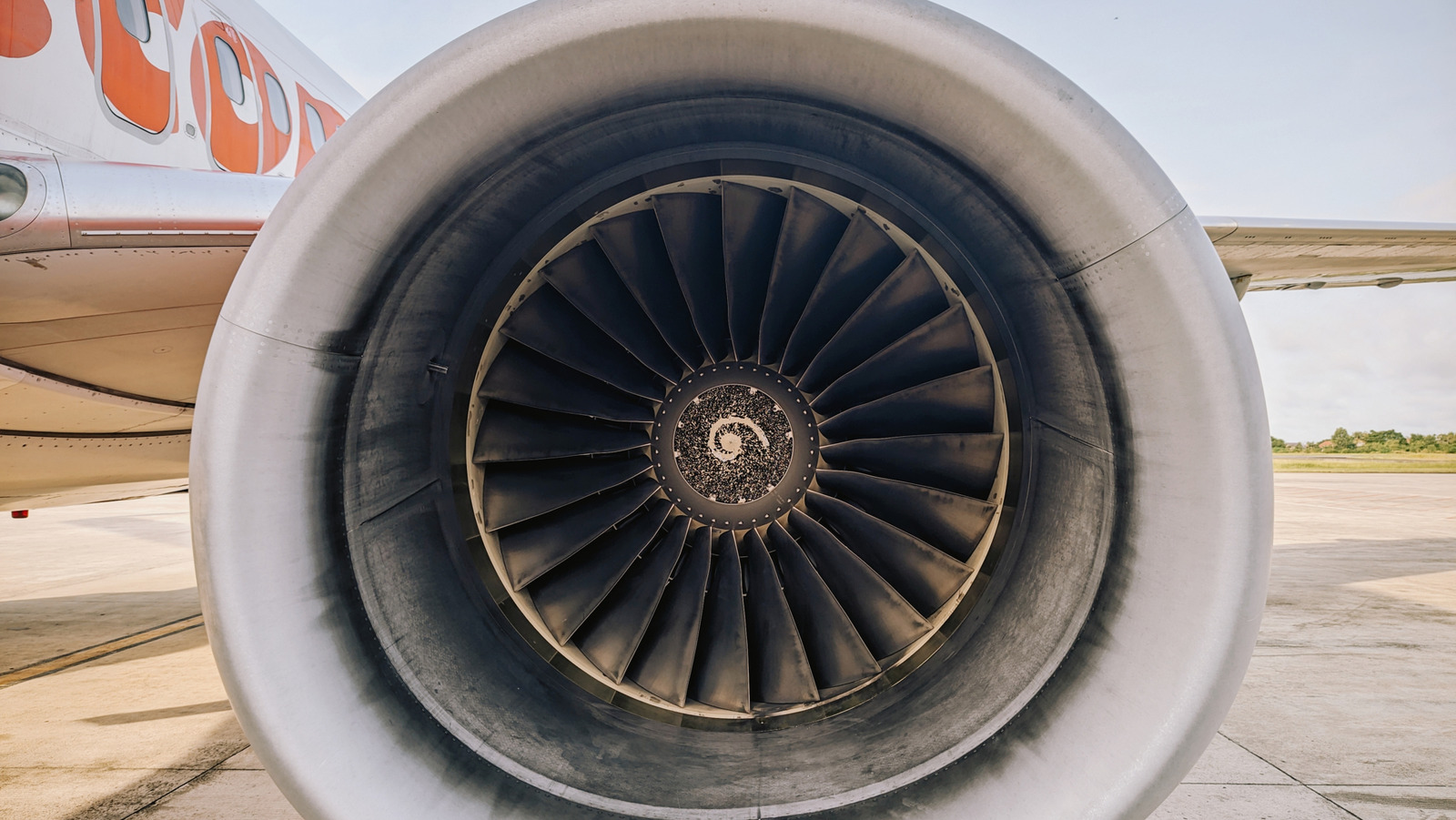
Large high-bypass turbofans use at least two spools, sometimes three. The low-pressure spool includes the big front fan and might turn a few thousand revolutions per minute, typically in the ballpark of 2,000 to 5,000 rpm depending on engine size. That fan rpm can sound comparable to a car, but the fan blades are enormous and move huge volumes of air, so the physics are completely different.
The high-pressure spool inside the core spins much faster. Compressors and high-pressure turbines routinely hit the tens of thousands of rpm; common practical ranges for HP spools sit around 8,000 to 15,000 rpm on many airliner engines. Smaller engines and some military turbines can go even higher, because their disks and blades are designed for different stresses and tip speeds than the big, slow-moving fan out front.
Another twist is geared turbofan technology, which separates fan speed from turbine speed with a reduction gearbox. Engines like the geared turbofan let the big fan turn relatively slowly for efficiency and lower noise while the core revs faster where it makes power. That enables a fan RPM that looks very tame next to a car while the core keeps spinning at its optimal, higher speed.
Measuring jet rotation is also different in practice. Pilots watch N1 and N2 gauges, which show spool speeds as percentages of max rather than raw rpm numbers. Manufacturers and maintenance crews deal with absolute rpm during teardown and testing, but operationally the percent-of-max readout is more useful for monitoring and control across temperature and altitude changes.
Tip speed matters more than rpm for aerodynamic limits. Blade tips approach critical Mach numbers long before disk rpm becomes the only concern, so designers cap rpm to keep tip speeds subsonic. That means a fan with a huge diameter runs slower than core compressors of smaller diameter, yet both can be operating at their mechanical and aerodynamic sweet spots.
Comparing jets to cars by rpm alone misses the point: engines produce power differently. A car engine makes peak torque at certain rpm to drive wheels through a gearbox, while a jet produces thrust by accelerating air and expelling it at high velocity. Even when a core spool spins faster than a typical car redline, the energy delivery mechanism is fundamentally distinct.
So when you hear a jet and wonder whether it “revves” like a car, remember the split personality of turbofans: a slow-turning, massive fan up front and a high-speed core tucked behind it, each optimized for its job. RPM numbers are interesting, but they only tell one piece of a larger engineering story about airflow, tip speeds, and how thrust is created.
